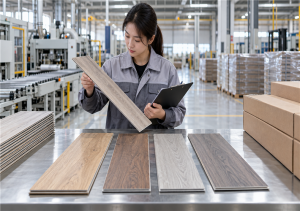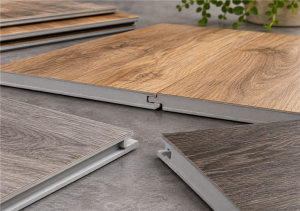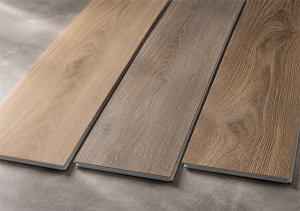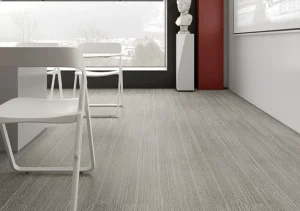
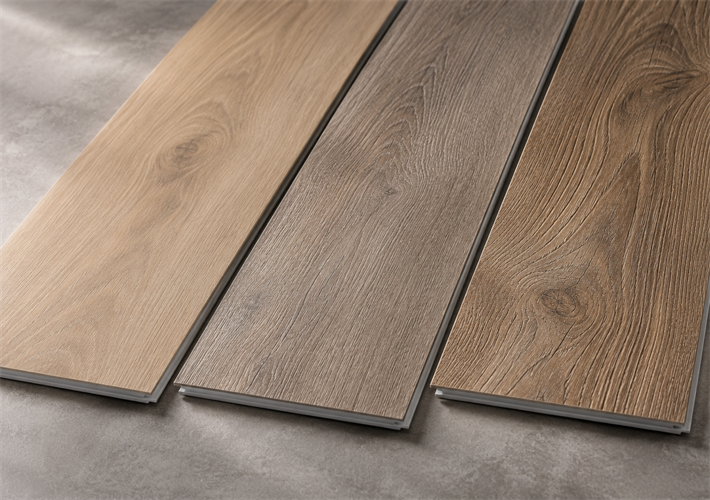
When buyers compare SPC flooring, the surface finish is one of the first product details they notice, but it is also a technical specification that affects appearance, touch, cleaning expectations, and product positioning. Matte, embossed, and EIR finishes can create very different impressions even when the plank size and color are similar.
This guide explains the main SPC flooring surface finish options, how they relate to the wear layer and decorative film, how buyers should compare samples, and what to confirm with an SPC flooring manufacturer before placing a wholesale order.
What Is an SPC Flooring Surface Finish?
The surface finish is the visible and tactile treatment applied above the decorative film of an SPC flooring plank. It can influence gloss, texture, light reflection, touch, and how closely the product resembles natural wood or stone.
Surface finish is not the same as the wear layer. The wear layer is the protective surface layer, while the finish describes the visual and tactile treatment of the finished surface. Buyers should record both specifications in the product brief.
A complete surface specification may include the wear layer, gloss level, embossing, registered embossing, protective coating, decorative film, and edge treatment. Comparing only the word “matte” or “embossed” is not enough to identify the complete product.
Matte, Semi-Matte, and Gloss Finishes
Matte SPC flooring
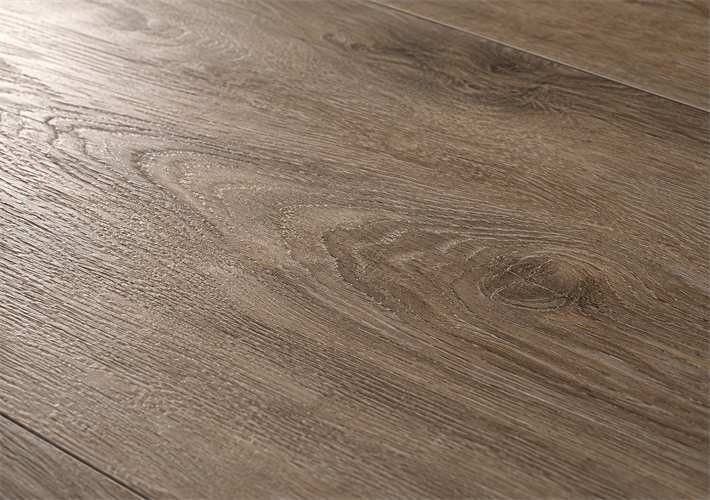
Matte SPC flooring reflects less direct light and can create a softer, more natural visual. It is often selected when the buyer wants a calm wood or stone appearance rather than a highly reflective surface.
When comparing matte samples, review the consistency of the sheen under different lighting. A matte finish should still show clear print detail and even surface treatment without cloudy areas, unexpected shine, or visible coating marks.
Semi-matte SPC flooring
Semi-matte finishes sit between matte and gloss. They can preserve a natural appearance while making the decorative film easier to read under showroom lighting. The exact level of sheen should be approved with a physical sample because different factories may use different finishing systems.
Gloss SPC flooring
Gloss finishes reflect more light and can create a brighter, sharper visual. A gloss product should be checked for uniform reflection, surface marks, and consistency between planks. Buyers should also confirm that the surface appearance matches the intended product position and packaging presentation.
What Is Embossing on SPC Flooring?
Embossing is a raised or textured surface treatment that gives the plank a more tactile structure. It can follow a general wood-grain pattern, a stone texture, or a customized design. The purpose is to make the surface feel less flat and to support the visual character of the decorative film.
Embossing depth, pattern clarity, gloss, and coating all influence the final result. A strong texture does not automatically mean a better product. The texture should be consistent, easy to evaluate on samples, and compatible with the approved decorative design.
Standard embossing
Standard embossing uses a repeatable texture that may be applied across several decorative designs. It can be efficient for regular product collections, but buyers should confirm whether the texture is aligned with the printed grain or independent of it.
Registered embossing and EIR
Registered embossing, often called EIR, is designed to align the raised texture more closely with the printed wood grain. When the alignment is well controlled, the surface can create a more convincing natural-wood effect.
Buyers should not assume that every product described as EIR has the same level of registration. Request a physical sample and inspect the relationship between the printed knots, grain lines, and raised texture. The quotation should state whether registered embossing is included and whether there are design or minimum-order requirements.
How Surface Finish Works with the Wear Layer and Decorative Film
The finished appearance comes from several connected layers. The wear layer protects the visual surface, the decorative film creates the wood or stone image, and the embossing or finish creates the tactile and reflective response.
- Wear layer: the transparent protective layer that should be specified separately.
- Decorative film: the printed visual that determines the main color, grain, and pattern.
- Embossing: the physical texture that adds relief to the finished surface.
- Protective finish: the coating or treatment that influences gloss and surface feel.
For a complete comparison, buyers should use the same color, plank size, wear layer, core, backing, and edge profile when comparing different surface finishes. Otherwise, the comparison may mix several product changes at once.
How Surface Finish Affects Product Positioning
Surface finish can change how a product is presented in a catalog or showroom. A matte finish may support a natural design story, while an EIR finish may support a more detailed premium visual. These are positioning choices, not universal performance rankings.
Finish can also influence development time, sample approval, printing preparation, tooling, production yield, and packaging artwork. Ask the manufacturer to separate standard finish options from custom development costs.
How Buyers Should Compare SPC Flooring Samples
Use a controlled sample review rather than choosing from a single photograph. Compare several pieces under the same light and record the exact sample reference.
- Check the gloss: view the sample from different angles and look for uneven reflection or coating marks.
- Feel the texture: run a hand across the surface and compare the consistency of the embossing.
- Check registration: on EIR designs, compare the printed grain with the raised texture.
- Review the edges: inspect bevels, click profiles, and whether the finish continues consistently to the edge.
- Compare several pieces: look for changes in color, grain, sheen, texture, and surface defects.
- Keep the approved reference: store the sample, design code, technical sheet, and packaging artwork together.
A sample shows the intended appearance, but it does not replace production records or testing. Ask the supplier how surface consistency is checked during mass production and how an unapproved batch is handled.
How Manufacturers Control Finish Consistency
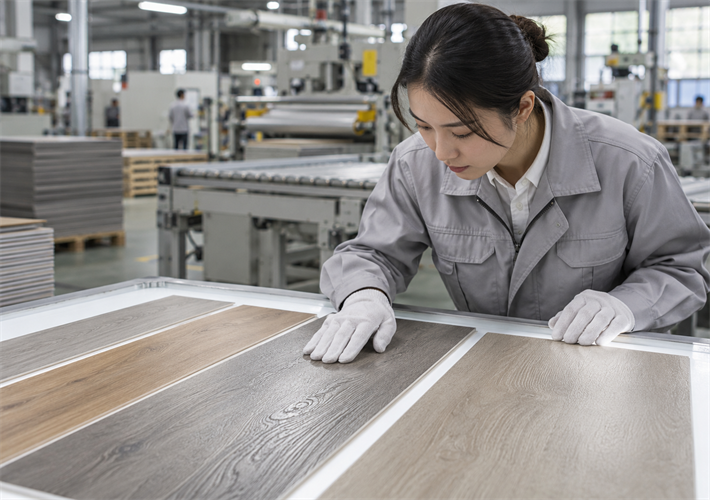
An SPC flooring manufacturer should be able to explain how surface finish is controlled from decorative film preparation through final packing. Important checkpoints may include:
- Decorative film color and design reference approval.
- Embossing roller or texture reference control.
- Gloss and surface appearance checks under consistent lighting.
- Inspection of scratches, pinholes, coating marks, and uneven texture.
- Comparison of first production pieces with the approved sample.
- Final inspection and batch records before packing.
The exact process varies between factories, but the principle is the same: the approved sample must be linked to a repeatable production and inspection process.
Custom Finish, MOQ, and Wholesale Cost
Standard matte or embossed finishes are usually easier to quote than a custom EIR design. Custom work may involve decorative film development, texture preparation, artwork approval, sampling, and minimum-order requirements.
When requesting a quote, specify the design, plank size, wear layer, core, backing, edge, finish, quantity, packaging, and destination. Ask the manufacturer to separate recurring unit cost from one-time development charges.
Do not compare a standard finish from one supplier with a custom registered-embossing finish from another and treat the price difference as a manufacturing margin. The product assumptions must be equivalent first.
Questions to Ask an SPC Flooring Manufacturer
- Which matte, semi-matte, gloss, embossed, and EIR options are standard?
- Is the finish applied consistently across the full product collection?
- How is the wear layer specified separately from the surface finish?
- Can the supplier provide a physical sample under the final decorative design?
- How is EIR registration checked during production?
- What are the MOQ, sample lead time, tooling, and development charges?
- How are color, gloss, texture, and batch consistency inspected?
- Can the approved finish be reproduced for repeat orders?
How ChangFlor Can Help
ChangFlor can help buyers compare SPC flooring surface finishes, wear layers, decorative films, embossing, backing, packaging, and private-label requirements before placing a bulk order.
For related information, review our SPC flooring wear layer guide, SPC flooring core quality guide, and SPC flooring thickness guide. For samples, use the free sample page, or send your product brief through the contact page.
Final Checklist
- Separate surface finish from wear-layer thickness.
- Confirm whether the texture is standard embossing or EIR.
- Compare samples under consistent light and with the same base construction.
- Check gloss, texture, registration, edges, and batch consistency.
- Request the exact finish specification and approval sample.
- Clarify MOQ, tooling, development costs, and repeat-order control.
Conclusion
SPC flooring surface finish is both a visual and technical purchasing decision. Matte, embossed, and EIR options can create different product positions, but the final quality depends on the complete construction and the manufacturer’s ability to reproduce the approved sample.
When buyers compare the wear layer, decorative film, texture, gloss, edge, packaging, and inspection process together, they can choose a surface finish that is easier to sell and more consistent to reorder.