Introduction
The global flooring market is increasingly focused on materials that combine durability, attractive design, installation flexibility, and cost efficiency. Among the many available flooring solutions, Dry Back Luxury Vinyl Tile (LVT) flooring has become a popular choice for commercial buildings, hospitality projects, retail spaces, offices, and residential developments.
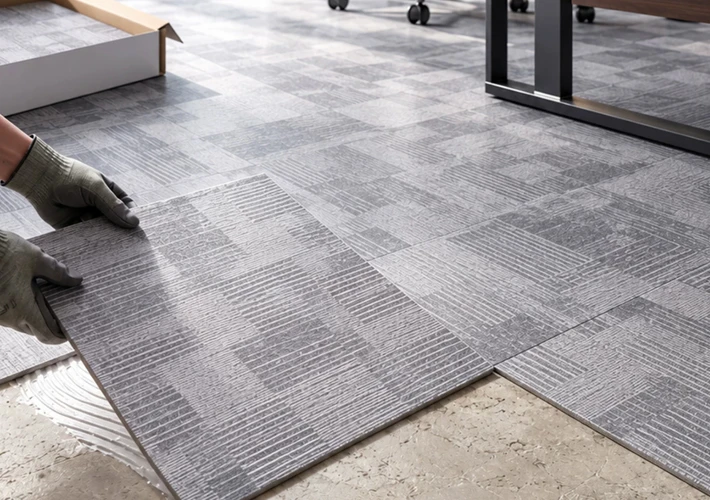
Unlike floating flooring systems that rely on click-lock connections or loose-lay installation methods, dry back LVT flooring is installed directly onto a properly prepared subfloor using a suitable flooring adhesive. This installation method creates a firm bond between the flooring material and the underlying surface, providing excellent dimensional stability and a seamless appearance when installed correctly.
For flooring distributors, wholesalers, importers, contractors, and project developers, understanding the advantages of dry back LVT flooring is essential when selecting products for different markets and applications. Its relatively low profile, realistic decorative finishes, flexible installation patterns, and suitability for large-scale commercial projects make it a competitive alternative to traditional flooring materials.
As a professional Chinese flooring manufacturer, Changflor supplies LVT and SPC flooring solutions for international B2B customers. With a focus on product quality, decorative variety, manufacturing consistency, and customized supply solutions, Changflor helps overseas buyers source flooring products that meet different commercial and residential project requirements.
This article explores the major advantages of dry back luxury vinyl tile flooring, its technical characteristics, applications, installation considerations, and the factors international buyers should evaluate when choosing a reliable LVT flooring manufacturer in China.
What Is Dry Back Luxury Vinyl Tile LVT Flooring?
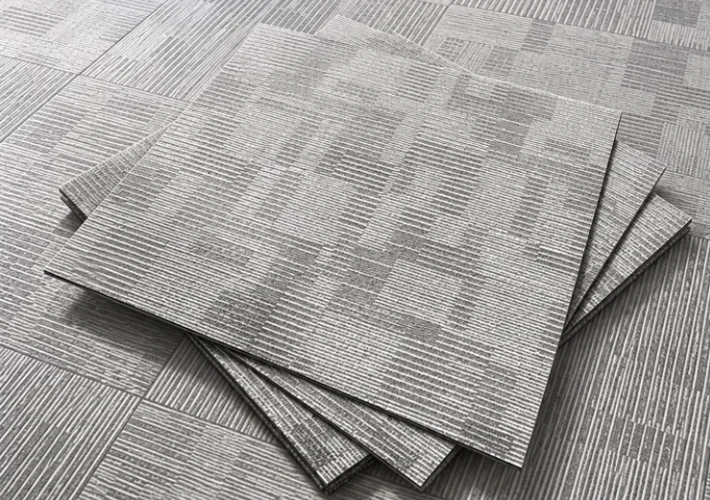
Dry Back LVT flooring is a type of resilient vinyl flooring designed to be permanently bonded to a prepared subfloor using a compatible flooring adhesive. It is commonly manufactured in plank or tile formats, allowing buyers and designers to select different sizes, colors, textures, and decorative patterns.
The term “dry back” refers to the adhesive installation method rather than a floating connection system. During installation, flooring adhesive is applied to the subfloor or flooring backing according to the adhesive manufacturer’s instructions. The LVT flooring is then positioned and pressed into the adhesive to establish a secure bond.
This installation method is widely used in commercial flooring projects because it provides a stable flooring surface and allows installers to create various decorative layouts.
Main Structure of Dry Back LVT Flooring
Although the exact construction varies between manufacturers and product specifications, dry back LVT flooring generally consists of several functional layers.
1. UV coating or surface protection
The surface treatment helps improve resistance to everyday wear, staining, and surface contamination. Depending on the product design, it can also make routine cleaning easier.
2. Wear layer
The transparent wear layer protects the decorative surface against abrasion and everyday foot traffic. Its thickness is an important specification when selecting LVT flooring for different applications.
Common wear layer options include:
- 0.1 mm for light-duty applications.
- 0.2 mm for selected residential applications.
- 0.3 mm for general residential and light commercial applications.
- 0.5 mm for many commercial applications.
- 0.7 mm for demanding commercial environments where the complete product specification supports the intended traffic level.
These are common market configurations rather than universal performance guarantees. Actual suitability depends on the entire flooring construction, testing results, maintenance requirements, and expected traffic.
3. Decorative film layer
The decorative layer provides the visual appearance of the flooring. Advanced printing technology allows manufacturers to reproduce the appearance of natural oak, walnut, stone, marble, concrete, and other materials.
This layer gives designers considerable flexibility when creating different interior styles.
4. Vinyl core layer
The vinyl core provides the main body of the flooring product. It contributes to flexibility, dimensional characteristics, and the overall physical performance of the tile or plank.
5. Backing layer
The backing layer forms the underside of the flooring and is designed to support adhesive installation. Its surface characteristics and compatibility with flooring adhesives are important factors in achieving reliable installation results.
Dry Back LVT vs. Other Vinyl Flooring Types
Dry back LVT, click LVT, loose-lay LVT, and SPC flooring all belong to the broader resilient flooring category, but they have different constructions and installation requirements.
| Flooring Type | Installation Method | Main Characteristics |
|---|---|---|
| Dry Back LVT | Adhesive installation | Thin profile, firm subfloor bonding, flexible layouts |
| Click LVT | Floating installation | Mechanical locking system, no full-spread adhesive required in typical installations |
| Loose-Lay LVT | Loose-lay or perimeter-fixed installation | Designed for specific installation conditions and easy replacement |
| SPC Flooring | Usually floating click installation | Rigid mineral-filled core and dimensional stability |
For projects where a low-profile floor covering, direct subfloor bonding, and flexible design patterns are priorities, dry back LVT can be an attractive option.
What Are the Main Advantages of Dry Back Luxury Vinyl Tile LVT Flooring?
Dry back LVT flooring offers several practical advantages that make it suitable for different building types and commercial environments. Its benefits extend beyond appearance, covering installation flexibility, maintenance, space utilization, and long-term flooring management.
1. Excellent Installation Stability
One of the most important advantages of dry back LVT flooring is its direct bonding installation method.
Unlike floating flooring systems, dry back LVT is attached to the prepared subfloor with a suitable adhesive. When the subfloor is properly prepared and the correct adhesive is used, the flooring can form a stable surface with reduced movement between individual tiles or planks.
This characteristic is particularly useful in commercial spaces with frequent pedestrian traffic.
Examples include:
- Office buildings with daily employee movement.
- Retail stores with continuous customer traffic.
- Hotel corridors and guest accommodation areas.
- Educational institutions with regular student movement.
- Healthcare and administrative buildings.
The direct bonding system can also help reduce unwanted movement associated with improperly installed floating floors.
However, installation quality remains essential. Subfloor flatness, moisture conditions, adhesive compatibility, application technique, and curing time all influence the final result.
2. Thin Profile for Renovation Projects
Dry back LVT flooring is generally thinner than many traditional flooring systems and some rigid-core alternatives.
This makes it especially useful for renovation projects where maintaining the existing floor height is important.
For example, replacing old flooring with a thicker material may create problems around:
- Door clearances.
- Stair transitions.
- Skirting boards.
- Built-in cabinets.
- Thresholds between different rooms.
- Existing floor drainage and transition details.
A thinner dry back LVT product can help reduce the need for extensive modifications, provided the existing subfloor is suitable and the total installed height is carefully calculated.
For commercial renovation contractors, this can improve project planning and reduce unnecessary adjustment work.
It is important to note that a thin flooring product does not eliminate the need for subfloor preparation. Existing flooring, adhesive residue, cracks, and uneven areas may still require professional treatment before installation.
3. Wide Range of Decorative Designs
Another major advantage of dry back LVT flooring is its design versatility.
Modern digital printing and decorative film technologies allow manufacturers to create realistic patterns that imitate natural materials.
Popular decorative options include:
Wood-look LVT flooring
Wood-look designs remain popular in residential, hospitality, and commercial interiors. Oak, walnut, maple, pine, and other wood-inspired finishes can create warm and natural-looking environments.
Stone-look LVT flooring
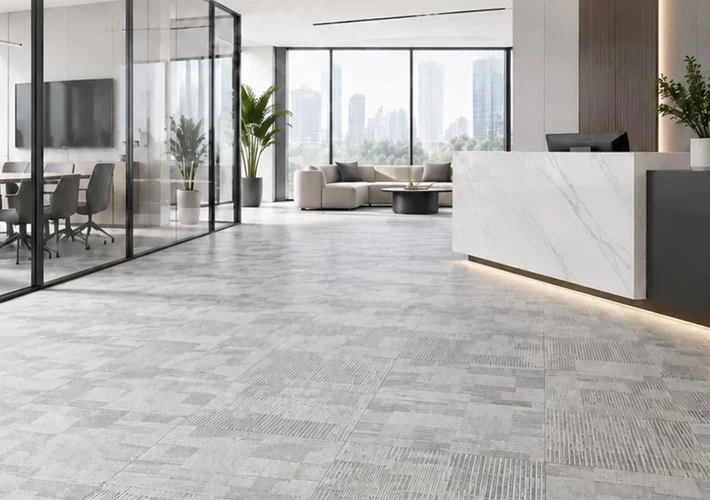
Stone-inspired patterns are suitable for contemporary commercial interiors, reception areas, offices, and retail environments.
Marble-look LVT flooring
Marble patterns provide an elegant appearance without requiring natural marble slabs. They are often selected for hotel interiors, apartments, and commercial spaces.
Concrete-look LVT flooring
Concrete-inspired designs are widely used in industrial-style offices, modern retail stores, restaurants, and creative workspaces.
Custom decorative patterns
Depending on manufacturing capabilities and minimum order requirements, buyers may also explore customized colors, patterns, textures, and plank dimensions.
For distributors and importers, a diversified decorative collection makes it easier to serve different customer groups without relying on a single design style.
4. Water Resistance for Everyday Interior Applications
LVT flooring is manufactured using vinyl-based materials, which provide good resistance to water exposure compared with many traditional wood-based flooring products.
Dry back LVT does not absorb water in the same way as natural wood flooring. This makes it suitable for many interior environments where occasional spills and routine cleaning are expected.
Typical applications include:
- Residential living rooms.
- Bedrooms.
- Offices.
- Retail stores.
- Hotel guest rooms.
- Commercial corridors.
- Restaurants and other interior spaces where the product specification permits.
Nevertheless, water resistance should not be confused with a waterproof building system.
Water may penetrate through joints, edges, expansion details, or improperly sealed transitions. Excessive moisture beneath the flooring can also affect adhesive performance and subfloor conditions.
For bathrooms, wet rooms, and areas with standing water, buyers should verify the complete installation system and manufacturer recommendations before specifying dry back LVT.
5. Comfortable Walking Experience
Compared with hard flooring materials such as ceramic tiles and natural stone, LVT flooring generally offers a more resilient surface underfoot.
Its vinyl construction provides a degree of flexibility that can make walking more comfortable in everyday environments.
This characteristic is beneficial in locations where people spend considerable time standing or walking, including:
- Retail stores.
- Offices.
- Hotel reception areas.
- Residential kitchens.
- Commercial corridors.
- Educational buildings.
The actual comfort level depends on the flooring construction, thickness, backing design, subfloor, and installation system.
For buyers developing commercial flooring collections, comfort is an important selling point when targeting customers who want an alternative to conventional hard-surface flooring.
6. Easy Cleaning and Routine Maintenance
Maintenance requirements are another reason why dry back LVT flooring is widely considered for commercial and residential projects.
Its non-porous vinyl surface helps prevent ordinary dirt and many common contaminants from penetrating deeply into the flooring material.
Routine maintenance generally includes:
- Removing loose dust and debris.
- Sweeping or vacuuming the surface.
- Damp mopping with a suitable neutral cleaning solution.
- Removing spills promptly.
- Using protective pads beneath furniture.
- Avoiding abrasive cleaning tools and unsuitable chemicals.
For commercial property managers, relatively straightforward cleaning procedures can simplify daily maintenance operations.
However, maintenance performance also depends on the surface treatment, wear layer, cleaning products, traffic conditions, and maintenance frequency.
Selecting the correct wear layer and following the manufacturer’s cleaning recommendations are important for maintaining the flooring’s appearance.
7. Flexible Installation Patterns
Dry back LVT flooring offers considerable flexibility in terms of installation design.
Because the individual tiles or planks are bonded directly to the subfloor, installers can create a variety of patterns depending on the product format and installation requirements.
Popular installation patterns include:
- Straight plank installation.
- Herringbone patterns.
- Chevron patterns.
- Brick-style layouts.
- Basket-weave patterns.
- Checkerboard tile arrangements.
- Mixed-size decorative layouts.
This flexibility makes dry back LVT particularly attractive for interior designers and commercial project contractors.
For example, a hotel lobby may use a combination of wood-look planks and stone-look tiles to create visual zones. A retail store may use contrasting colors to guide customers through different product sections.
The availability of multiple installation patterns also gives flooring distributors more opportunities to promote premium design solutions.
8. Cost Efficiency for Commercial Projects
Dry back LVT flooring can offer a competitive overall flooring solution when material costs, installation requirements, renovation conditions, and long-term maintenance are considered together.
Its relatively thin profile may reduce the need for certain floor-height adjustments. Its decorative flexibility can also provide an alternative to more expensive natural materials.
For large-scale projects, standardized plank and tile specifications can simplify procurement, transportation, and installation planning.
However, buyers should compare the total installed cost rather than looking only at the factory price per square meter.
A proper cost evaluation should include:
- Flooring material price.
- Wear layer specification.
- Adhesive requirements.
- Subfloor preparation.
- Installation labor.
- Transportation and import expenses.
- Maintenance requirements.
- Expected replacement and renovation costs.
The most economical product is not necessarily the one with the lowest purchase price. Consistent product quality and appropriate specifications can provide better value throughout the flooring’s service life.
9. Suitable for Large Commercial Flooring Areas
Commercial buildings often require flooring materials that can accommodate different room layouts, traffic levels, and interior design requirements.
Dry back LVT can be specified for many large interior spaces when the product, adhesive, and subfloor system are properly selected.
Its plank and tile formats allow installers to divide large areas into manageable sections while maintaining consistent decorative patterns.
For developers and contractors, this can make dry back LVT a practical choice for projects involving multiple rooms, corridors, offices, and retail zones.
10. Convenient Product Selection for International Distributors
For overseas flooring distributors, dry back LVT offers opportunities to develop product collections for different customer segments.
A distributor can select several wear layer options, thicknesses, plank sizes, and decorative patterns to build a collection for residential and commercial customers.
As a result, the same product category can serve multiple market segments without requiring completely different flooring systems.
This flexibility can help importers organize their product portfolios and respond to changing market demand.
Where Can Dry Back LVT Flooring Be Used?
Dry back luxury vinyl tile flooring is suitable for a wide range of interior environments. Its actual application depends on the product specification, expected foot traffic, subfloor conditions, local building regulations, and installation requirements.
The following are some of its most common commercial and residential applications.
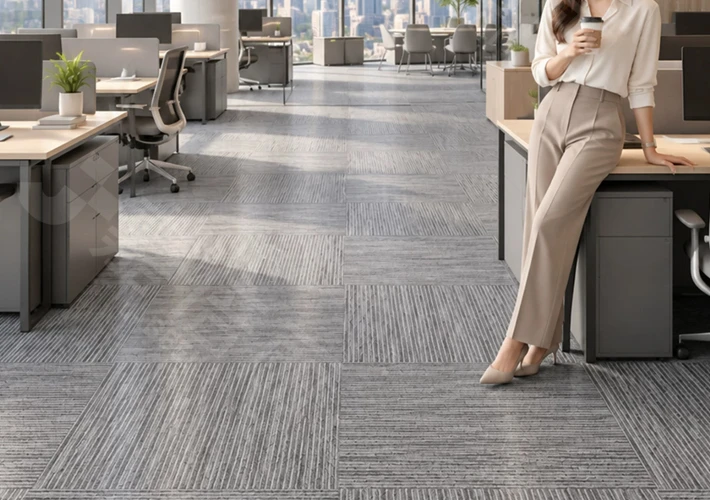
Office Buildings
Modern offices require flooring that combines professional appearance, easy maintenance, and suitable performance under regular pedestrian traffic.
Dry back LVT is often selected for:
- Private offices.
- Meeting rooms.
- Reception areas.
- Open-plan workspaces.
- Corridors.
- Staff break rooms.
Wood-look LVT can create a warm and welcoming office environment, while stone-look and concrete-look patterns can support a more contemporary interior design.
For office projects, buyers should pay particular attention to wear layer thickness, chair-caster performance, indentation resistance, and applicable indoor air quality requirements.
Hotels and Hospitality Projects
Hotels need flooring solutions that can accommodate different design themes while supporting routine cleaning and maintenance.
Dry back LVT can be considered for:
- Guest bedrooms.
- Hotel corridors.
- Reception areas.
- Meeting rooms.
- Administrative offices.
- Selected restaurant and lounge interiors.
Wood-look patterns are frequently used to create a comfortable atmosphere in guest rooms, while stone-inspired designs can complement modern hospitality interiors.
For hotel procurement teams, consistency between production batches is also important because flooring materials may be required across multiple rooms or different project phases.
Retail Stores and Shopping Centers
Retail environments experience regular customer movement and may require flooring with good surface protection and easy maintenance.
Dry back LVT offers a wide range of decorative options that can complement different retail concepts.
Typical applications include:
- Clothing stores.
- Furniture showrooms.
- Electronic stores.
- Supermarkets.
- Shopping center corridors.
- Brand exhibition spaces.
Different colors and installation patterns can also help retailers visually distinguish product display zones and customer circulation areas.
Educational Buildings
Schools, training centers, and other educational facilities need practical flooring solutions for classrooms, offices, libraries, and corridors.
Dry back LVT can be considered where the product meets the required commercial performance and safety standards.
Its design flexibility also allows schools to select colors and patterns that match their interior design requirements.
For these projects, buyers should verify fire classification, slip resistance, indoor air emissions, and maintenance requirements according to local regulations.
Healthcare and Medical Administration Areas
Certain healthcare environments require flooring that is easy to clean and compatible with specific hygiene and maintenance procedures.
Dry back LVT may be suitable for selected administrative areas, offices, waiting areas, and other spaces where its technical specifications meet project requirements.
However, healthcare flooring should never be selected based on appearance alone.
Project specifications may require additional testing for chemical resistance, rolling loads, slip resistance, seam performance, and compatibility with specialized cleaning agents.
Some medical environments may require homogeneous or specialized resilient flooring rather than standard decorative LVT.
Residential Interior Projects
Although dry back LVT is widely used in commercial applications, it is also suitable for many residential interiors.
Common applications include:
- Living rooms.
- Bedrooms.
- Dining rooms.
- Home offices.
- Apartment renovation projects.
- Selected kitchen areas.
For residential developers and flooring retailers, dry back LVT provides an opportunity to offer customers a variety of decorative designs at different price points.
Its thin profile can also be beneficial in apartment renovation projects where existing floor heights need to be maintained.
Dry Back LVT Flooring vs. Other Flooring Solutions
When selecting flooring materials, buyers should compare different products based on construction, installation, performance, cost, and project requirements.
Dry back LVT is not necessarily the best choice for every application. However, it offers several advantages in projects where direct bonding, low profile, and flexible decorative layouts are important.
Dry Back LVT vs. Click LVT Flooring
Both products use vinyl-based flooring construction, but their installation systems are different.
| Comparison | Dry Back LVT | Click LVT |
|---|---|---|
| Installation | Adhesive bonded | Floating locking system |
| Subfloor preparation | Requires a suitable smooth subfloor | Requires a suitable flat subfloor |
| Floor height | Generally low profile | Depends on overall product thickness |
| Installation pattern | Flexible tile and plank arrangements | Depends on locking design and product format |
| Replacement | Individual pieces may be replaceable, but adhesive removal is required | Individual plank replacement depends on access and locking system |
| Adhesive | Required | Usually not required for standard floating installation |
Dry back LVT is often preferred for projects where a firmly bonded surface and lower installed profile are priorities.
Click LVT may be more suitable for applications where a floating installation system is preferred.
Dry Back LVT vs. SPC Flooring
SPC flooring uses a rigid core generally made with mineral fillers and polymer materials. It is commonly installed as a floating floor using a click-lock system.
Dry back LVT has a more flexible vinyl construction and is typically bonded to the subfloor.
| Comparison | Dry Back LVT | SPC Flooring |
|---|---|---|
| Core construction | Flexible vinyl-based construction | Rigid mineral-filled core |
| Installation | Adhesive installation | Commonly floating click installation |
| Floor profile | Generally thinner | Often thicker |
| Surface feel | Relatively resilient | More rigid |
| Subfloor requirements | Smooth and properly prepared | Flat and suitable for floating installation |
| Design flexibility | Multiple tile and plank layouts | Depends on product format and locking system |
| Renovation suitability | Useful where low floor height is important | Useful where rigid floating flooring is preferred |
The choice between dry back LVT and SPC depends on the building structure, renovation conditions, project budget, installation preference, and performance requirements.
Dry Back LVT vs. Ceramic Tiles
Ceramic tiles are widely used in residential and commercial buildings because of their hard surface and resistance to many common forms of wear.
However, ceramic tile installation generally involves additional considerations such as mortar, grout, cutting, and floor-height transitions.
Dry back LVT offers a different approach.
| Comparison | Dry Back LVT | Ceramic Tiles |
|---|---|---|
| Material | Vinyl-based | Ceramic or porcelain |
| Surface feel | More resilient | Hard |
| Installation | Flooring adhesive | Tile mortar or suitable adhesive |
| Decorative designs | Wood, stone, marble, concrete | Extensive printed and natural finishes |
| Weight | Generally lighter | Generally heavier |
| Renovation profile | Often thinner | Depends on tile and installation system |
| Maintenance | Routine vinyl flooring maintenance | Tile and grout maintenance |
For projects where designers want wood or stone aesthetics with a relatively thin resilient flooring system, dry back LVT can be an attractive alternative.
Dry Back LVT vs. Traditional Wood Flooring
Natural wood flooring provides an authentic material appearance, but it can be more sensitive to moisture, temperature changes, and maintenance conditions.
Dry back LVT offers wood-inspired decorative patterns without relying on natural timber as its primary material.
For large commercial projects, this can make LVT a practical alternative when buyers want consistent decorative finishes and easier routine maintenance.
Nevertheless, the appearance, surface texture, and material characteristics of vinyl flooring are different from genuine wood. Buyers should select products according to the actual design and performance expectations of the project.
Important Technical Specifications When Buying Dry Back LVT Flooring
For international importers, wholesalers, and project contractors, understanding technical specifications is essential before placing a bulk order.
Two dry back LVT products may look similar but have significantly different constructions and performance characteristics.
A professional procurement process should therefore consider the following specifications.
Overall Thickness
Overall thickness refers to the total thickness of the flooring product.
Common dry back LVT thicknesses vary by manufacturer and collection. Products in the approximate 2.0 mm to 3.0 mm range are frequently available in the international market.
The appropriate thickness depends on the intended application, installation conditions, and required performance.
Buyers should not assume that a thicker product automatically provides better wear resistance. The wear layer and complete construction must also be evaluated.
Wear Layer Thickness
The wear layer is one of the most important specifications for LVT flooring.
It protects the decorative layer against surface abrasion and everyday use.
For general purchasing reference:
| Wear Layer | Typical Market Positioning |
|---|---|
| 0.1 mm | Selected light-duty applications |
| 0.2 mm | Residential applications |
| 0.3 mm | Residential and light commercial |
| 0.5 mm | Many commercial applications |
| 0.7 mm | Selected demanding commercial applications |
These categories are indicative rather than fixed industry rules. Actual product selection should be based on relevant abrasion tests and complete product performance.
Plank and Tile Dimensions
Dry back LVT is available in different dimensions to support different interior designs.
Common formats include:
- Long wood-look planks.
- Standard rectangular planks.
- Square stone-look tiles.
- Large-format decorative tiles.
- Customized dimensions based on production capabilities.
The choice of dimensions affects the visual appearance, installation pattern, material utilization, and cutting waste.
For project procurement, buyers should confirm exact product dimensions, dimensional tolerances, and packaging quantities before ordering.
Surface Treatment and Texture
Surface treatment affects both appearance and everyday maintenance.
Common options include:
- Smooth surfaces.
- Wood-grain embossing.
- Stone textures.
- Matte finishes.
- Lightly textured finishes.
- Decorative embossed surfaces.
Some products use embossed-in-register technology to coordinate the surface texture with the printed decorative pattern.
This can improve the visual realism of wood and stone designs.
Dimensional Stability
Dimensional stability refers to the ability of flooring material to maintain its dimensions under specified environmental and testing conditions.
It is particularly important for commercial applications involving temperature changes, large installation areas, and regular traffic.
Buyers should request relevant test reports and verify that the product meets the dimensional stability requirements specified for the intended project.
Fire Performance and Slip Resistance
Commercial flooring projects may have specific requirements for fire classification and slip resistance.
These requirements differ between countries and building types.
For example, a hotel, office building, educational facility, and healthcare project may have different flooring specification requirements.
Importers should confirm:
- Applicable fire classification.
- Slip resistance test method.
- Test conditions.
- Product-specific test reports.
- Local regulatory compliance.
A manufacturer should provide accurate documentation for the actual product being supplied rather than relying on general marketing descriptions.
Indoor Air Quality and Chemical Compliance
Indoor air quality is an important purchasing consideration for international flooring buyers.
Depending on the target market, project specifications may require testing for volatile organic compounds (VOCs), formaldehyde, phthalates, or other regulated substances.
Buyers should clarify the applicable standards and request current test reports or declarations where required.
Certifications and compliance claims should always be verified against the exact product and production facility.
Installation and Maintenance Considerations for Dry Back LVT Flooring
Even a high-quality dry back LVT product cannot deliver reliable performance without proper installation.
The adhesive system, subfloor condition, installation environment, and workmanship all influence the final flooring result.
For contractors and project developers, following the correct installation procedures is essential.
Step 1: Inspect and Prepare the Subfloor
Subfloor preparation is one of the most important stages of dry back LVT installation.
The surface should be:
- Clean and free from dust.
- Smooth and sufficiently level.
- Structurally sound.
- Free from loose materials.
- Suitable in terms of moisture conditions.
- Compatible with the selected adhesive system.
Concrete subfloors may require moisture testing and appropriate surface treatment.
Existing flooring may also need to be removed or treated depending on its condition and compatibility.
Any cracks, depressions, or uneven areas should be addressed before installation.
Step 2: Acclimatize the Flooring Material
Before installation, the flooring should be stored and acclimatized according to the manufacturer’s recommendations.
The room temperature, material temperature, and environmental conditions should be suitable for installation.
Proper acclimatization helps reduce the risk of installation problems caused by significant temperature differences.
Step 3: Plan the Installation Layout
Installers should establish reference lines and plan the flooring layout before applying adhesive.
This is especially important for herringbone, chevron, and other decorative patterns.
Planning helps ensure:
- Balanced layouts.
- Straight installation lines.
- Consistent joint alignment.
- Reduced material waste.
- Attractive transitions between different areas.
For large projects, the installation team should also coordinate flooring patterns with doors, corridors, and room boundaries.
Step 4: Apply Suitable Flooring Adhesive
The adhesive must be compatible with the specific LVT product and subfloor.
Installers should follow the adhesive manufacturer’s instructions regarding:
- Application method.
- Adhesive quantity.
- Open time.
- Working time.
- Environmental conditions.
- Curing requirements.
Different adhesives may have different application requirements. Using an unsuitable product can lead to bonding problems, movement, or other installation defects.
Step 5: Install and Press the Flooring
After adhesive application, position the LVT planks or tiles carefully according to the planned layout.
Maintain consistent spacing and alignment throughout the installation.
Use the appropriate flooring roller or installation equipment to ensure proper contact between the flooring and adhesive.
Avoid unnecessary movement of installed planks before the adhesive reaches the required setting stage.
Step 6: Allow Proper Curing Time
The newly installed flooring should be protected during the adhesive curing period.
Furniture, heavy equipment, and intensive foot traffic should not be introduced until the adhesive manufacturer’s specified requirements have been met.
Following the correct curing procedure helps reduce the risk of installation-related failures.
Routine Maintenance Recommendations
Dry back LVT flooring is generally straightforward to maintain.
However, regular cleaning and appropriate protection are necessary to preserve its appearance.
Recommended practices include:
- Remove dust and loose dirt regularly.
- Clean the floor using a suitable neutral cleaning solution.
- Avoid excessive water during routine cleaning.
- Use entrance mats to reduce dirt and abrasive particles.
- Install protective pads under furniture legs.
- Use suitable protective measures when moving heavy furniture.
- Avoid harsh chemicals and abrasive cleaning equipment.
- Follow the flooring manufacturer’s maintenance instructions.
For commercial projects, establishing a regular maintenance schedule can help maintain the appearance of the flooring over time.
How to Choose a Reliable Dry Back LVT Flooring Manufacturer in China
China is an important sourcing destination for international flooring buyers because of its established vinyl flooring manufacturing supply chain, product variety, production capacity, and export experience.
However, choosing a suitable Chinese dry back LVT manufacturer requires more than comparing quotations.
For importers, distributors, wholesalers, and project procurement teams, the supplier’s manufacturing capabilities and quality control procedures can directly affect purchasing reliability and customer satisfaction.
1. Evaluate Manufacturing Experience and Production Capabilities
The first step is to understand whether the supplier has genuine manufacturing capabilities.
Buyers should investigate:
- Factory location.
- Production equipment.
- Product categories.
- Manufacturing processes.
- Production capacity.
- Quality control procedures.
- Export experience.
A professional flooring manufacturer should be able to explain its product construction and provide clear technical information.
It is also useful to request factory videos, production photographs, and samples to evaluate the supplier more comprehensively.
2. Request Detailed Product Specifications
A reliable manufacturer should provide detailed specifications for each dry back LVT collection.
These should include:
- Overall thickness.
- Wear layer thickness.
- Product dimensions.
- Surface treatment.
- Core construction.
- Packaging specifications.
- Dimensional tolerances.
- Relevant performance test results.
Avoid purchasing based solely on product photographs or general descriptions.
Technical specifications help importers compare different suppliers and prevent misunderstandings during bulk procurement.
3. Check Quality Control Procedures
Consistent product quality is essential for distributors and large commercial projects.
Buyers should understand how the manufacturer controls quality throughout production.
Important inspection points include:
Raw material inspection: Verify the consistency and suitability of incoming materials.
Production monitoring: Check whether production parameters are controlled and recorded.
Dimensional inspection: Verify product thickness, width, length, and tolerances.
Surface inspection: Identify scratches, printing defects, color differences, and other visible imperfections.
Finished product inspection: Confirm that the final products meet the agreed specifications before packaging and shipment.
For large orders, buyers may also arrange third-party inspection before shipment.
4. Evaluate Customization and Product Development Capabilities
Different international markets may prefer different colors, dimensions, and surface designs.
A supplier that offers customization options can help distributors develop more competitive product collections.
Depending on manufacturing capabilities and minimum order quantities, customization may include:
- Wood-look decorative patterns.
- Stone-look designs.
- Customized colors.
- Special dimensions.
- Different wear layer options.
- Customized packaging.
- Private-label branding.
Before confirming a customized order, buyers should request samples and approve the final specifications.
5. Understand MOQ, Lead Time, and Export Packaging
Commercial purchasing requires careful coordination between product specifications, production schedules, and international logistics.
Important questions include:
- What is the minimum order quantity?
- How long does sample preparation take?
- What is the standard production lead time?
- Can different colors be combined in one order?
- What packaging options are available?
- How many square meters can be loaded into a container?
- Can the supplier provide export documentation?
Clear communication about these details can help reduce procurement risks and improve supply chain efficiency.
6. Compare Total Value Rather Than Only Factory Price
A lower quotation does not always mean a better purchasing decision.
For example, two dry back LVT products may have different wear layers, raw material formulations, dimensional tolerances, and quality control standards.
These differences can influence the product’s performance and suitability for different projects.
Professional buyers should compare:
- Material specifications.
- Product consistency.
- Manufacturing capabilities.
- Quality assurance.
- Customization services.
- Packaging and logistics.
- Communication efficiency.
- Long-term supply reliability.
A reliable supplier should provide transparent product information and help buyers identify the most appropriate flooring solution for their market.
Why Choose Changflor as Your China LVT Flooring Supplier?
Changflor is a Chinese flooring manufacturer focused on supplying LVT and SPC flooring products to international B2B customers.
Understanding the different purchasing requirements of importers, wholesalers, distributors, and project contractors, Changflor emphasizes product selection, manufacturing consistency, and practical sourcing support.
Our flooring solutions are designed to serve different interior applications, from residential developments to commercial renovation and large-scale building projects.
Changflor’s B2B Supply Advantages
1. Professional Flooring Manufacturing
As a China-based flooring supplier, Changflor focuses on flooring product manufacturing and provides overseas buyers with sourcing solutions for different market requirements.
2. Multiple Flooring Product Options
Our product range includes LVT and SPC flooring solutions, allowing buyers to explore different flooring constructions and installation systems according to their project requirements.
3. Diverse Decorative Designs
We understand that flooring appearance is an important purchasing consideration. Different wood-look, stone-look, and contemporary decorative styles can help distributors build collections for different customer groups.
4. Specification-Based Product Selection
We support product selection according to requirements such as overall thickness, wear layer, dimensions, and intended applications.
5. B2B-Oriented Supply Support
Changflor works with international buyers seeking flooring products for wholesale distribution, retail supply, construction projects, and commercial developments.
6. Export-Oriented Cooperation
For overseas customers, product specifications, packaging requirements, order quantities, and shipping arrangements are important parts of the procurement process.
Changflor aims to provide clear product information and professional communication throughout the sourcing process.
If you are looking for a Chinese dry back LVT flooring manufacturer, Changflor welcomes inquiries from flooring importers, distributors, wholesalers, contractors, and project procurement companies.
Conclusion
Dry back luxury vinyl tile flooring offers a combination of installation stability, low-profile construction, decorative flexibility, convenient maintenance, and cost efficiency.
Its adhesive installation system makes it particularly suitable for projects where direct subfloor bonding and flexible decorative layouts are important. From offices and hotels to retail stores, educational buildings, and residential renovation projects, dry back LVT provides a versatile flooring solution for many interior environments.
However, selecting the right product requires careful consideration of wear layer thickness, overall construction, dimensional stability, surface treatment, fire performance, and installation requirements.
For international buyers, choosing a reliable manufacturer is equally important. Product consistency, technical transparency, quality control, customization capabilities, and export experience should all be considered before placing a bulk order.
As a China flooring manufacturer, Changflor is committed to supplying LVT and SPC flooring solutions for global B2B customers.
Whether you are expanding your flooring distribution business, sourcing materials for a commercial development, or looking for a dependable Chinese flooring supplier, Changflor can help you explore suitable flooring options.
Contact Changflor today to request dry back LVT flooring specifications, product catalogs, and samples.
Changflor – Your Reliable Flooring Manufacturing Partner in China.