When buyers compare SPC flooring suppliers, the visible surface is only part of the product decision. The rigid core underneath the decorative layer influences the plank’s structure, dimensional behavior, weight, edge quality, and batch-to-batch consistency. A reliable purchase decision therefore requires more than a marketing description or a single density number.
This guide explains how importers, distributors, and private-label buyers can evaluate SPC flooring core quality before placing a bulk order. It covers material formulation, density, dimensional stability, flatness, thickness consistency, production controls, sample approval, and the documents an SPC flooring manufacturer should provide.
What Is the Core in SPC Flooring?
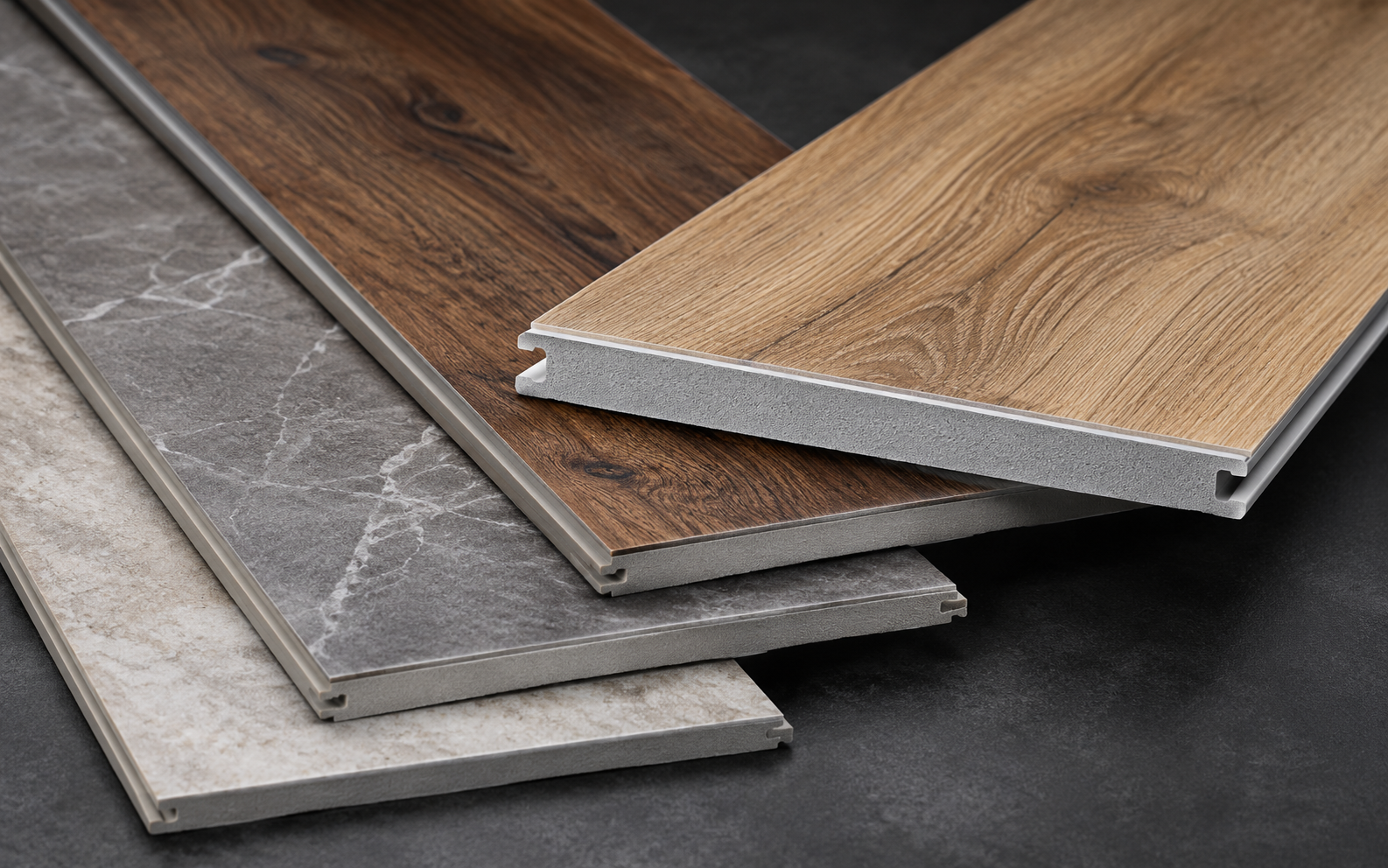
The core is the rigid mineral-filled composite layer that gives an SPC flooring plank its main body and structure. It sits beneath the decorative film and protective surface, and it may be combined with an attached backing depending on the product construction.
The core is not judged by one feature alone. Its quality depends on the formulation, mixing, extrusion or pressing process, cooling, curing, calibration, cutting, and inspection. The same nominal thickness can produce different results when the raw materials, process control, or production tolerances are different.
Buyers should ask the supplier to provide a layer structure that separates the core from the surface and backing. This prevents confusion when comparing 4mm, 6mm, or 8mm SPC flooring products, because total thickness does not automatically indicate core quality.
Which Factors Define SPC Flooring Core Quality?
Material formulation
SPC flooring cores are made from a mineral-filled polymer composite. The balance of mineral filler, polymer, stabilizers, pigments, and processing aids affects the finished core. The exact formulation is normally a manufacturer’s production know-how, but the buyer should still request a clear technical specification and a consistent approved sample.
A supplier should be able to explain which product characteristics are controlled during production. These may include appearance, thickness, weight, edge integrity, dimensional behavior, and compatibility with the specified click profile or backing.
Density and uniformity
Density can be a useful quality-control indicator, but it should not be used as a standalone ranking system. A higher number does not automatically mean a better product if the core is not uniform, the dimensions are unstable, or the finished plank does not match the approved sample.
Ask how density is sampled, how frequently it is checked, and whether the result is recorded by batch. The most useful comparison is between products made to the same construction, thickness, size, and backing conditions.
Thickness consistency
Core thickness affects the finished plank, click-lock fit, carton weight, and installation planning. The manufacturer should control thickness across the width and length of the plank, not only at one convenient inspection point.
When approving samples, compare several pieces from the same production batch. Check whether the edges sit evenly, whether the click profile aligns, and whether the finished surface remains consistent from piece to piece.
Dimensional stability
SPC flooring must retain its intended dimensions within the supplier’s stated quality requirements. Temperature, humidity, formulation, cooling, and storage can all influence dimensional behavior. A credible supplier should provide the relevant test method, sample information, and result rather than making a broad stability claim without evidence.
Buyers should also ask how the factory manages production conditions and storage before packing. A technically good core can still create problems if planks are packed before the production process has stabilized or if the goods are stored incorrectly.
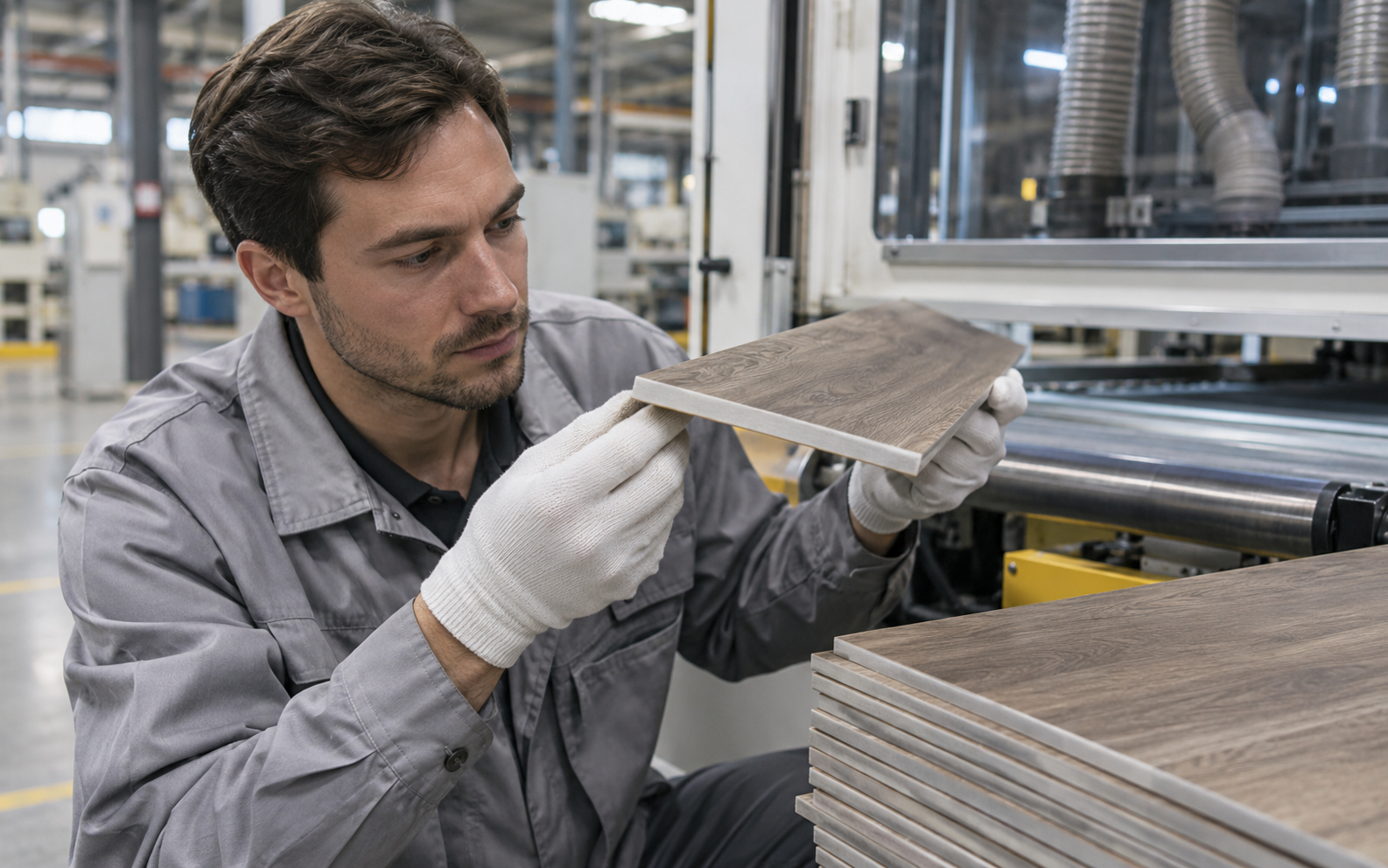
Flatness and edge integrity
Flatness affects how planks sit together and how the finished product looks after installation. Edge integrity matters because click-lock profiles are machined into the plank and must survive handling, packing, transport, and installation.
Inspect the plank under consistent lighting and on a flat inspection surface. Look for visible bowing, twisting, chipped edges, weak locking sections, uneven bevels, and surface marks that were not present on the approved sample.
Why One Density Number Is Not Enough
It is tempting to compare SPC flooring quotes by asking for the highest density. This can lead to an incomplete decision. Density should be reviewed together with thickness, plank dimensions, core uniformity, surface construction, backing, click profile, and test information.
Two products with similar density can behave differently if their formulations, cooling conditions, dimensional tolerances, or machining processes are different. Likewise, a product with a lower quoted density may still be suitable for its intended product position when the complete construction and quality controls are properly defined.
A better purchasing method is to create a product scorecard. Record the supplier’s stated construction, sample result, test information, inspection frequency, and approved tolerance. Then compare suppliers using the same fields instead of relying on a single headline specification.
How to Evaluate Core Quality from Samples
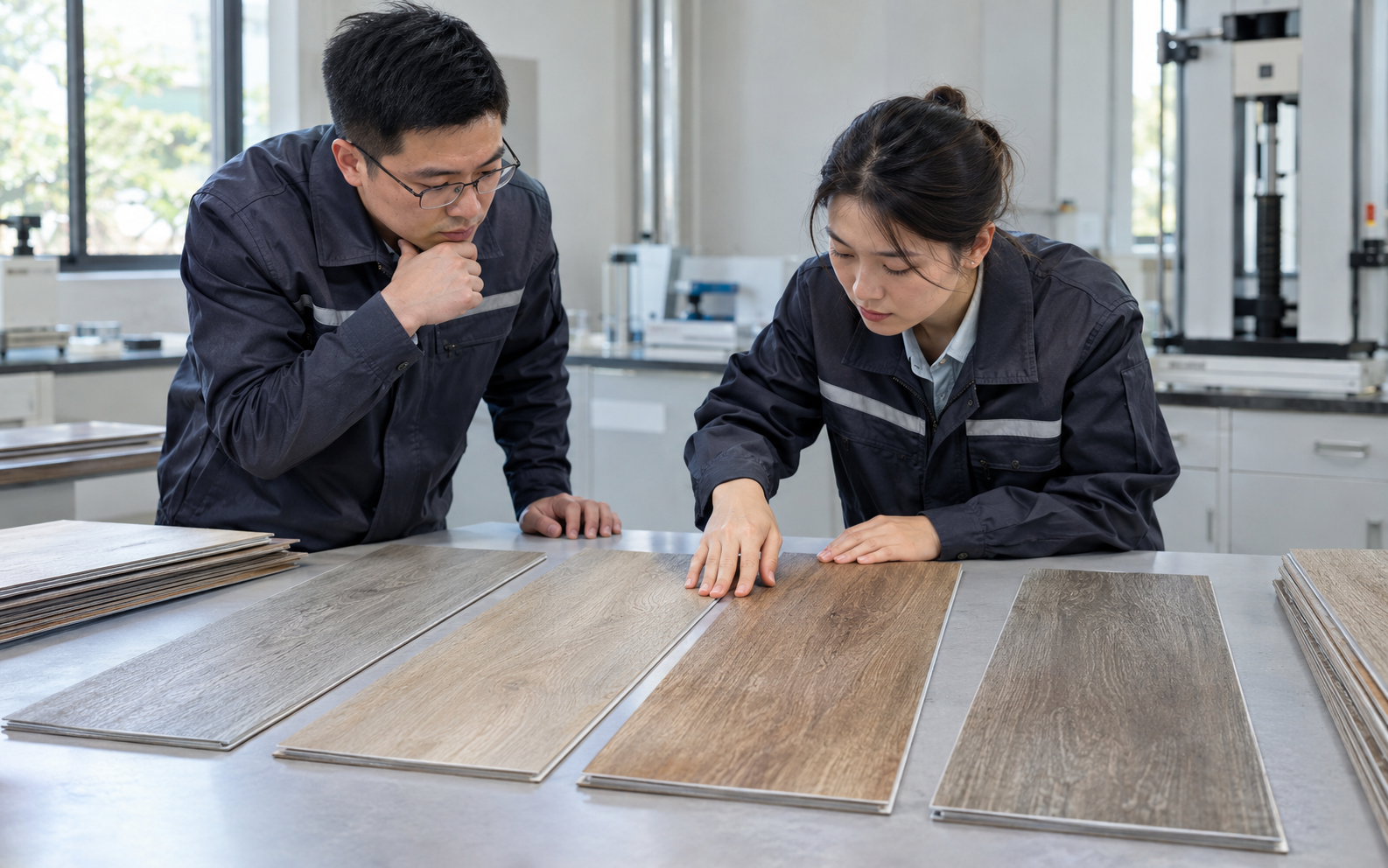
Samples cannot replace laboratory testing, but they can reveal whether a supplier follows a consistent production process. Use several pieces rather than inspecting only one attractive sample.
- Check the edge: review the cut edge, corner strength, click profile, and any visible voids or irregularities.
- Compare several pieces: place samples side by side and look for changes in thickness, color, surface finish, and edge alignment.
- Review the backing: confirm whether the attached IXPE or EVA layer is included in the quoted construction and whether it is bonded evenly.
- Inspect the surface: check print clarity, embossing, gloss, scratches, pinholes, and marks under consistent light.
- Record the reference: keep the approved sample, technical sheet, color reference, and packaging specification together in the purchase file.
Do not describe a sample as proof of long-term performance without supporting test data. The sample is a reference for construction and appearance; the manufacturer’s test records and agreed inspection plan provide the evidence for production control.
Where Quality Control Should Happen in the Factory
Core quality is easier to maintain when controls are placed throughout production rather than only at final packing. Ask the SPC flooring manufacturer to explain the following checkpoints:
- Incoming material control: how raw materials are identified, stored, and checked before use.
- Mixing and processing control: how the formulation and process conditions are monitored during production.
- Calibration and cooling control: how thickness, flatness, and dimensional behavior are managed before cutting.
- Machining control: how click profiles, bevels, and edges are checked after processing.
- Final inspection: how appearance, dimensions, packing, labels, and quantity are verified before shipment.
The exact process may vary between factories, but the supplier should be able to describe who performs each check, how results are recorded, and what happens when a batch does not meet the approved requirements.
Documents to Request from an SPC Flooring Manufacturer
A professional supplier should be able to provide documents that match the specific product construction being quoted. Ask for:
- A technical data sheet showing total thickness, core construction, surface, backing, dimensions, and tolerances.
- Relevant test reports with the test method, sample description, date, and result.
- A sample approval record with the agreed color, texture, edge, and packaging reference.
- A quality-control or inspection plan for mass production.
- A packing list format showing carton quantity, square meters, gross weight, and loading information.
- A clear explanation of how nonconforming goods are handled before shipment.
Check that the documents describe the same product you are buying. A generic report for another thickness, surface, or construction should not be treated as proof for the current order.
SPC Flooring Core Quality Scorecard for Buyers
| Quality area | What to compare | Evidence to request |
|---|---|---|
| Core construction | Material structure, total thickness, backing, and plank size | Technical data sheet and approved sample |
| Density and uniformity | Sampling method, batch result, and consistency between pieces | Internal inspection record or agreed test report |
| Dimensions | Thickness, length, width, flatness, and tolerances | Inspection plan and production measurements |
| Edges and click profile | Locking fit, bevel quality, chipping, and machining consistency | Sample approval and pre-shipment inspection |
| Batch consistency | Color, surface, core appearance, and repeat-order control | Color reference, sample record, and batch traceability |
Questions to Ask Before Approving a Bulk Order
Before confirming production, ask the supplier these questions:
- Which core construction is included in the quotation, and does the total thickness include backing?
- How is core density sampled and recorded for each production batch?
- What tolerances apply to thickness, length, width, and flatness?
- How are click-lock edges checked after machining?
- Can the manufacturer keep the approved core and surface construction consistent for repeat orders?
- Which test reports apply to the exact SKU, thickness, and surface being quoted?
- What inspection stage is available before packing and before shipment?
- How will the supplier handle a batch that does not match the approved sample?
How ChangFlor Can Support a More Reliable SPC Flooring Purchase
ChangFlor can help buyers organize an SPC flooring specification around the complete product construction rather than one isolated number. Discuss the target thickness, core construction, surface, backing, click profile, packaging, quantity, and destination before requesting a final quotation.
For related purchasing questions, review our SPC flooring wear layer guide, SPC flooring thickness guide, and guide to importing SPC and LVT flooring from China. You can request a sample through the free sample page or send your complete product brief through the contact page.
Final Checklist
- Separate core quality from total plank thickness.
- Use density as one indicator, not the only selection criterion.
- Check thickness, flatness, edge integrity, and batch uniformity.
- Compare samples made to the same construction and finish.
- Request documents that match the exact product being quoted.
- Approve the sample, tolerance, color, surface, and packaging before production.
- Agree on the inspection plan and nonconformity process before shipment.
- Keep all approved references for repeat orders.
Conclusion
Reliable SPC flooring core quality comes from a controlled construction and a repeatable manufacturing process. Density matters, but buyers should evaluate it together with uniformity, dimensional stability, flatness, edge quality, documentation, and batch consistency.
When the supplier provides the same technical information, sample reference, and inspection plan for every quotation, importers and distributors can compare products more fairly and reduce surprises after shipment. Send ChangFlor your target construction and purchasing requirements to begin a sample and quotation review.