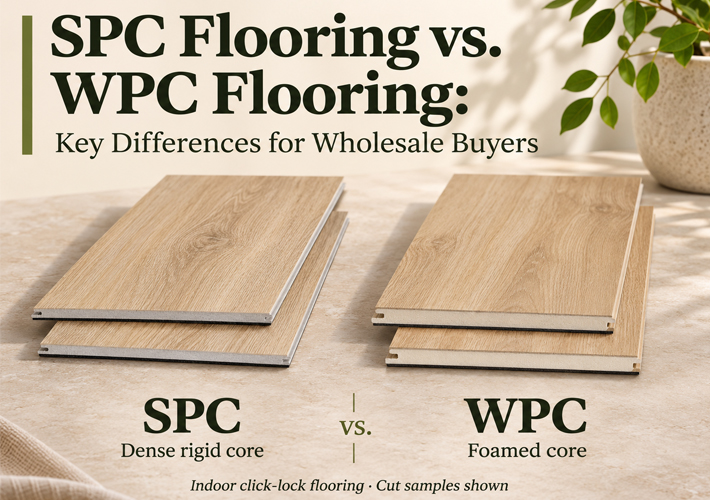
When buyers compare SPC flooring and WPC flooring, the decision should begin with construction rather than a single sales claim. Both products can provide realistic wood or stone visuals, but their core materials, feel, weight, product positioning, and quotation structure are different.
This guide explains the main differences between SPC flooring and WPC flooring for importers, distributors, and private-label buyers. It also shows how to compare samples, technical documents, packaging, and wholesale quotations on the same basis.
What Is the Difference Between SPC Flooring and WPC Flooring?
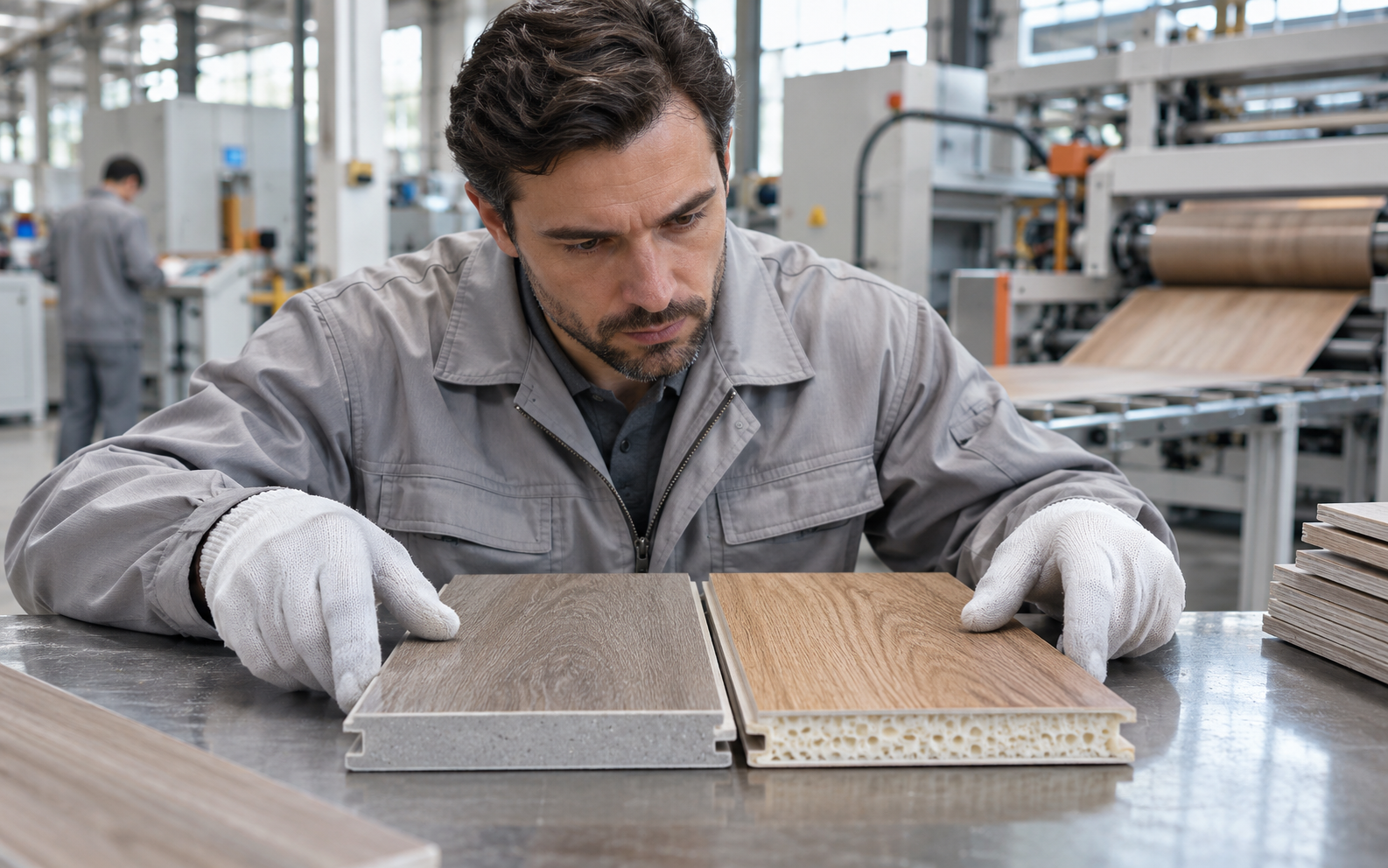
SPC flooring uses a rigid mineral-filled composite core, while WPC flooring uses a wood-plastic composite core that is generally engineered to provide a softer and more cushioned feel. The exact formulation varies by manufacturer, so buyers should always check the technical data sheet for the specific product being quoted.
The difference in core construction can influence the plank’s weight, rigidity, sound feel, surface response, edge machining, and commercial price. It does not mean that one product is automatically right for every buyer. The better choice depends on the target product line, customer expectations, logistics, and the supplier’s ability to keep the approved construction consistent.
SPC Flooring vs. WPC Flooring at a Glance
| Comparison area | SPC flooring | WPC flooring |
|---|---|---|
| Core structure | Rigid mineral-filled polymer composite | Wood-plastic composite core |
| Product feel | Firm and stable underfoot | Often softer and more cushioned |
| Weight and handling | May be heavier because of mineral content | May offer a lighter or more resilient handling profile depending on construction |
| Design position | Often positioned around rigidity, dimensional control, and value efficiency | Often positioned around comfort, acoustic feel, and a premium resilient-flooring experience |
| Key buyer checks | Core uniformity, flatness, edge integrity, click fit, and dimensional behavior | Core consistency, compression response, backing, thickness, and dimensional behavior |
| Quotation variables | Core construction, surface, backing, profile, packaging, and loading quantity | Core construction, surface, backing, profile, packaging, and loading quantity |
This table is a starting framework, not a substitute for product testing. Different factories can use different formulations and constructions under the same product name. Compare the actual sample and technical documents instead of relying on the label alone.
Core Construction and Product Feel
SPC flooring core
The rigid SPC flooring core gives the plank a firm structure. Buyers often review core density, thickness uniformity, flatness, edge quality, and the fit of the click-lock profile. These characteristics should be checked across several pieces rather than one sample.
SPC flooring can be a practical choice for product lines that need a firm plank and a clearly defined construction. The final result still depends on formulation, production control, surface layers, attached backing, and installation conditions.
WPC flooring core
WPC flooring uses a wood-plastic composite core and is often developed to provide a more cushioned response. The buyer should review how the core reacts to compression, how the plank returns to shape, and whether the surface, backing, and locking system are designed as one complete construction.
A softer feel does not remove the need for dimensional and quality control. Ask the manufacturer to explain the core specification, thickness tolerance, backing, packaging conditions, and inspection process for the exact WPC product being quoted.
How Core Construction Affects Purchasing Decisions
Rigidity and handling
SPC flooring and WPC flooring can feel different when samples are handled, stacked, packed, and installed. The buyer should assess whether the plank is easy to move without edge damage, whether the cartons remain stable, and whether the click profile tolerates normal handling.
Weight and logistics
Core formulation and total thickness affect carton weight, pallet quantity, loading plans, and inland handling. Do not compare the two products only by price per square meter. Request pieces per carton, square meters per carton, gross weight, carton dimensions, and estimated loading quantity for each construction.
Sound and comfort expectations
Product feel and sound response are influenced by the core, attached backing, subfloor, room conditions, and installation method. A buyer should compare samples with the intended backing and communicate the expected product positioning clearly to the supplier.
Surface and wear specification
Neither SPC nor WPC should be selected from the core name alone. Compare the wear layer, decorative film, surface finish, embossing, gloss, edge profile, and backing. For more detail, see our SPC flooring wear layer guide.
How to Compare SPC and WPC Samples Fairly
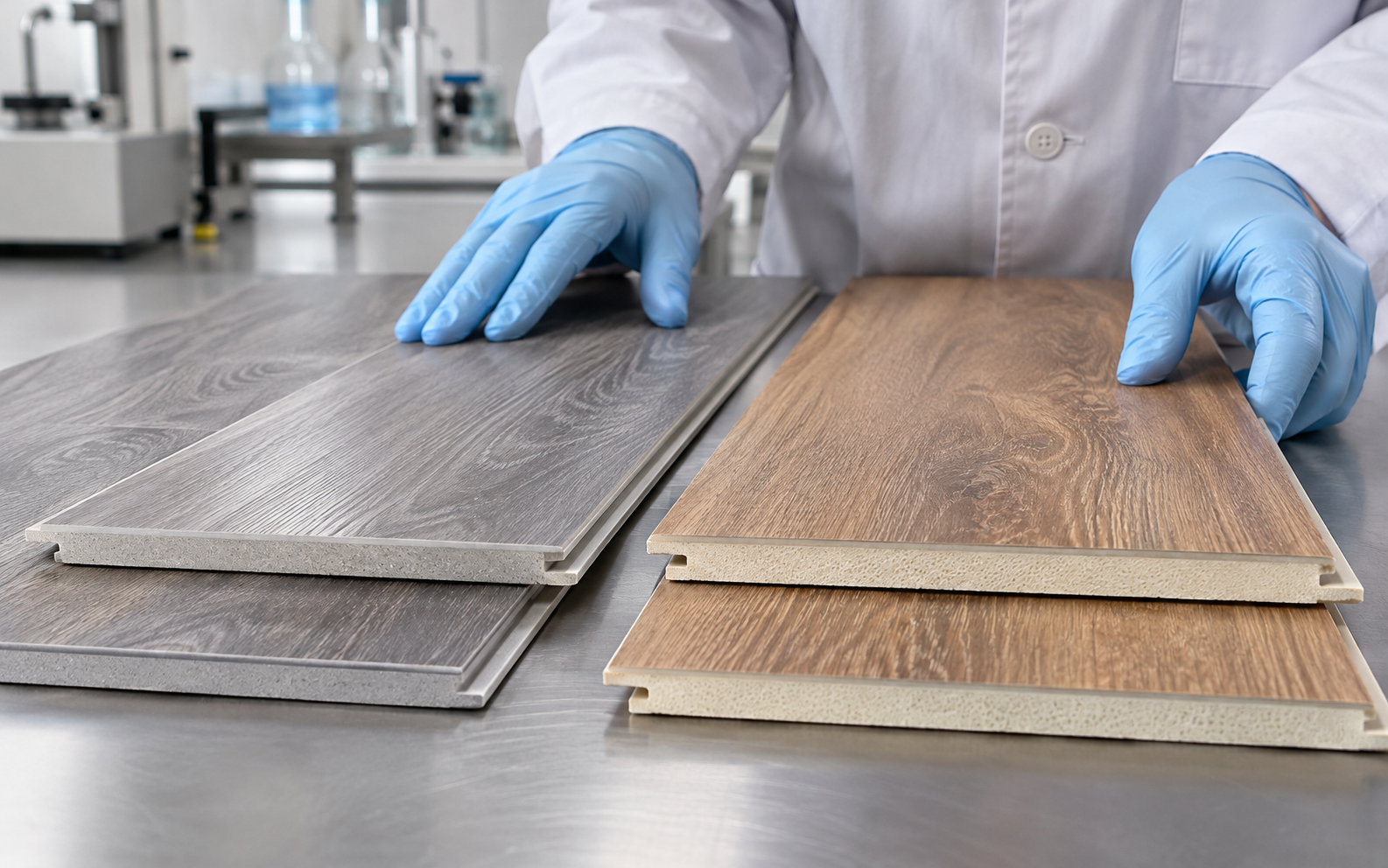
A fair comparison uses similar product conditions. Ask the supplier to keep plank size, total thickness, surface finish, decorative design, wear layer, backing, and edge profile as close as possible before comparing the core construction.
- Compare the same product position: do not compare an entry SPC product with a premium WPC product and treat the result as a core-only comparison.
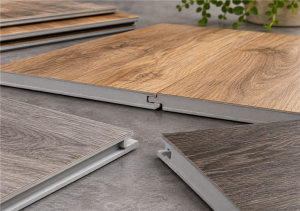
- Check the side profile: review the visible layers, edge machining, click profile, and backing attachment.
- Handle several pieces: compare firmness, weight, surface response, and consistency between pieces.
- Review the sample under the same light: check color, texture, embossing, gloss, and visible surface defects.
- Keep the approved reference: record the exact construction and sample code before requesting a bulk quotation.
Visual inspection is useful for screening, but it does not replace testing. Ask the supplier for documents that apply to the exact product and construction being quoted. A report for another thickness or another core should not be presented as proof for the current SKU.
Wholesale Cost: What Buyers Should Compare
The cheaper product is not always the lower-cost option after packing and shipping are included. Compare the same commercial assumptions for both SPC flooring and WPC flooring:
- Product construction, plank size, and total thickness.
- Wear layer, decorative film, surface finish, and backing.
- Pieces per carton, square meters per carton, carton weight, and pallet plan.
- Minimum order quantity, sample cost, tooling, and private-label requirements.
- EXW, FOB, CIF, or other trade terms, using the same destination and currency.
- Lead time, inspection stage, documents, and procedure for nonconforming goods.
Ask the SPC flooring manufacturer or WPC supplier to separate recurring product cost from one-time development charges. This makes the quotation easier to compare and reduces the risk of unexpected costs after sample approval.
Questions to Ask the Manufacturer
Before choosing a supplier, ask the following questions:
- What is the exact core construction and how is it controlled by batch?
- Does the quoted total thickness include the attached backing?
- Which surface and wear-layer specifications are included?
- How are flatness, thickness, edge integrity, and click-lock fit inspected?
- Can the manufacturer reproduce the approved color, surface, and core construction for repeat orders?
- Which test reports apply to the exact SKU and thickness?
- What are the carton details, loading quantity, lead time, and inspection terms?
- Can the same design be developed in SPC flooring and WPC flooring versions?
Which Product Should a Wholesale Buyer Choose?
Choose SPC flooring when the product brief prioritizes a firm rigid construction, clearly defined core specifications, and a value position based on the complete product and logistics package.
Consider WPC flooring when the product brief prioritizes a more cushioned feel or a different premium resilient-flooring position, provided that the supplier can document the core, backing, dimensions, and quality controls.
In both cases, the best choice is the product that matches the buyer’s target market and can be reproduced consistently. Sample approval, technical documents, packaging data, and inspection terms should be part of the decision, not an afterthought.
How ChangFlor Can Help
ChangFlor can help buyers compare SPC flooring constructions, surface specifications, backing options, packaging, and private-label requirements before placing a bulk order. Send us the target design, plank size, thickness, quantity, destination, and product position so that the quotation is based on clear assumptions.
You can also review our SPC flooring thickness guide and guide to importing SPC and LVT flooring from China. For samples, use the free sample page, or send your complete requirements through the contact page.
Final Checklist
- Compare the actual core construction, not only the SPC or WPC product name.
- Use equivalent thickness, surface, backing, and plank-size conditions.
- Review core uniformity, flatness, edge quality, and click-lock fit.
- Compare carton weight, packing configuration, and loading data.
- Request documents that match the exact product being quoted.
- Approve physical samples before mass production.
- Confirm repeat-order consistency and the nonconformity process.
Conclusion
SPC flooring and WPC flooring can both serve strong wholesale product strategies, but they are not interchangeable specifications. Their core construction influences feel, handling, logistics, quotation structure, and product positioning. Buyers who compare the complete construction and ask for matching technical evidence can choose more confidently and reduce surprises after shipment.