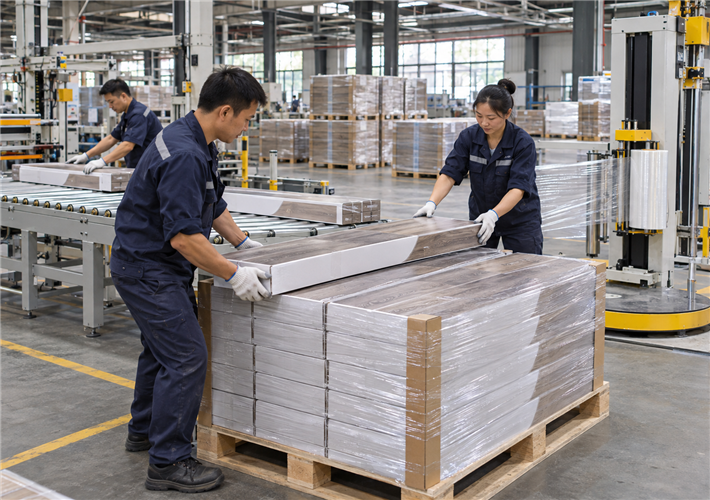
Export packaging is part of the product specification when you buy SPC flooring for distribution, private-label projects, or multi-site installation. A good package protects the click system, preserves carton count, and gives the buyer clear information from the factory to the destination warehouse. This guide explains how to plan SPC flooring packaging for export, including cartons, pallets, container loading, and pre-shipment checks.
What export packaging should achieve for SPC flooring
SPC flooring is dimensionally stable, but the finished product still has long, rigid boards with exposed edges and click profiles. During handling, cartons may be lifted, stacked, moved by forklift, and exposed to vibration, pressure, and changing humidity. Export packaging should therefore do four jobs:
- Keep boards flat and prevent carton corners from collapsing.
- Protect click locks, decorative surfaces, wear layers, and attached underlay.
- Make the quantity, batch, color, and installation information easy to verify.
- Use the available container space efficiently without creating unsafe stack pressure.
The right solution depends on plank size, thickness, packing quantity, pallet policy, destination climate, and whether the order uses standard or private-label cartons. A responsible SPC flooring manufacturer should confirm these points before mass production.
1. Choose the carton structure and packing quantity
Start with the board dimensions and the square meters or square feet required in each carton. Cartons should be long enough to support the plank without forcing the ends against the box, while the internal fit should prevent excessive movement. A carton that is too loose allows boards to slide; a carton that is too tight can transfer impact directly to the click edges.
For SPC flooring carton packing, confirm the following in the approved packing specification:
- Plank size, thickness, and the number of pieces per carton.
- Coverage per carton and the conversion between square meters and square feet.
- Carton dimensions, gross weight, net weight, and carton tolerance.
- Board orientation, protective interleaf or foam where needed, and end protection.
- Carton board grade, moisture resistance, closure method, and pallet pattern.
For products with 4 mm, 6 mm, or 8 mm thickness, the pieces-per-carton calculation should be checked against the final weight and carton compression strength. Do not approve a carton only because the coverage looks convenient. The carton must also be comfortable for warehouse staff to handle and strong enough for the planned stack height.
2. Protect click locks, edges, and the backing layer
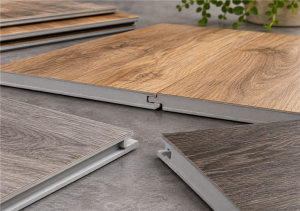
The most valuable part of the package is often the protection that cannot be seen after the carton is closed. Click-lock profiles need clearance from impact at the carton ends. Rigid corner boards, folded paper protection, or shaped inserts can reduce damage when cartons are set down or moved by forklift.
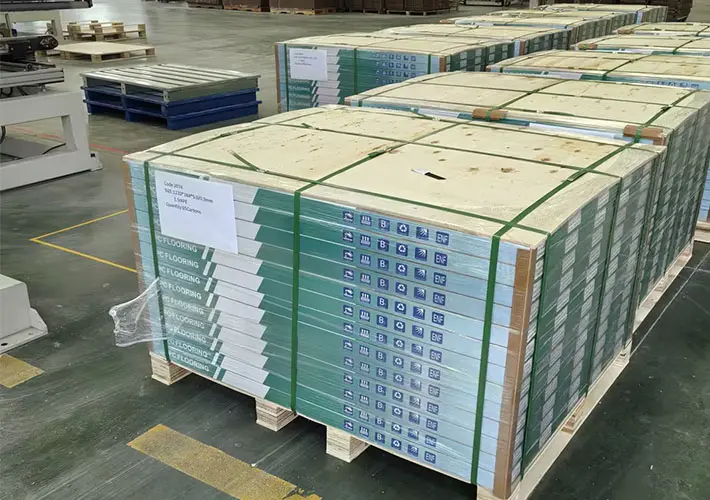
Check that the packaging does not rub against the decorative surface or leave pressure marks on the wear layer. If the flooring has an attached IXPE or EVA pad, the package should prevent the backing from being compressed unevenly. For beveled products, extra attention is needed at the ends and corners because a small impact can be visible after installation.
Ask the factory to send photos of an opened carton and a packed carton. The photos should show how the first and last boards are protected, how the click edges are oriented, and whether the boards can move inside the box. This simple check is more useful than relying on a carton artwork proof alone.
3. Use pallets, corner boards, and stretch film as one system
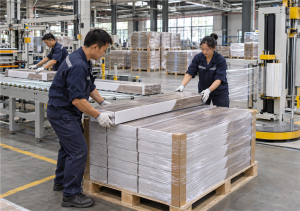
Pallet packaging is not just a wrapping step. The pallet, carton footprint, strapping, corner boards, and stretch film must work together. A pallet that is too small leaves carton edges unsupported. A pallet that is too large may waste container width and create unstable overhang.
- Keep the carton footprint aligned with the pallet deck whenever possible.
- Use dry, sound pallets with enough load capacity for the full stack.
- Place corner boards under the strap path so straps do not crush carton edges.
- Use stretch film to stabilize the load, but avoid excessive tension against long cartons.
- Add a top sheet or cap when dust, condensation, or roof leakage is a concern.
For destinations that require heat-treated or certified wood packaging, confirm the pallet requirement before production. The pallet standard can affect the number of cartons loaded and the total container utilization.
4. Plan SPC flooring container loading before production
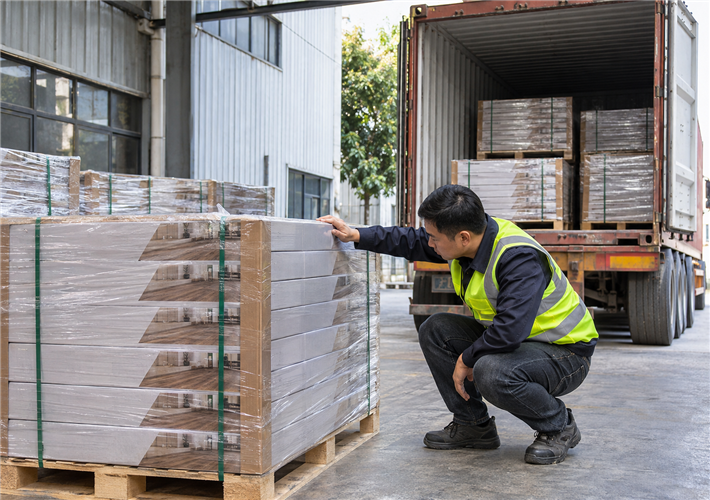
Good SPC flooring container loading starts with a loading plan. The plan should show whether the order will be palletized or floor-loaded, how many cartons are in each row, and where different colors or batches are positioned. This helps the buyer compare the packing list with the actual loading photos.
For palletized cargo, distribute weight across the container floor and avoid placing a heavy pallet on a weak or uneven section. Keep the center of gravity low and use dunnage or load bars when a gap could allow movement. For floor-loaded cartons, use a consistent pattern that supports the lower layers and does not create a tall, leaning wall near the doors.
Ask the supplier for the following before the container is sealed:
- Final carton count and pallet count.
- Loading sequence by color, batch, or SKU.
- Estimated gross weight and the container utilization plan.
- Photos of the first row, middle section, and completed door area.
- Seal number and the date of loading.
These records are especially important for mixed orders. Clear loading information reduces receiving time and makes it easier to find a specific batch if a project needs a replacement carton.
5. Protect the cargo from moisture, compression, and vibration
SPC flooring is water resistant as a finished surface, but cartons, paper labels, and attached underlay can still be affected by moisture. Allow cartons to be packed and stored in a dry area before loading. Avoid loading wet pallets or cartons that have been placed directly on a damp floor.
During a long ocean shipment, temperature changes can create condensation inside the container. The packaging plan may include a container liner, desiccant, a moisture barrier, or a top cover depending on the route and season. These measures should be selected with the freight forwarder and the manufacturer rather than added randomly.
Compression is another common cause of carton damage. The bottom cartons carry the load above them, so the stack height and pallet pattern must be tested against the actual carton weight. Vibration can also loosen straps and create rubbing between cartons. A short trial shipment or internal handling test can reveal problems before a full container is produced.
6. Make labels and traceability easy to read
A professional SPC flooring export packaging system should identify the product without requiring the warehouse team to open every carton. The carton label can include the product name, collection, color, plank size, thickness, wear layer, coverage, pieces per carton, batch number, and country of origin when required.
Use the same SKU and batch language on the carton, packing list, commercial documents, and purchase order. If the order is private label, approve the artwork and barcode placement before printing. Avoid placing important information across a strap or on a surface likely to be hidden by stretch film.
Traceability is also a quality-control tool. If the buyer reports a damaged carton, the factory should be able to identify the production batch, packing date, inspection record, and loading photos. This makes corrective action faster and protects the consistency of future orders.
7. Check cartons, weight, and loading data before sealing
Before dispatch, compare the approved packing specification with the actual shipment. Randomly select cartons from different pallets and check the coverage, piece count, carton dimensions, and gross weight. Inspect corners and edges for crushing, open seams, water marks, or excessive strap pressure.
Do not rely only on the first pallet. The final pallets may have been packed later, may contain a different batch, or may have a different label. A pre-shipment inspection should sample the beginning, middle, and end of the order.
For a buyer, the most useful evidence is a short photo set: one opened carton, one protected carton end, one complete pallet, one pallet label, and the inside of the loaded container. These images create a practical record without replacing a formal inspection report.
8. Pre-shipment SPC flooring packaging QC checklist
- Carton dimensions and coverage match the approved specification.
- Pieces per carton and carton weight are within the agreed tolerance.
- Click locks, plank ends, decorative surfaces, and attached pad are protected.
- Cartons are dry, square, fully closed, and free from crushing.
- Pallets are stable, dry, correctly sized, and not overloaded.
- Corner boards, straps, and stretch film hold the load without crushing it.
- Labels show SKU, color, batch, thickness, coverage, and handling information.
- Loading photos and the final packing list match the actual cargo.
- Container floor, walls, and roof are clean and dry before loading.
- Seal number and loading date are recorded after the doors are closed.
9. Questions to ask an SPC flooring manufacturer
Before placing a repeat order, ask the supplier:
- Which carton board grade and pallet pattern are recommended for this plank size?
- How are the click edges and first and last boards protected?
- What is the maximum safe stack height for this carton weight?
- Can the factory provide loading photos and batch-level packing records?
- Can the carton, pallet, and label be customized for a private-label program?
- What packaging changes are recommended for humid routes or long transit times?
The answers should be specific to the product, not a generic promise that every shipment uses the same carton. Packaging is part of the supplier’s export capability, so it should be reviewed together with core quality, wear layer, and click-lock performance.
How ChangFlor supports export-ready SPC flooring
ChangFlor can coordinate product specifications, carton artwork, pallet packing, loading records, and pre-shipment checks for distributors, wholesalers, and project buyers. If you are comparing specifications, review our guides to SPC flooring core quality, wear-layer selection, and click-lock profiles. To discuss a sample or export quotation, visit Free Sample or Contact Us.
Final takeaway
The best SPC flooring packaging is planned before the first carton is printed. Confirm the carton construction, protect the click edges, stabilize the pallet, plan the container pattern, and record the final loading details. With a clear specification and a repeatable inspection checklist, buyers can reduce transit damage, speed up receiving, and build a more reliable SPC flooring supply chain.