
When buyers compare SPC flooring wholesale price, the lowest number on a quotation is rarely the complete cost. A better decision comes from comparing the same construction, the same commercial terms, and the same delivery assumptions. This guide explains the main cost drivers behind SPC flooring, how to compare 4mm, 6mm, and 8mm options, and which questions help importers and distributors request a more accurate supplier quote.
For a practical purchase decision, treat the quotation as a cost model rather than a single unit price. Product construction, finish, packaging, order quantity, loading plan, inspection, freight, duties, and payment terms can all change the final landed cost.
What Makes Up SPC Flooring Wholesale Price?
An SPC flooring quote normally combines several layers of cost. The exact balance depends on the product specification, order volume, destination, and trade term, but buyers should ask suppliers to separate the following items:
- Material construction: the rigid core, stabilizing layers, wear layer, decorative film, backing, and any attached underlayment.
- Manufacturing and finishing: pressing, profiling, click-lock machining, embossing, beveling, surface treatment, and quality control.
- Packaging: cartons, printing, protective materials, pallets, labels, and export packing requirements.
- Compliance and service: test reports, sample development, artwork changes, inspection support, and documentation requested by the destination market.
- Logistics and commercial terms: loading quantity, inland transport, ocean freight, insurance, duties, payment terms, and currency exposure.
Two suppliers may quote the same price per square meter while offering different wear-layer thicknesses, carton yields, packaging quality, or delivery terms. That is why a buyer should normalize the specifications before comparing suppliers.
How Product Construction Changes SPC Flooring Cost
The construction should be checked before discussing price. A quote is meaningful only when the supplier clearly states what is included in the total thickness and what belongs to the finished product.
Core and total thickness
A thicker plank may use more material and may require different tooling, packaging, and container planning. However, thickness alone does not prove better value. Buyers should confirm whether the stated thickness includes an attached IXPE or EVA backing, and whether the dimensions match the approved sample.
Wear layer and surface finish
The wear layer, texture, gloss level, embossing, and protective coating affect both appearance and manufacturing cost. A buyer should compare the complete surface specification instead of asking only for a price difference between two colors.
Click-lock profile and edge treatment
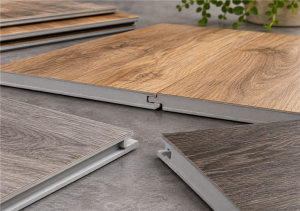
Click-lock machining, beveling, painted edges, and special profiles can change production time and yield. If the project requires a specific installation system, the quotation should identify the profile and any tooling or minimum-order implications.
Comparing 4mm, 6mm, and 8mm SPC Flooring Options
Many buyers compare 4mm, 6mm, and 8mm SPC flooring because these thicknesses often serve different product positions. The right choice depends on the full specification, not thickness in isolation.
- 4mm SPC flooring: often positioned as a material-efficient option where the subfloor, transition height, and product brief allow a slimmer construction. Confirm the core, wear layer, backing, and click performance before comparing price.
- 6mm SPC flooring: commonly used as a balanced specification for buyers who want a more substantial plank while keeping container and project economics under control. The exact value still depends on the layer structure and finish.
- 8mm SPC flooring: may be selected when the product brief calls for a thicker, more substantial construction. It can affect material consumption, carton weight, pallet height, and loading efficiency, so request a packing calculation with the quote.
Use the SPC flooring thickness guide as a starting point, then ask the manufacturer to quote each thickness using the same color, wear layer, surface, backing, packaging, and delivery term.

Surface, Design, and Customization Costs
Design choices can influence the unit price even when the plank size stays the same. Ask whether the quotation includes standard or custom decorative film, synchronized embossing, registered embossing, special gloss, painted bevels, or custom color matching.
Custom artwork can also create one-time costs. These may include cylinder or printing preparation, color proofing, sample approval, artwork revisions, and minimum order requirements. A clear quotation should distinguish recurring product cost from one-time development cost.
For repeat orders, keep the approved color reference and artwork revision in the purchase file. A lower quote is not useful if a change in decorative film creates shade variation between batches.
Packaging, Carton Yield, and Palletization
Packaging affects more than presentation. Carton dimensions, pieces per carton, square meters per carton, carton weight, pallet quantity, and loading pattern influence both warehouse handling and freight efficiency.
- Confirm the net and gross square meters per carton.
- Ask for carton dimensions and cartons per pallet.
- Check whether the quoted price includes export cartons, corner protection, palletizing, and stretch wrapping.
- Confirm the shipping marks, barcode requirements, and private-label artwork.
- Request a loading plan for the proposed order quantity.
A product with a slightly higher ex-factory price may produce a better landed cost if the packing configuration uses container space efficiently and reduces damage risk.
EXW, FOB, CIF, and Other Delivery Terms
Do not compare an EXW price directly with a CIF price. The delivery term determines which logistics costs are included and which remain with the buyer.
- EXW: the buyer generally arranges collection and most transportation from the factory.
- FOB: the supplier usually handles the agreed origin-side export process and delivery to the named port, while the buyer arranges the main freight and destination costs according to the contract.
- CIF: the quote generally includes cost, insurance, and freight to the named destination port, but destination handling, duties, taxes, and inland delivery may still be excluded.
- DDP or delivered pricing: confirm exactly which duties, taxes, customs services, and final delivery charges are included before treating the number as a landed cost.
When requesting quotes, give every supplier the same destination port or delivery address, expected order quantity, and target shipping window. Otherwise, differences in freight assumptions can look like differences in product cost.

How to Compare Supplier Quotes on the Same Basis
Build a simple comparison sheet before selecting a supplier. Each supplier should complete the same fields so that the decision is based on equivalent information.
| Cost area | Information to compare |
|---|---|
| Product | SKU, color, plank size, total thickness, wear layer, backing, surface, edge, and click profile |
| Packaging | Pieces and square meters per carton, carton size, gross weight, pallets, and loading quantity |
| Commercial term | EXW, FOB, CIF, DDP, currency, payment schedule, and quotation validity |
| Quality service | Sample approval, inspection method, test documents, and nonconformity handling |
| Delivery | Production lead time, shipping window, destination assumptions, and required documents |
Then calculate the expected landed cost using the same unit. Depending on the project, that may be cost per square meter, cost per carton, or total cost per container. Keep freight, duties, inspection, banking fees, and inland delivery visible rather than hiding them inside a single estimate.
Common Hidden Costs in a Low SPC Flooring Quote
A low initial quote may become expensive when key assumptions are missing. Watch for these questions during negotiation:
- Does the price include the requested wear layer and attached backing?
- Is the quoted color a standard design or a custom design with a separate setup charge?
- Does the minimum order quantity apply to one color, one thickness, or the whole shipment?
- Are cartons, pallets, export labels, and inspection support included?
- Will the final carton quantity and loading plan change the freight cost?
- Are test reports, certificates, or destination-market documents included?
- What happens if the mass-production product does not match the approved sample?
The purpose of these questions is not to force the lowest number. It is to make the offer comparable, repeatable, and suitable for the buyer’s real sales or project requirements.
What Information to Send When Requesting an SPC Flooring Quote
A supplier can prepare a more accurate quotation when the buyer provides a complete brief. Include:
- Target market and delivery location.
- Estimated quantity, order frequency, and preferred shipment plan.
- Required thickness, wear layer, backing, surface, edge, and click-lock construction.
- Color references, product images, or a request for samples.
- Carton artwork, private-label requirements, barcode needs, and pallet preferences.
- Required test reports, compliance documents, inspection standard, and installation information.
- Preferred trade term, payment method, and requested production schedule.
If you are importing from China for the first time, this guide to importing SPC and LVT flooring from China can help you organize the early purchasing questions.
Questions to Ask an SPC Flooring Manufacturer
Can the manufacturer quote several constructions?
Ask for a side-by-side quote for the same color and finish in 4mm, 6mm, and 8mm versions, with the layer structure and packing data shown for each option.
Can the supplier keep the approved sample consistent?
Confirm the sample approval process, production reference, shade control, inspection records, and procedure for handling a nonconforming batch.
Can the supplier explain the full shipment cost?
Request a packing list, loading plan, trade-term explanation, and destination assumptions. This makes the supplier’s offer easier to compare with other manufacturers.
How ChangFlor Can Support a More Reliable Quote
A good SPC flooring manufacturer should help buyers connect product specification with packaging and shipment planning. ChangFlor can support the quotation process with product samples, construction options, private-label discussions, packaging coordination, and pre-shipment communication based on the buyer’s brief.
Instead of asking only for the cheapest SPC flooring price, send the complete specification and target destination. The result is a quote that is easier to evaluate and less likely to change after sample approval.
Final Checklist Before Choosing an SPC Flooring Supplier
- Compare the same construction, not just the same thickness.
- Confirm whether backing is included in the total thickness.
- Align wear layer, surface, edge, click-lock, color, and artwork.
- Compare carton yield, palletization, and loading efficiency.
- Use the same EXW, FOB, CIF, or delivered basis for every supplier.
- Keep one-time development costs separate from recurring unit cost.
- Confirm inspection, documentation, lead time, and nonconformity handling.
- Evaluate the expected landed cost and supply reliability together.
Conclusion
SPC flooring cost is shaped by product construction, finish, packaging, order quantity, logistics, and commercial terms. A reliable buyer compares these elements in one clear framework instead of selecting a supplier from a single low price. When suppliers receive the same detailed brief, they can quote more accurately, and buyers can make a stronger decision between 4mm, 6mm, and 8mm SPC flooring options.
Send ChangFlor your target construction, quantity, destination, and packaging requirements to request a comparable SPC flooring quotation and sample plan.