Introduction: Why Is Self-Adhesive LVT Flooring Gaining Attention?
Flooring buyers are increasingly looking for products that balance appearance, installation efficiency, durability, and total project cost. For distributors, flooring wholesalers, property renovation companies, and commercial contractors, choosing the right flooring system means evaluating more than the initial price per square meter. Installation labor, subfloor preparation, maintenance requirements, replacement costs, and the suitability of the product for its intended environment all affect the final purchasing decision.
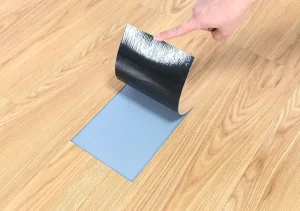
Self-adhesive luxury vinyl tile flooring, commonly known as self-adhesive LVT flooring or peel-and-stick LVT, is one option that meets these requirements in many interior applications. Unlike traditional glue-down LVT, which normally requires a separate flooring adhesive, self-adhesive LVT features a factory-applied adhesive layer protected by a removable release liner. During installation, the installer removes the liner and presses the tile or plank onto a properly prepared surface.
This installation method makes self-adhesive LVT particularly attractive for renovation projects where minimizing installation complexity is important. It is available in a wide variety of wood-look, stone-look, and contemporary decorative finishes, allowing buyers to coordinate flooring with different interior design styles.
However, self-adhesive LVT is not suitable for every environment. Its performance depends heavily on the quality of the adhesive, the condition of the subfloor, installation workmanship, and exposure to moisture and temperature changes. Understanding these factors is essential for making a commercially sound purchasing decision.
For international buyers sourcing flooring from China, Changflor provides a manufacturing-oriented approach to LVT flooring supply, helping importers and project buyers evaluate product specifications, decorative options, packaging requirements, and order suitability for their target markets.
The following guide explores the key advantages of self-adhesive LVT flooring and explains how B2B buyers can assess whether it is the right solution for their business.
1. Easy Installation and Reduced Labor Requirements
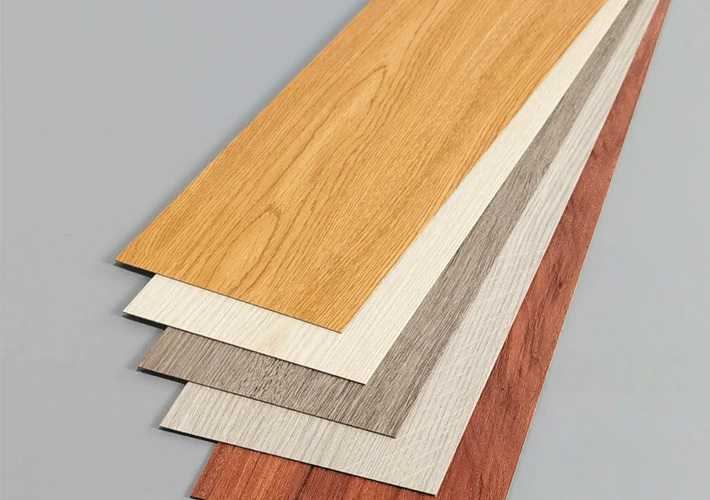
One of the most important advantages of self-adhesive LVT flooring is its relatively straightforward installation process. The adhesive is already incorporated into the product, eliminating the need to apply a separate layer of flooring adhesive in many standard installations.
For contractors, property renovation companies, and flooring distributors, this feature can simplify installation planning and reduce the number of materials required on site.
How does self-adhesive LVT installation work?
A typical installation involves several steps:
- Inspect the subfloor and confirm that it is suitable for the selected flooring product.
- Remove dust, grease, loose materials, and other contaminants.
- Repair cracks, depressions, and uneven areas, then allow any repair compounds to dry completely.
- Confirm that the surface meets the manufacturer’s requirements for moisture, smoothness, and temperature.
- Plan the layout and establish reference lines to maintain consistent alignment.
- Remove the release liner from the first tile or plank.
- Position the flooring carefully and press it firmly into place.
- Continue across the floor, maintaining consistent joints and alignment.
- Roll the installed floor if required by the manufacturer’s instructions.
- Inspect the finished surface and follow the specified restrictions on furniture placement and foot traffic.
Although the process is simpler than many traditional adhesive installations, preparation remains essential. Self-adhesive flooring is relatively thin, so irregularities in the underlying surface can become visible after installation.
Less dependence on additional adhesive products
Traditional glue-down LVT generally requires a compatible adhesive selected according to the subfloor, environmental conditions, and flooring specification. This adds another product to the procurement list and requires the installer to apply the adhesive at the correct coverage rate and observe the appropriate working time.
Self-adhesive LVT combines the flooring and adhesive layer in one product. For suitable applications, this can reduce the number of installation materials that must be purchased, stored, transported, and handled.
For distributors serving small contractors or renovation customers, a product with fewer installation components can also be easier to explain and demonstrate.
Nevertheless, some projects still require primers, leveling compounds, moisture-control systems, or other subfloor treatments. Self-adhesive flooring should not be assumed to eliminate these requirements.
Potentially shorter installation schedules
Because installers do not generally need to spread a separate flooring adhesive, self-adhesive LVT can simplify workflow and help reduce installation time under suitable conditions.
This is particularly useful for:
- Small retail spaces undergoing refurbishment.
- Rental apartments between tenants.
- Residential renovation projects.
- Temporary or short-cycle interior fit-outs.
- Small offices and service businesses.
- Property maintenance projects involving limited floor areas.
For contractors, reduced installation complexity may allow more efficient labor allocation. For property managers, a shorter installation process can help minimize disruption to building operations.
Actual installation speed depends on room geometry, the number of cuts required, subfloor condition, installer experience, and the size and format of the flooring. Large commercial spaces may require substantial preparation even when the flooring itself is easy to install.
A practical choice for renovation projects
Self-adhesive LVT can be particularly useful where a project requires a decorative floor covering without introducing a more complicated installation system.
However, it should not automatically be installed over existing flooring. The existing surface must be stable, clean, smooth, compatible with the adhesive, and approved by the product manufacturer. Loose tiles, textured finishes, unstable coatings, and surfaces affected by moisture can compromise adhesion.
For B2B buyers, the key selling point is not simply that the product is easy to install. It is that a suitable self-adhesive LVT system can simplify the installation process when the substrate and environment meet the required conditions.
2. Lower Installation Costs and Better Project Cost Control
Another major advantage of self-adhesive LVT flooring is the potential to reduce total installation costs. For importers, wholesalers, contractors, and property developers, this can make the product attractive in price-sensitive markets.
However, buyers should distinguish between the purchase price of the flooring and the total installed cost. A product with a low factory price does not necessarily provide the lowest final project cost.
Reduced expenditure on separate adhesive
Traditional glue-down LVT installations typically involve additional adhesive materials. Depending on the project, buyers may also need specialized application tools and equipment.
With self-adhesive LVT, the adhesive layer is already attached to the flooring. This can reduce separate adhesive purchases and simplify material estimation.
The actual savings depend on the adhesive system used in the alternative installation method, the product’s adhesive specifications, and whether the project still requires primers or moisture-control products.
Potential labor savings
Installation labor can represent a significant portion of total flooring expenditure, especially in markets with higher labor costs.
Self-adhesive LVT may reduce the time required for adhesive application and associated handling. This can be beneficial for smaller renovation projects and repetitive installations where the subfloor is already in suitable condition.
For contractors working on multiple properties, even modest time savings per room can improve scheduling flexibility and resource utilization.
However, it is important not to overstate this benefit. If a subfloor requires extensive grinding, leveling, moisture remediation, or removal of incompatible materials, preparation costs may outweigh any savings during installation.
Simplified logistics and material management
A self-adhesive flooring system can make site logistics easier because the flooring and adhesive are supplied as one product.
Potential benefits include:
- Fewer separate consumable products to coordinate.
- Simpler quantity estimation.
- Reduced need to store and handle additional adhesive containers.
- Easier organization for smaller renovation crews.
- More straightforward product demonstrations for distributors.
These advantages can be relevant for buyers serving regional markets where contractors prefer flooring systems with a relatively simple installation process.
Understanding total installed cost
B2B buyers should evaluate the complete cost structure rather than comparing factory prices alone.
| Cost factor | Self-adhesive LVT | Traditional glue-down LVT |
|---|---|---|
| Flooring material | Required | Required |
| Separate flooring adhesive | Usually not required for standard installation | Generally required |
| Subfloor preparation | Required as specified | Required as specified |
| Installation labor | May be lower for suitable projects | Depends on adhesive system and site conditions |
| Installation tools | Basic cutting and pressing tools, as specified | May include additional adhesive application tools |
| Replacement and maintenance | Individual tiles or planks may be replaceable | Individual pieces may also be replaceable, depending on the installation |
| Moisture-control measures | Required where specified | Required where specified |
The comparison is indicative rather than universal. Different LVT products and adhesive systems can have different requirements.
For example, a self-adhesive product may have a competitive purchase price, but it may not be the most economical choice for a large, high-traffic commercial floor that requires a specialized adhesive system.
Conversely, a small retail renovation with a suitable subfloor may benefit considerably from the simpler installation process.
A useful purchasing calculation
When comparing products from different manufacturers, buyers can estimate the total installed cost per square meter using the following formula:
Total installed cost per m² = flooring material + installation materials + subfloor preparation + labor + expected waste and replacement allowance.
The calculation should use the same project assumptions for every product being compared. It should also account for installation requirements, local labor rates, cutting waste, and any specified accessories.
For international distributors, this approach is more useful than evaluating self-adhesive LVT based solely on the factory quotation.
3. Attractive Designs and Flexible Interior Applications
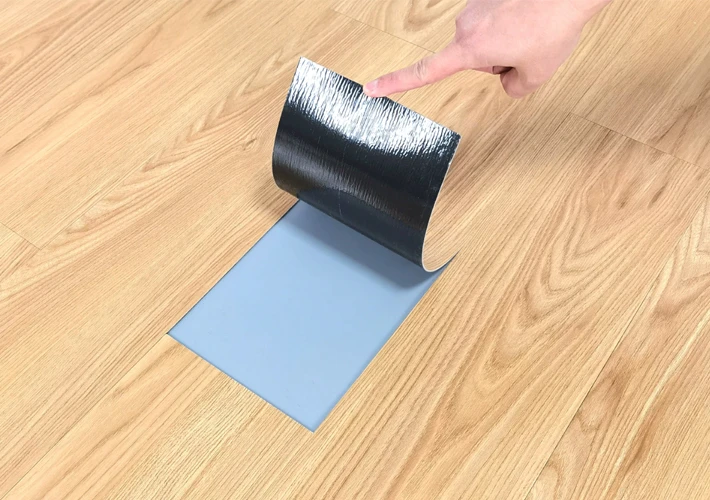
Self-adhesive LVT flooring is available in a broad range of decorative patterns, making it suitable for different interior design concepts.
The product typically uses a printed decorative layer protected by a transparent wear layer. Depending on the construction, embossing and surface finishing can add texture and help create the appearance of natural materials.
For commercial flooring distributors, design variety is important because different customer groups may prioritize different visual styles.
Wood-look self-adhesive LVT
Wood-look LVT is one of the most versatile options for residential and commercial interiors.
Common designs include:
- Light oak and Scandinavian-inspired finishes.
- Natural walnut and medium-brown wood tones.
- Grey wood and weathered timber patterns.
- Dark wood designs for sophisticated interiors.
- Contemporary linear wood-grain textures.
These finishes can complement bedrooms, living rooms, rental apartments, offices, boutique retail stores, and selected hospitality interiors where the product specification is appropriate.
Unlike natural timber, the decorative appearance of LVT does not require the same maintenance procedures as a traditional wood floor. Routine cleaning generally involves removing dust and using a compatible damp-cleaning method.
Nevertheless, the product should not be marketed as genuine hardwood. Its appearance and performance are determined by its vinyl construction, surface finish, wear layer, and manufacturing quality.
Stone-look and tile-inspired designs
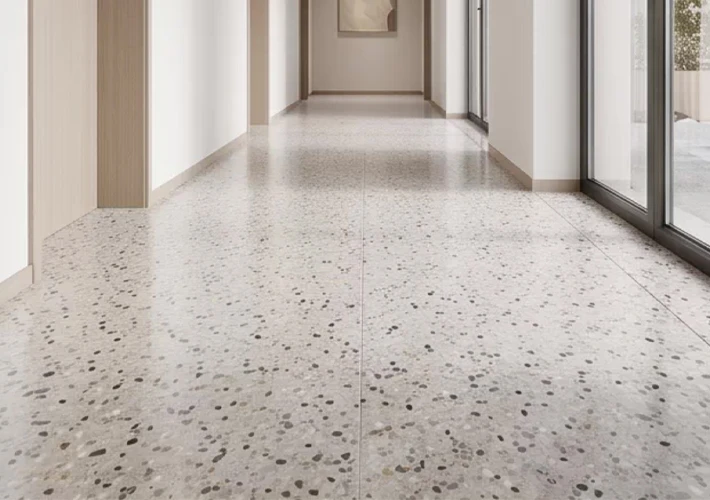
Stone-look self-adhesive LVT can reproduce the visual effect of concrete, marble, limestone, and other decorative surfaces.
These designs are useful for customers who want a contemporary appearance without installing natural stone or ceramic tiles.
Popular options include:
- Light grey concrete effects.
- Beige and cream stone patterns.
- Marble-inspired surfaces.
- Dark slate-like finishes.
- Minimalist monochromatic designs.
Compared with natural stone, vinyl flooring is generally lighter and easier to cut. Its installation system can also be simpler for suitable renovation projects.
However, self-adhesive LVT does not provide the same hardness, heat resistance, or structural properties as ceramic tiles and natural stone. Buyers should therefore position it according to its actual performance characteristics rather than presenting it as a direct technical replacement for every hard-surface material.
Consistent appearance for multi-unit projects
For distributors supplying apartment renovations, retail chains, or standardized commercial interiors, consistent color and pattern selection is important.
A reliable manufacturer should be able to provide product samples and technical specifications before a large order is placed. Buyers should also confirm color consistency between production batches, available stock, packaging details, and the feasibility of repeat orders.
For projects covering multiple rooms or locations, it is advisable to purchase enough flooring from the same production batch whenever practical and to retain spare material for future repairs.
Design flexibility for different customer segments
Self-adhesive LVT can support several market segments:
| Customer segment | Typical design preference | Purchasing consideration |
|---|---|---|
| Residential renovation retailers | Wood and stone effects | Appearance, price, ease of installation |
| Rental property contractors | Neutral, versatile colors | Replacement convenience and project cost |
| Small offices | Natural wood and understated stone | Appearance, maintenance, suitability for traffic |
| Retail fit-out contractors | Modern decorative patterns | Installation schedule and surface performance |
| Flooring wholesalers | Broad design range | Stock turnover, packaging, repeat availability |
| Project procurement companies | Coordinated specifications | Technical documents and batch consistency |
Not every self-adhesive LVT product is suitable for every application listed. Commercial buyers should verify the product’s traffic rating, wear layer, fire-performance documentation where required, and installation limitations before specifying it for a project.
4. Easy Daily Maintenance and Convenient Local Repairs
For building owners and facility managers, flooring maintenance can influence long-term operating costs. Self-adhesive LVT offers practical maintenance advantages because its vinyl surface is generally straightforward to clean and does not require the polishing or refinishing associated with some traditional flooring materials.
The actual maintenance requirements depend on the surface coating, wear layer, product construction, and cleaning instructions provided by the manufacturer.
Simple routine cleaning
In most suitable interior applications, routine maintenance includes:
- Sweeping or vacuuming to remove dust and loose debris.
- Wiping the surface with a slightly damp mop.
- Using a cleaning product approved for vinyl flooring.
- Removing spills promptly.
- Placing protective pads under furniture legs.
- Using entrance mats to reduce the amount of grit tracked onto the floor.
Abrasive brushes, aggressive solvents, and harsh cleaning chemicals should be avoided unless explicitly approved for the product.
The objective is to preserve the decorative surface while preventing dirt and grit from acting as abrasives under footwear and furniture.
Resistance to everyday stains
Many LVT products have surfaces that resist common household and light commercial stains when spills are cleaned promptly.
This can make them convenient for apartments, offices, reception areas, and other interior environments where routine cleaning is necessary.
Nevertheless, stain resistance is not absolute. Strong dyes, chemicals, prolonged exposure to certain substances, and inappropriate cleaning products may discolor or damage the surface.
Buyers supplying commercial customers should request product-specific cleaning instructions and relevant test data rather than relying on general claims about vinyl flooring.
Individual tile or plank replacement
One practical advantage of tile- and plank-format LVT is that localized damage may be addressed by replacing an individual piece rather than removing the entire floor.
For a self-adhesive installation, the repair procedure depends on the adhesive condition, surrounding flooring, and the manufacturer’s instructions.
A typical repair may involve:
- Identifying the damaged tile or plank.
- Carefully removing the affected piece without damaging the substrate.
- Cleaning and preparing the exposed surface.
- Checking that the substrate remains dry, smooth, and stable.
- Installing a matching replacement.
- Pressing the replacement firmly into place and checking the surrounding joints.
A replacement piece may be difficult to match exactly if the original product is discontinued or if the new piece comes from a different production batch. Retaining spare tiles or planks is therefore a useful practice for property managers and project contractors.
It is also important to recognize that individual replacement is not unique to self-adhesive LVT. Other modular flooring systems can offer the same benefit, depending on their installation method.
Practical maintenance planning for commercial buyers
For distributors and contractors, a maintenance plan should include the following:
- Recommended cleaning methods.
- Restrictions on cleaning chemicals.
- Furniture and equipment protection measures.
- Guidance for handling localized damage.
- Spare material requirements.
- Instructions for dealing with adhesive failure or moisture-related problems.
These details help customers understand how to maintain the flooring correctly and reduce avoidable complaints after installation.
5. Space Efficiency, Lightweight Construction, and Renovation Convenience
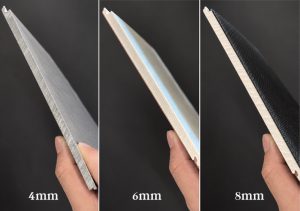
Self-adhesive LVT is generally a relatively thin and lightweight flooring product compared with many ceramic, stone, and engineered flooring systems. This can make it attractive for projects where floor height, transportation, or renovation complexity is an important consideration.
However, the actual thickness and weight depend on the specific product. Buyers should request the manufacturer’s technical data rather than assuming that all self-adhesive LVT products have identical dimensions.
A useful option for projects with limited floor-height allowance
In renovation projects, raising the finished floor level can create difficulties around doors, transitions, stairs, and adjoining rooms.
A thin LVT product may help minimize the additional height introduced by the new floor covering.
This can be especially useful in:
- Existing apartments.
- Small commercial units.
- Interior refurbishment projects.
- Rooms with limited clearance beneath doors.
- Renovations where multiple floor finishes meet.
The total finished height still includes any required primer, leveling compound, underlayment, or other preparation layer. In addition, the existing flooring must be suitable for the new installation.
A thin flooring material cannot compensate for an unstable or uneven subfloor. Surface irregularities may remain visible and can interfere with adhesion.
Lightweight material for transport and handling
Compared with many heavy mineral flooring products, LVT is generally easier to transport and handle because of its relatively low weight.
For importers purchasing from China, packaging efficiency, carton dimensions, pallet configuration, and container loading plans can influence the final landed cost.
A professional supplier should provide:
- Product dimensions and thickness.
- Weight per piece or carton.
- Pieces and coverage per carton.
- Carton dimensions.
- Pallet configuration, where applicable.
- Estimated loading quantities based on the selected packaging.
- Product identification and batch information.
These details allow buyers to estimate freight costs and coordinate warehouse operations more accurately.
Actual container quantities depend on the product format, carton size, packing method, container type, and transport restrictions. They should be calculated from the selected specification rather than using a generic loading estimate.
No complex mechanical locking system
Many self-adhesive LVT products do not require the click-lock profiles used by some floating vinyl flooring systems.
This can simplify the product construction and eliminate the need to align mechanical joints during installation.
However, the absence of a locking system also means that the flooring relies heavily on the adhesive bond and the condition of the substrate. If the adhesive is incompatible with the surface or affected by moisture, temperature, or contamination, the flooring may shift, curl, or develop open joints.
Therefore, the installation system should always be evaluated as a complete solution rather than judging it solely by its simplicity.
Potential benefits for renovation schedules
Because self-adhesive LVT does not normally require the same adhesive-spreading procedure as traditional glue-down flooring, it may be convenient for projects with tight installation schedules.
That does not mean every installation can be completed immediately. Leveling compounds, primers, moisture-control treatments, and other preparation materials may need to cure or dry before flooring is installed.
Similarly, the product may have acclimation or temperature-conditioning requirements. These must be followed according to the technical documentation.
For project buyers, the correct question is whether self-adhesive LVT reduces the overall project duration under the actual site conditions, not simply whether the product is advertised as easy to install.
6. Water Resistance, Surface Durability, and Important Limitations
Self-adhesive LVT is often selected for its practical surface performance. However, B2B buyers should distinguish between the water resistance of the vinyl material and the moisture sensitivity of the complete flooring installation.
This distinction is especially important when supplying products to humid climates, ground-floor properties, commercial spaces, and renovation projects.
Water-resistant flooring material does not mean waterproof installation
The vinyl surface of LVT is generally resistant to ordinary surface water. For example, brief exposure to a spilled drink or routine damp cleaning is normally manageable when the product is used according to its instructions.
However, the complete installation includes the adhesive layer, substrate, joints, perimeter edges, and any transitions. Water can enter through these areas or migrate through the subfloor.
For this reason, self-adhesive LVT should not automatically be considered suitable for:
- Shower floors.
- Swimming pool surrounds exposed to continuous wet conditions.
- Areas subject to standing water.
- Subfloors with unresolved moisture problems.
- Locations where water can penetrate beneath the flooring.
- Wet rooms requiring a certified waterproofing assembly.
The product should only be used in wet or moisture-prone environments if the specific manufacturer explicitly approves the application and the complete installation meets the applicable requirements.
Adhesion performance depends on the environment
The adhesive is a critical part of self-adhesive LVT flooring. Even if the vinyl surface remains intact, a weakened adhesive bond can cause installation problems.
Common risk factors include:
- Excessive moisture in the substrate.
- Dust or oil on the installation surface.
- Uneven or poorly prepared flooring.
- Temperatures outside the recommended installation range.
- Incompatible coatings or cleaning residues.
- Significant temperature fluctuations.
- Insufficient pressure during installation.
- Installation before required preparation materials have dried.
Potential symptoms include curling edges, lifting corners, open joints, movement, and partial detachment.
For international distributors, adhesive performance is a particularly important technical issue because climate conditions vary between markets. A product suitable for a controlled indoor environment may perform differently in a humid building or a room exposed to substantial temperature changes.
Buyers should request installation instructions and confirm that the adhesive system is compatible with the intended substrate and local conditions.
Understanding wear resistance
The service life of LVT depends on more than its decorative pattern or nominal thickness.
Important factors include:
- Wear-layer thickness and composition.
- Surface coating and abrasion resistance.
- Overall product construction.
- Quality of the adhesive.
- Subfloor condition.
- Foot traffic and furniture movement.
- Cleaning practices.
- Exposure to direct sunlight and temperature changes.
For commercial applications, buyers should request the wear-layer specification and relevant product test reports.
A thicker wear layer can provide greater protection against surface wear in comparable product constructions, but it does not independently guarantee a particular service life. Adhesion, dimensional stability, and the installation environment remain important.
Furniture loads and rolling traffic
Self-adhesive LVT may be suitable for selected offices, shops, and other commercial interiors. Nevertheless, heavy furniture, concentrated loads, rolling equipment, and frequent movement can place additional stress on the flooring and adhesive bond.
Before specifying the product for a commercial project, confirm whether the manufacturer approves it for the expected traffic and loading conditions.
Protective pads, suitable furniture glides, and compatible entrance mats can help reduce surface damage. For heavy rolling traffic or demanding commercial use, another LVT installation system may be more appropriate.
Fire, emissions, and compliance documentation
International buyers should also evaluate the compliance requirements of their target market.
Depending on the intended application, relevant documents may include:
- Technical data sheets.
- Installation and maintenance instructions.
- Fire-performance test reports.
- Indoor air emissions documentation.
- Applicable product conformity declarations.
- Quality management and manufacturing documentation.
- Other market-specific certificates or test results.
Requirements differ between countries and project types. A supplier should provide genuine, applicable documentation rather than making broad compliance claims that are not supported by product-specific evidence.
7. How to Choose a Reliable Self-Adhesive LVT Flooring Manufacturer in China
For importers, wholesalers, and commercial project contractors, selecting the right supplier is as important as choosing the right flooring specification.
A reliable manufacturer should offer consistent product quality, transparent technical information, stable production arrangements, and practical export support.
When comparing Chinese LVT flooring manufacturers, buyers should assess several key factors.
Evaluate product specifications before requesting a quotation
A detailed inquiry helps the supplier recommend an appropriate product and provide a more accurate price.
Buyers should specify:
- Product format: tile or plank.
- Overall thickness.
- Wear-layer thickness.
- Dimensions and edge design.
- Surface texture and decorative pattern.
- Adhesive type and release-liner details.
- Intended application and traffic conditions.
- Required technical standards.
- Packaging and labeling requirements.
- Estimated order quantity.
These details reduce misunderstandings and make quotations from different suppliers easier to compare.
For example, two products may look similar in photographs but differ in wear-layer thickness, adhesive performance, overall construction, or packaging. Comparing only the price per square meter can therefore produce misleading results.
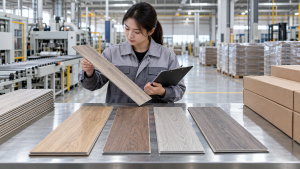
Check the manufacturer’s quality-control procedures
A manufacturer should be able to explain how it manages product quality during production.
Useful areas to investigate include:
- Incoming raw material inspection.
- Vinyl formulation and production controls.
- Decorative film and color consistency.
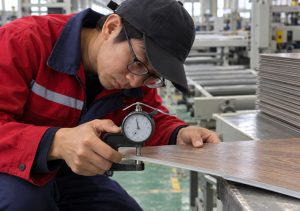
- Dimensional and thickness checks.
- Surface appearance inspection.
- Adhesive application and release-liner quality.
- Packaging inspection.
- Batch traceability and shipment records.
The precise inspection process varies by factory and product. Buyers should ask which checks are actually performed and whether supporting records or reports are available.
Where adhesion is a major concern, request relevant test information or representative samples so the product can be evaluated under realistic installation conditions.
Request samples before placing a bulk order
Samples help buyers examine color, surface texture, thickness, flexibility, edge quality, and general workmanship.
For self-adhesive LVT, the sample evaluation should also include the adhesive system.
A practical assessment may involve:
- Inspecting the product and its release liner.
- Installing it on the intended type of substrate.
- Following the manufacturer’s surface preparation instructions.
- Checking initial adhesion and edge behavior.
- Observing the installed sample under the expected indoor conditions.
- Reviewing cleaning and maintenance instructions.
- Comparing the product with the approved specification.
A brief sample test cannot establish long-term service life, but it can reveal obvious compatibility issues before a large order is committed.
Compare production capacity, MOQ, and lead time
B2B buyers need a supplier that can support both the initial order and future replenishment.
Questions worth asking include:
- What is the minimum order quantity for standard designs?
- Are custom colors or dimensions available?
- What is the production lead time for the requested quantity?
- Are repeat orders subject to minimum production runs?
- Can the manufacturer maintain consistent specifications across batches?
- What packaging and private-label options are available?
- How are damaged cartons or quality complaints handled?
Minimum order quantities and lead times vary according to product specifications, raw material availability, production schedules, and customization requirements. They should be confirmed in writing for each order.
Consider OEM and private-label services
For distributors developing their own flooring brands, OEM and private-label arrangements may provide additional commercial flexibility.
Depending on factory capabilities and order requirements, services may include custom carton printing, private-label packaging, product labeling, decorative selection, and specification coordination.
Buyers should clarify ownership and approval of artwork, packaging language, barcode requirements, and the documents needed for importation.
Changflor can be considered by international buyers looking for a Chinese flooring manufacturing partner for LVT-related product sourcing. Buyers should confirm the exact self-adhesive LVT specifications, available designs, minimum order quantities, and customization options directly with the company before making purchasing decisions.
Why work with Changflor?
Changflor focuses on SPC and LVT flooring supply from China, serving buyers who need flooring products for distribution, renovation, and project procurement.
For importers and wholesalers evaluating self-adhesive LVT flooring, the supplier selection process should center on specification accuracy, sample verification, consistent quality, and export readiness.
When discussing a potential order with Changflor, B2B buyers should provide their target market, intended application, preferred decorative styles, product dimensions, technical requirements, and estimated purchasing quantity.
This information helps establish whether the requested self-adhesive LVT product is available and whether its technical characteristics fit the intended project.
For applications with demanding moisture conditions, heavy rolling traffic, or strict commercial performance requirements, buyers should also compare self-adhesive LVT with conventional glue-down LVT and other flooring systems in Changflor’s product range.
The objective is to select the most appropriate flooring solution for the project rather than assuming one installation method is ideal for every application.
Conclusion: Is Self-Adhesive LVT Flooring the Right Choice for Your Business?
Self-adhesive LVT flooring offers several practical advantages for flooring distributors, importers, contractors, and renovation companies. Its factory-applied adhesive can simplify installation, reduce the need for separate adhesive products, and potentially lower labor costs in suitable projects. Its wide range of decorative patterns supports different interior styles, while its vinyl surface is generally easy to clean and individual tiles or planks may be replaceable when localized damage occurs.
Its lightweight construction and relatively thin profile can also make it attractive for selected renovation projects where transport, floor height, and installation convenience are important considerations.
However, self-adhesive LVT is not a universal replacement for every flooring system. The quality of the adhesive bond depends on proper subfloor preparation, moisture control, temperature conditions, and installation workmanship. Buyers should also assess wear-layer specifications, expected traffic, fire and emissions requirements, and the suitability of the product for the intended environment.
For B2B purchasing, the most effective approach is to compare the total installed cost, technical performance, supplier reliability, and repeat-order consistency rather than choosing solely on the basis of the initial price.
As a Chinese flooring manufacturer, Changflor welcomes inquiries from international flooring distributors, wholesalers, importers, and project buyers interested in evaluating LVT and SPC flooring solutions for their markets.
Contact Changflor to discuss your flooring requirements, request product specifications, and explore suitable designs for your next order.
Frequently Asked Questions About Self-Adhesive LVT Flooring
1. What is self-adhesive LVT flooring?
Self-adhesive LVT flooring is a luxury vinyl tile or plank product with a factory-applied adhesive layer protected by a removable release liner. The installer removes the liner and presses the flooring onto a properly prepared substrate, avoiding the need for a separate flooring adhesive in standard applications.
2. What are the main advantages of self-adhesive LVT flooring?
Its principal advantages include a relatively simple installation process, potentially lower installation costs, a wide range of decorative designs, straightforward daily cleaning, convenient localized replacement, and lightweight construction. Actual benefits depend on the product specification and project conditions.
3. Is self-adhesive LVT flooring waterproof?
The vinyl flooring material is generally resistant to surface water, but this does not mean the entire installation is waterproof. Water can penetrate through joints, edges, or the substrate and affect adhesion. Use the product in wet environments only when the manufacturer explicitly approves the application and the complete installation meets the necessary requirements.
4. Can self-adhesive LVT be installed over existing flooring?
Sometimes, but only when the existing surface is stable, clean, smooth, dry, and compatible with the adhesive system. Loose tiles, deep textures, unstable coatings, and moisture-affected surfaces can cause installation failure. The manufacturer’s instructions should determine whether installation over the existing floor is permitted.
5. Is self-adhesive LVT suitable for commercial projects?
It can be suitable for selected small offices, retail spaces, rental properties, and other interior projects. Buyers should verify the wear layer, adhesive performance, expected traffic, rolling-load requirements, and applicable compliance documents before specifying it for commercial use.
6. How long does self-adhesive LVT flooring last?
Service life varies with product quality, wear-layer construction, adhesive performance, subfloor preparation, traffic, maintenance, and environmental conditions. There is no single reliable lifespan that applies to every self-adhesive LVT product. Buyers should request product-specific performance information and warranty terms.
7. How does self-adhesive LVT compare with glue-down LVT?
Self-adhesive LVT has a factory-applied adhesive layer and can simplify installation in suitable applications. Traditional glue-down LVT generally uses a separate adhesive selected for the substrate and project conditions. The better choice depends on the installation environment, traffic requirements, labor costs, and total installed cost.
8. What should importers check before buying self-adhesive LVT from China?
Importers should evaluate product thickness, wear-layer specification, dimensions, adhesive quality, available designs, technical documentation, sample performance, packaging, MOQ, lead time, and repeat-order consistency. It is also important to confirm that the product meets the requirements of the intended market.
9. Can self-adhesive LVT be customized for private-label brands?
Customization possibilities depend on the manufacturer, product range, and order quantity. Buyers can inquire about decorative options, packaging design, private-label labeling, and other OEM arrangements. All customization details and minimum order requirements should be confirmed before production.
10. How can I request a quotation from Changflor?
Contact Changflor with your target market, intended application, preferred designs, product dimensions, required specifications, estimated order quantity, and packaging requirements. Providing these details will help the supplier assess your needs and prepare a more relevant quotation for your business.