
For a commercial flooring order, a polished sample is only the beginning. Before shipment, buyers need a repeatable way to confirm that the approved sample, technical specification, and mass-production goods are the same product. This SPC flooring quality control checklist is designed for importers, distributors, wholesalers, and project purchasing teams that want fewer surprises after the container leaves the factory.
The goal is not to inspect one attractive plank. The goal is to verify the complete construction, dimensions, surface, locking system, packaging, and records against the purchase specification. A clear checklist also gives the SPC flooring manufacturer an objective acceptance standard before production is released.
What Does SPC Flooring Quality Mean?
SPC flooring quality is the result of several connected controls rather than one thickness number or one laboratory result. A buyer should assess the rigid core, wear layer, decorative film, backing, click profile, dimensional consistency, surface finish, packaging, and documentation as one system.
Start with the approved reference sample and the written specification. Record the product name, color, plank size, total thickness, wear-layer thickness, surface texture, edge profile, backing construction, carton quantity, and packing artwork. If any of these details change during production, the buyer should review the change before shipment.
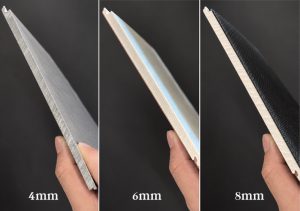
For a useful comparison of 4mm, 6mm, and 8mm constructions, see ChangFlor’s SPC flooring thickness guide. Thickness helps define a product, but it should never replace inspection of the complete layer structure and performance requirements.
Check the SPC Flooring Manufacturer’s Documents
Before inspecting physical goods, ask the supplier to provide the latest technical data sheet, packing list, approved artwork, installation instructions, and any test reports required for the destination market. The documents should describe the same SKU and revision that will be produced.
- Confirm the product code, color name, plank dimensions, total thickness, and wear-layer thickness.
- Check whether the quoted thickness includes attached IXPE, EVA, or another underlayment.
- Confirm the declared tolerances for length, width, thickness, squareness, and locking profile.
- Match the surface finish, embossing, gloss level, and edge treatment to the approved sample.
- Review carton quantity, square meters per carton, carton weight, pallet details, and loading plan.
- List the tests or declarations required by the buyer, project, or destination market.
Documents are not a substitute for inspection, but they create the baseline for inspection. If a specification is vague, the final inspection can become a discussion rather than a decision.
Inspect the SPC Flooring Core and Layer Structure
Cut or examine a representative sample to confirm the layer order and construction. The visible product may include a transparent wear layer, decorative film, rigid stone-polymer composite core, balancing layer, and attached backing. The buyer should understand which layers are included in the quoted thickness.
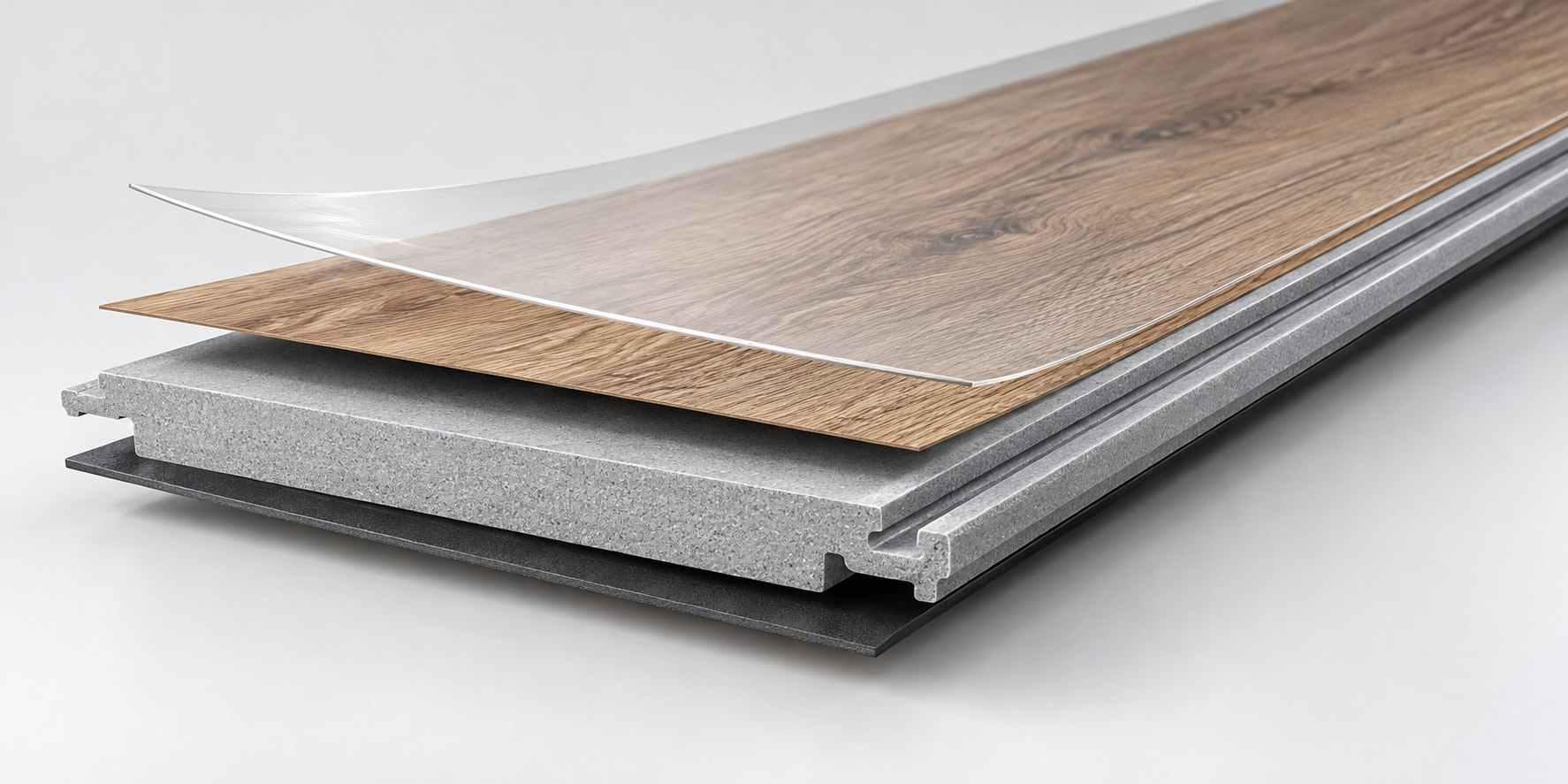
Look for a consistent core without obvious voids, delamination, contamination, or unusual color changes. The edge should be clean and the backing should be firmly attached when an attached pad is part of the specification. A visual check cannot confirm every performance property, but it can identify a mismatch between the approved sample and production goods.
Ask the SPC flooring manufacturer how core density, formulation, and dimensional stability are controlled. Do not convert an unverified density claim into a guaranteed performance statement. Instead, record the required range and the test method in the purchase specification.
Verify Length, Width, Thickness, and Dimensional Tolerances
Measure samples from different cartons and production positions, not only pieces selected from one convenient carton. Check length, width, total thickness, rigid-board thickness, squareness, straightness, and edge alignment against the written tolerance.
For 4mm, 6mm, and 8mm SPC flooring, confirm whether the advertised number means the rigid plank or the complete product with attached underlayment. This matters for door clearance, transitions, carton weight, freight planning, and like-for-like quotation comparisons.
| Inspection item | What the buyer should record | Why it matters |
|---|---|---|
| Plank length and width | Target size, sampling points, and allowed tolerance | Inconsistent dimensions can create visible layout and joint problems. |
| Total thickness | Whether backing is included and how the reading is taken | Prevents misleading comparisons between 4mm, 6mm, and 8mm offers. |
| Squareness and straightness | Approved method and acceptance range | Helps control gaps, misalignment, and installation complaints. |
| Click profile | Profile version, fit, and sample assembly result | Ensures cartons can be installed consistently across the order. |
Use the same method at pre-production approval and pre-shipment inspection. A change in measurement method can make two apparently different results impossible to compare.
Check the Click-Lock Profile and Edge Quality
Assemble planks from several cartons in both directions. The joint should close with normal installation pressure and should not require excessive force, visible hammering, or improvised correction. Check the assembled surface from a low angle for height differences, open joints, chipped edges, and pattern misalignment.
Inspect male and female profiles for crushed corners, incomplete milling, powder, burrs, and damage from handling. A click system can look acceptable on one plank but fail when production variation accumulates across a larger installation area. Photograph any rejected sample and record its carton or batch reference.
Evaluate Wear Layer, Decor Film, and Surface Finish
Compare production planks with the approved reference under the same lighting. Check color, shade, print repeat, embossing, gloss, bevel, and texture. The surface should not show obvious pinholes, scratches, coating marks, contamination, edge chipping, or inconsistent sheen.
Confirm the agreed wear-layer thickness and finish through the technical document and the agreed test method. Avoid describing a product as “commercial grade” or “heavy duty” unless the buyer has defined what that phrase means for the order. A measurable requirement is easier to inspect than a broad marketing label.
For wood-look SPC flooring, also review plank-to-plank variation and carton mixing. Some variation may be intentional for a natural appearance, but it should remain within the approved visual range.
Confirm Waterproofing and Dimensional Stability Data
Water resistance claims need a defined product construction and test method. Inspect the click joints, edge treatment, backing attachment, and surface condition, then confirm the applicable test information in the technical file. Do not promise that a floor is suitable for every wet environment without confirming the installation system and destination requirements.
Dimensional stability should be assessed using the agreed test or report, especially when the order will face temperature changes, long-distance transport, or large open areas. The buyer should also confirm acclimation, subfloor, expansion-joint, and installation instructions that apply to the product.
Review Packaging, Labels, and Container Loading
Packaging is part of SPC flooring quality control because a compliant plank can still arrive damaged or become difficult to trace. Check carton strength, corner protection, inner protection, pallet stability, stretch wrap, labels, batch information, and barcode or artwork details against the approved packing specification.

- Confirm carton quantity and square-meter calculation.
- Check carton labels, color names, product codes, and production or batch references.
- Inspect cartons for crushed corners, moisture exposure, torn wrapping, and unstable stacking.
- Compare the final packing list with the purchase order and container loading plan.
- Photograph the container condition, loading sequence, pallet marks, and sealed-door record where required.
Buyers importing from China can also review ChangFlor’s SPC and LVT importing guide when preparing documentation and logistics questions.
Create an SPC Flooring Pre-Shipment Inspection Checklist
A practical inspection report should make each requirement easy to mark as pass, fail, or requires correction. At minimum, include the following sections:
- Product identity: SKU, color, approved sample, production date, batch, and quantity.
- Dimensions: length, width, total thickness, core thickness, squareness, straightness, and tolerances.
- Construction: layer order, core appearance, backing attachment, wear layer, decor film, and surface finish.
- Assembly: click-lock condition, joint fit, edge quality, and multi-carton assembly.
- Appearance: shade, embossing, gloss, bevel, print variation, scratches, and visible defects.
- Packaging: cartons, labels, palletization, carton weight, packing list, and container loading.
- Documentation: technical data, test reports, approved artwork, installation instructions, and inspection photos.
Define the sampling level and acceptance criteria before production. If the buyer wants defects classified as critical, major, or minor, those definitions should be written into the inspection plan. The inspector should not have to invent a pass/fail rule after seeing the goods.
Questions to Ask an SPC Flooring Manufacturer
Use these questions during quotation, sample approval, and pre-shipment review:
- What is the complete layer build-up, and which layer is included in the quoted thickness?
- What are the production tolerances for length, width, thickness, squareness, and click profile?
- How is core consistency checked during production?
- Which tests or reports support the requirements for my destination market?
- How are color, embossing, gloss, and print variation matched to the approved sample?
- What information is printed on each carton for traceability?
- What happens if the final inspection finds a mismatch or out-of-tolerance result?
A capable supplier should be able to explain the control point, the record, and the corrective action. Buyers should be cautious when a response relies only on general phrases such as “top quality” without a measurable specification.
Final Checklist for Buyers
Before authorizing shipment, confirm that the following items are complete:
- The production SKU matches the approved sample and purchase order.
- 4mm, 6mm, or 8mm thickness is clearly defined as rigid-board thickness or complete installed thickness.
- Wear layer, core, backing, surface, and click-lock requirements are documented.
- Samples from multiple cartons meet the agreed dimensional and appearance criteria.
- Cartons, labels, packing list, palletization, and loading photos are complete.
- Inspection results, defect photos, corrective actions, and approval records are filed.
If you are sourcing SPC flooring for a distribution program or commercial project, share your target plank size, thickness, wear-layer requirement, surface finish, quantity, packaging needs, and destination market with ChangFlor. We can help you define the sample and inspection points before you place a bulk order. Request a free sample or send a technical inquiry through Contact Us.
Conclusion
The best SPC flooring quality control process connects the approved sample, written specification, production inspection, packaging review, and pre-shipment records. Checking only the appearance of one plank is not enough. By verifying the layer structure, dimensions, click-lock profile, surface, documentation, and loading condition, buyers can make supplier comparisons more objective and reduce avoidable claims after delivery.