When purchasing luxury SPC flooring for residential developments, hotels, retail stores, offices, or other commercial projects, wear layer thickness is one of the most important specifications to evaluate. It directly affects how the floor’s decorative surface withstands repeated abrasion and helps buyers determine whether a product is suitable for its intended application.
However, choosing the right luxury SPC flooring wear layer is not simply a matter of selecting the thickest option available. Importers and distributors must balance surface durability, product cost, appearance retention, installation requirements, maintenance conditions, and end-user expectations.
For many residential projects, a 0.3 mm wear layer provides a practical balance between cost and performance. A 0.5 mm wear layer is often considered for busy households, rental properties, offices, and selected commercial environments. For more demanding applications, a 0.7 mm wear layer may be worth evaluating, provided the complete flooring system meets the project’s technical requirements.
As a China-based flooring manufacturer, Changflor supplies SPC and LVT flooring solutions for international wholesale, distribution, and project procurement. This guide explains how to compare wear layer thicknesses, understand technical specifications, and select the right luxury SPC flooring for different market segments.
What Is the Wear Layer in Luxury SPC Flooring?
Understanding the Structure of SPC Flooring
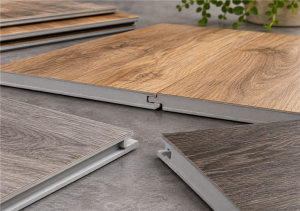
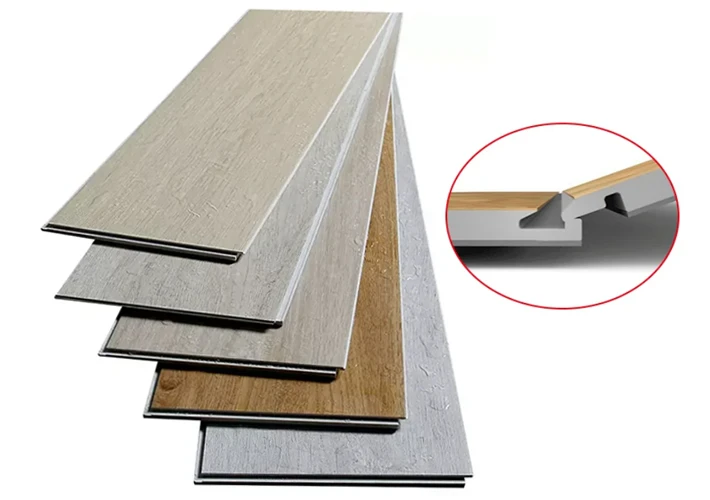
Luxury SPC flooring, also known as Stone Plastic Composite or Stone Polymer Composite flooring, is a rigid-core flooring product designed to combine decorative versatility with practical performance.
A typical SPC flooring plank contains several layers, each serving a different purpose. Although the exact construction varies by manufacturer and product series, the main components generally include:
- UV coating: Provides a surface finish and can improve resistance to everyday stains, scuffs, and surface marking, depending on the coating system.
- Transparent wear layer: Protects the decorative film from repeated surface abrasion and helps preserve the floor’s visual appearance.
- Decorative film: Creates the wood, stone, marble, or other visual pattern.
- SPC core: Provides the rigid structural body of the plank.
- Optional backing layer: Often made from IXPE, EVA, or another suitable material to provide additional cushioning or acoustic benefits.
The wear layer sits above the decorative film and beneath the outer surface finish. Its principal function is to protect the design layer against wear associated with normal use.
For flooring importers and wholesalers, understanding this structure is essential because different product layers influence different performance characteristics. A thicker SPC core does not automatically mean better surface abrasion resistance, just as a thicker wear layer does not automatically guarantee a more stable locking system.
When evaluating a supplier’s quotation, buyers should therefore request the total plank thickness, wear layer thickness, core construction, surface treatment, and backing specification as separate parameters.
Why Wear Layer Thickness Matters
The transparent wear layer is exposed to everyday contact from footwear, furniture movement, cleaning equipment, and other sources of surface friction.
Over time, repeated abrasion can affect the appearance of a flooring surface. Depending on the product construction and exposure conditions, this may include visible scuffing, changes in gloss, deterioration of the surface finish, or eventual wear through the protective layer.
A properly specified wear layer helps reduce the risk of premature surface deterioration. It is particularly relevant for projects where floors must maintain a consistent appearance over an extended period.
For example, a residential bedroom may experience relatively limited foot traffic, while a hotel corridor may receive continuous traffic from guests, housekeeping carts, luggage, and cleaning equipment. These environments place different demands on the flooring surface.
Nevertheless, wear layer thickness is only one part of the performance equation. The quality of the transparent PVC layer, UV coating, decorative film, manufacturing consistency, cleaning routine, and amount of abrasive dirt entering the building all influence actual results.
Buyers should avoid treating thickness as a stand-alone guarantee of durability.
Wear Layer Thickness Is Not Total Flooring Thickness
One common purchasing mistake is confusing the wear layer with the overall thickness of an SPC plank.
For example, a specification reading “5 mm SPC flooring with a 0.5 mm wear layer” describes two different measurements:
- 5 mm: The overall thickness of the flooring product, excluding any separately measured underlay where applicable.
- 0.5 mm: The nominal thickness of the transparent wear layer.
A 4 mm plank with a 0.5 mm wear layer and a 6 mm plank with a 0.3 mm wear layer have different construction characteristics. Neither should automatically be considered superior without examining the core, locking profile, surface quality, underlay, and installation conditions.
For wholesale procurement, Changflor recommends listing both values separately on product specifications, quotations, technical data sheets, and purchase orders.
This approach reduces misunderstandings between manufacturers, importers, distributors, installers, and end customers.
Common Luxury SPC Flooring Wear Layer Thicknesses Compared
International SPC flooring markets commonly use 0.2 mm, 0.3 mm, 0.5 mm, and 0.7 mm wear layer options. The most appropriate specification depends on the intended application, target selling price, expected traffic, and local market expectations.
The following table provides general procurement guidance rather than a universal classification or performance guarantee.
| Wear layer thickness | Approximate mil equivalent | Typical positioning | Potential applications |
|---|---|---|---|
| 0.2 mm | 8 mil | Entry-level | Light-use residential spaces and budget-oriented collections |
| 0.3 mm | 12 mil | Mainstream residential | Bedrooms, living rooms, apartments, and general residential projects |
| 0.5 mm | 20 mil | Premium residential and selected commercial | Busy homes, rental units, offices, and suitable hospitality applications |
| 0.7 mm | 28 mil | Higher-protection specification | Selected higher-traffic commercial projects and premium product ranges |
One mil equals 0.001 inch, or 0.0254 mm. Therefore, 0.3 mm is approximately 11.8 mil, 0.5 mm is approximately 19.7 mil, and 0.7 mm is approximately 27.6 mil.
These conversions are useful when comparing specifications from North American suppliers and manufacturers using metric measurements.
0.2 mm Wear Layer: For Budget-Oriented Flooring Programs
A 0.2 mm wear layer may be appropriate for selected entry-level flooring collections where the intended use involves relatively light traffic and the primary commercial objective is price competitiveness.
Potential applications include low-traffic residential rooms and certain renovation projects with limited performance demands.
For importers, this specification can support a value-focused product range. It may also allow distributors to offer an entry-level price point alongside more durable premium collections.
However, a 0.2 mm wear layer should not be selected solely because it reduces the purchase price. Buyers must consider the expected service conditions, local customer expectations, warranty obligations, and the consequences of premature surface wear.
For hotel corridors, busy retail spaces, and other environments with frequent foot traffic, a higher wear layer may be more appropriate.
0.3 mm Wear Layer: A Practical Choice for Residential Markets
A 0.3 mm wear layer is a widely used option for mainstream luxury SPC flooring.
It can offer a practical balance between surface protection and material cost when the product is designed for normal residential use.
Typical target applications include:
- Apartments and residential developments.
- Bedrooms and living rooms.
- Private houses and condominiums.
- Standard residential renovation projects.
- Rental housing with moderate traffic.
- Residential flooring collections sold through wholesalers and retailers.
For importers serving price-sensitive markets, 0.3 mm flooring can form the core of a residential product range. It can be offered in wood-look, stone-look, and other decorative designs to meet different customer preferences.
Nevertheless, a 0.3 mm wear layer should not automatically be described as suitable for every commercial application. Heavy entrance traffic, frequent furniture movement, abrasive dirt, and intensive cleaning may require a different specification.
When purchasing from Changflor or another Chinese factory, buyers should verify the actual wear layer thickness, tolerance, finish, and product-specific test results rather than relying only on the nominal number printed in a catalogue.
0.5 mm Wear Layer: A Strong Option for Premium Residential and Commercial Projects
A 0.5 mm wear layer is commonly specified for premium residential flooring and selected commercial applications.
Compared with a 0.3 mm layer, it provides more transparent protective material above the decorative film. This additional material can support better long-term appearance retention under suitable conditions, although actual results depend on the complete surface system.
Potential applications include:
- Busy residential living areas and kitchens.
- Rental apartments with frequent tenant turnover.
- Offices and meeting rooms.
- Boutique retail environments.
- Hotel guestrooms and selected shared areas.
- Commercial interiors with moderate or regular foot traffic.
For distributors, a 0.5 mm wear layer can serve as a premium upgrade from a standard 0.3 mm product.
For project contractors, the specification may provide an appropriate balance between surface protection, procurement cost, and the intended maintenance schedule.
However, a 0.5 mm wear layer does not automatically make every SPC product suitable for every commercial space. Commercial classification, fire performance, slip resistance, dimensional stability, indentation resistance, and other project-specific requirements must be evaluated separately.
For a hotel or office project, buyers should assess the entire flooring system rather than approve the material on the basis of wear layer thickness alone.
0.7 mm Wear Layer: For More Demanding Specifications
A 0.7 mm wear layer may be considered when buyers require a higher level of surface protection or want to position a product within a premium flooring range.
Potential applications include selected busy retail spaces, commercial interiors, and projects with demanding appearance-retention expectations.
This specification may be particularly relevant when a buyer’s tender document, product standard, or client requirement explicitly calls for a thicker wear layer.
However, it is important to distinguish between a product’s nominal specification and its demonstrated performance. A 0.7 mm wear layer does not guarantee a specific service life, scratch-proof performance, or suitability for heavy industrial use.
For higher-traffic projects, procurement teams should request relevant test documentation, confirm the complete product construction, and ensure that the flooring is approved for the intended environment.
A thicker wear layer can also increase material cost. Buyers should compare the additional expense with the project’s actual requirements instead of automatically choosing the most expensive option.
How to Choose the Right Wear Layer for Different Applications
Selecting the correct luxury SPC flooring wear layer begins with a clear understanding of how the finished floor will be used.
The same product specification may perform differently in a quiet bedroom, a rental apartment, a hotel corridor, and a busy shop entrance. Foot traffic, maintenance procedures, furniture movement, contamination, and the expected appearance standard all influence the decision.
Residential Projects
For mainstream residential developments, a 0.3 mm wear layer is often a reasonable starting point.
Bedrooms and living rooms generally experience less concentrated traffic than commercial entrances. In these environments, a suitable 0.3 mm product may provide an appropriate balance between material cost and expected performance.
A 0.5 mm option may be worth considering for larger households, premium homes, open-plan living spaces, or properties where the owner expects more demanding use.
Families with pets should also evaluate resistance to claw marks, surface scuffing, staining, and cleaning chemicals. A thicker wear layer alone does not make a floor scratch-proof.
For developers and residential flooring distributors, the best approach is to establish clear product tiers:
- Entry-level products for budget-conscious buyers.
- Mainstream products for general residential use.
- Premium products for customers seeking enhanced surface protection and upgraded finishes.
This tiered strategy makes it easier to manage purchasing costs while giving customers a clear reason to choose higher-specification products.
Hotels and Hospitality Projects
Hotel flooring requires more careful evaluation because traffic conditions vary significantly between guestrooms, corridors, reception areas, restaurants, and service spaces.
For hotel guestrooms, a 0.3 mm or 0.5 mm wear layer may be appropriate depending on the project specification, expected occupancy, housekeeping practices, and desired maintenance cycle.
For corridors and reception areas, buyers should consider the frequency of luggage movement, cleaning carts, and continuous pedestrian traffic. A 0.5 mm or 0.7 mm wear layer may be worth evaluating where greater surface protection is required.
Restaurants and dining areas introduce additional concerns, including food spills, grease, frequent cleaning, and slip-resistance requirements.
The appropriate wear layer cannot be selected independently of these factors.
Hospitality procurement teams should assess:
- Expected traffic volume and peak occupancy.
- Required commercial-use classification.
- Slip resistance under relevant conditions.
- Resistance to stains and approved cleaning products.
- Acoustic requirements and underlay compatibility.
- Fire performance and applicable local regulations.
- Availability of replacement flooring for future repairs.
For international hotel projects, Changflor recommends confirming the complete specification with the project consultant before ordering bulk quantities.
Offices and Commercial Interiors
Offices, meeting rooms, reception areas, and retail interiors can place different demands on SPC flooring.
A private office with limited visitor traffic may not need the same surface specification as a busy reception area or a retail shop.
In addition to foot traffic, office flooring must withstand rolling chairs, desks, movable furniture, and routine cleaning.
For these environments, buyers should consider the wear layer alongside indentation resistance, the locking system, subfloor flatness, and the suitability of chair casters.
A 0.5 mm wear layer can be a sensible starting point for many office and light-commercial projects, while 0.7 mm may be considered for selected higher-traffic applications.
However, heavy rolling loads and concentrated furniture loads can affect the flooring through mechanisms that a thicker wear layer alone cannot prevent. Suitable floor protection, caster selection, and correct installation remain important.
For commercial distributors, offering multiple wear layer options can help meet different project budgets without forcing every customer into the same specification.
Retail Stores and High-Traffic Public Areas
Retail environments can expose flooring to repeated foot traffic, outdoor dirt, trolley movement, and intensive cleaning.
Entrance areas may experience particularly high abrasion because sand and grit can be carried inside on footwear. These particles can act as abrasives against the surface.
For such environments, a 0.5 mm or 0.7 mm wear layer may be worth considering, subject to the requirements of the specific project.
However, very busy public buildings, transport facilities, and specialist commercial spaces may require flooring products designed and tested for particular use classifications. A thicker wear layer alone does not establish suitability.
Before approval, buyers should verify the required use class, relevant test reports, surface performance, fire requirements, and maintenance recommendations.
Entrance mats, routine removal of abrasive dirt, suitable cleaning equipment, and prompt spill management can also help preserve the appearance of the floor.
Wear Layer Thickness vs. Total Thickness: What Should Buyers Compare?
For wholesale and project procurement, wear layer thickness is only one part of the product specification. Buyers should compare the complete SPC flooring construction to avoid paying for a thicker plank that does not meet the project’s actual needs.
Core Thickness and Wear Layer Thickness Serve Different Purposes
The SPC core forms the rigid body of the flooring plank. Its formulation, density, thickness, and dimensional stability influence structural behavior and installation performance.
The wear layer primarily protects the decorative surface.
These functions are related to overall product quality but are not interchangeable.
For example, a 6 mm SPC plank with a 0.3 mm wear layer may have a thicker core construction than a 5 mm plank with a 0.5 mm wear layer. The second product has a thicker protective layer, but the first may have different structural characteristics.
Neither configuration should be judged superior based only on one measurement.
Buyers should compare the core construction, wear layer, locking profile, attached underlay, and finished plank thickness together.
UV Coating and Surface Finish Also Matter
The outer UV coating and surface treatment contribute to the way the flooring looks, cleans, and responds to everyday use.
Depending on the formulation and manufacturing process, these finishes can influence stain resistance, gloss retention, surface marking, and maintenance requirements.
Embossed-in-register textures, matte finishes, wood-grain textures, and other decorative treatments can also affect the product’s appearance and positioning.
However, a UV coating should not be confused with the wear layer itself. Under the terminology used in ISO 10582, the wear layer and factory finish are distinct components.
When comparing suppliers, ask them to specify the wear layer separately from any factory-applied finish or coating.
This distinction is especially important when technical data sheets use different terminology or when product quotations are prepared for multiple markets.
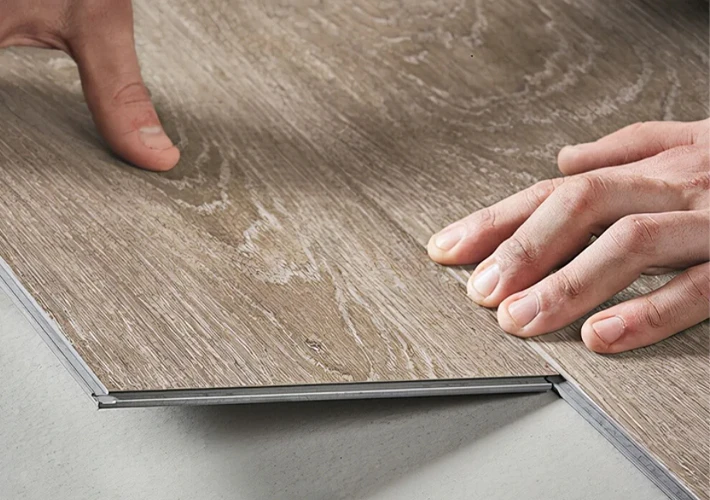
Click-Locking Performance and Installation Conditions
SPC flooring performance also depends on the quality of the locking system and the condition of the subfloor.
An unsuitable subfloor, excessive unevenness, incorrect expansion allowances, poor installation workmanship, or incompatible underlay can contribute to joint movement, gaps, or other installation problems.
A thicker wear layer does not resolve these issues.
For floating click-lock flooring, buyers should confirm the locking profile, installation instructions, allowable subfloor tolerances, and compatibility with any attached or separate underlay.
Project specifications should also account for the intended room size, transitions, direct sunlight exposure, and relevant temperature conditions.
For importers and contractors, reviewing these details before production and installation can reduce avoidable claims and replacement costs.
Check Product Standards and Test Documentation
ISO 10582:2017 specifies characteristics for heterogeneous PVC floor coverings and includes a use-classification framework based on intensity of use. It distinguishes the wear layer from the factory finish.
However, the existence of a product standard does not mean that one particular wear layer thickness is universally correct for every application.
Buyers should identify the standards required by the destination market and the project specification.
Depending on the application, relevant documentation may cover:
- Wear layer thickness and tolerance.
- Overall product dimensions and dimensional stability.
- Indentation and surface performance.
- Slip resistance under the specified test method.
- Fire classification.
- Indoor emissions and applicable environmental requirements.
- Commercial-use classification.
- Manufacturer quality-control procedures.
Do not assume that a supplier’s generic certificate covers every product in its catalogue. Request documentation that can be matched to the actual product, construction, and intended market.
How Wear Layer Thickness Affects Purchasing Cost and Long-Term Value
For importers and distributors, the lowest ex-factory price does not necessarily represent the best commercial decision.
A flooring product that is under-specified for its intended application may generate complaints, replacement expenses, warranty disputes, and damage to the buyer’s reputation. Conversely, selecting a much thicker wear layer than necessary can increase procurement costs without providing a meaningful benefit for the intended use.
The objective is to find the most suitable balance between purchase price and performance requirements.
Understand the Cost Difference Between 0.3 mm and 0.5 mm
A thicker wear layer generally requires more material, which can increase manufacturing costs. The final price difference depends on the raw materials, product construction, surface finish, order quantity, production requirements, and supplier pricing.
For this reason, buyers should request quotations for comparable products rather than comparing wear layer thickness in isolation.
When comparing a 0.3 mm and a 0.5 mm SPC product, confirm that both quotations use the same:
- Decorative design and film specification.
- Core construction and total thickness.
- Surface finish and texture.
- Locking system and edge treatment.
- Underlay specification.
- Packaging requirements.
- Order quantity and delivery terms.
If the two products differ in several areas, the price difference cannot be attributed entirely to the wear layer.
For a large commercial order, a small difference in unit price can become significant across thousands of square meters. The purchasing decision should therefore be based on the required performance level and the total project budget.
Evaluate Total Cost of Ownership
Total cost of ownership includes more than the initial purchase price. It can include installation, cleaning, maintenance, repair, replacement, downtime, and future availability of matching products.
For example, choosing a lower-cost wear layer for a hotel corridor may appear attractive at the quotation stage. If the floor’s appearance deteriorates earlier than expected under actual operating conditions, the property may face replacement work, room closures, or disruption to hotel operations.
On the other hand, specifying a 0.7 mm wear layer for a low-traffic bedroom may provide little practical value if a suitable 0.3 mm product already meets the project’s requirements.
A more effective approach is to estimate the total cost over the expected service period and consider the consequences of product failure.
Buyers should avoid assuming that a thicker wear layer automatically doubles the service life or provides a fixed number of additional years. Actual service life depends on traffic, maintenance, installation quality, product construction, and environmental conditions.
Select a Specification That Matches Your Target Market
For importers and wholesalers, the ideal product portfolio may include several wear layer options rather than a single specification.
A balanced collection could include:
- Value range: Selected 0.2 mm products for appropriate light-use applications.
- Standard range: 0.3 mm products for mainstream residential customers.
- Premium range: 0.5 mm products for demanding residential use and selected commercial applications.
- Specialized range: 0.7 mm products for projects that justify the higher specification.
This structure enables distributors to serve different customer groups while maintaining a clear distinction between entry-level, mainstream, and premium products.
It can also simplify quotation management. Instead of offering one product to every customer, a supplier can recommend a specification according to the intended application, budget, and performance expectations.
As a China-based SPC and LVT flooring supplier, Changflor supports B2B buyers in evaluating product specifications for their target markets and project requirements. Final availability, customization options, minimum order quantities, and lead times should be confirmed against the selected product and order details.
How to Verify Wear Layer Quality When Sourcing SPC Flooring from China
For overseas importers, purchasing from a Chinese flooring factory can provide access to a broad range of product designs, specifications, and bulk-order options. However, effective supplier evaluation requires more than reviewing catalogue images or comparing headline prices.
Wear layer thickness should be verified as part of a broader quality-control process.
Request a Detailed Technical Data Sheet
A reliable technical data sheet should clearly identify the product’s construction and measurable specifications.
At a minimum, request:
- Product code and decorative design.
- Nominal wear layer thickness.
- Wear layer tolerance and measurement method.
- Total plank thickness and dimensional tolerances.
- SPC core construction.
- Surface coating and finish.
- Plank dimensions and edge profile.
- Attached backing, if included.
- Applicable standards and available test reports.
- Recommended application and installation method.
Ask the supplier to distinguish nominal values from measured results and allowable tolerances.
For example, a quotation listing “0.5 mm wear layer” should clarify whether this is the nominal specification and what tolerance applies. A nominal value alone does not establish that every plank will measure exactly 0.5 mm.
Where required, buyers should arrange inspection or independent testing according to an agreed sampling plan.
Check Samples Before Confirming Bulk Orders
Samples allow buyers to evaluate color, texture, surface finish, dimensional details, and general workmanship before placing a large order.
However, a small sample cannot independently establish the long-term abrasion resistance of an entire production batch.
For more demanding projects, buyers should combine sample approval with relevant test reports, technical documentation, and pre-shipment quality inspection.
If the order requires a particular wear layer thickness, include this requirement in the approved sample specification and purchase order.
The approved sample should be linked to the exact product code, color, surface finish, and construction to minimize the risk of discrepancies during mass production.
Confirm Quality Control During Production
For container orders, consistent production quality is as important as the initial sample.
Buyers may consider checks at several stages:
- Before production: Confirm the product specification, approved sample, packaging design, and order quantity.
- During production: Verify material and dimensional consistency according to the agreed inspection plan.
- Before shipment: Inspect the finished flooring, carton labels, quantities, packaging condition, and other agreed acceptance criteria.
For the wear layer specifically, buyers should request an appropriate measurement or verification method and establish acceptance criteria before manufacturing begins.
The selected test method must be suitable for the flooring construction and agreed by the buyer and supplier. Where a measurement cannot be reliably performed using basic field equipment, laboratory testing may be necessary.
This process helps buyers identify discrepancies before the goods leave the factory.
Evaluate the Supplier’s Export and Project Support
A supplier’s commercial capabilities also matter when building a long-term flooring business.
For distributors and project contractors, useful questions include:
- Can the supplier provide several wear layer options?
- Are matching designs available across different specifications?
- Can product codes and carton labels be customized?
- Are technical data sheets and relevant test reports available?
- Can the factory support repeat orders with consistent specifications?
- What are the current minimum order quantities and production lead times?
- How are claims, replacement materials, and quality discrepancies handled?
For a distributor, consistent repeat-order quality helps maintain a stable product portfolio. For a contractor, clear specifications and timely documentation support project coordination and handover.
Changflor works with international buyers sourcing SPC and LVT flooring for wholesale and project applications. Buyers should confirm the required product specification, order quantity, packaging, delivery schedule, and documentation before placing an order.
Frequently Asked Questions About Luxury SPC Flooring Wear Layer Thickness
Is a 0.3 mm wear layer enough for luxury SPC flooring?
A 0.3 mm wear layer is commonly used for mainstream residential SPC flooring. It may be suitable for bedrooms, living rooms, apartments, and other applications with appropriate traffic levels.
For busy commercial spaces, high-traffic corridors, or environments involving intensive cleaning and frequent furniture movement, buyers should evaluate whether a 0.5 mm or 0.7 mm specification is more appropriate.
The final decision should also consider the complete flooring construction, required use classification, and maintenance conditions.
Is a 0.5 mm wear layer better than a 0.3 mm wear layer?
A 0.5 mm wear layer contains more protective material than a 0.3 mm layer and may be better suited to applications requiring greater surface protection.
However, “better” depends on the intended use. A 0.3 mm product may be the more cost-effective choice for a suitable residential project, while a 0.5 mm product may offer a more appropriate specification for busy homes or selected commercial interiors.
Buyers should compare the complete product and verify the relevant technical requirements before making a decision.
Is a 0.7 mm wear layer suitable for heavy commercial use?
A 0.7 mm wear layer may be suitable for selected higher-traffic commercial applications, but thickness alone does not establish suitability for heavy commercial use.
The flooring must also meet the project’s requirements for use classification, indentation resistance, dimensional stability, slip resistance, fire performance, and other applicable characteristics.
For specialist or extremely busy environments, consult the project specification and relevant test documentation before approval.
What is the difference between 12 mil and 20 mil SPC flooring?
Twelve mil is approximately 0.3048 mm, while 20 mil is approximately 0.508 mm.
These measurements are commonly associated with nominal 0.3 mm and 0.5 mm wear layer products, respectively.
When comparing products from different countries, always confirm the unit, nominal thickness, tolerance, and actual product construction.
Does a thicker wear layer make SPC flooring scratch-proof?
No. A thicker wear layer can provide additional material to resist surface abrasion, but it does not make SPC flooring completely scratch-proof.
Damage can still occur from sharp objects, dragging furniture, abrasive particles, unsuitable cleaning tools, or excessive point loads.
Chair protectors, suitable entrance mats, routine cleaning, and following the manufacturer’s maintenance instructions can help reduce avoidable surface damage.
Does the wear layer determine the lifespan of SPC flooring?
Wear layer thickness is an important factor in surface protection, but it does not determine the entire service life of the flooring.
Actual lifespan also depends on product quality, traffic intensity, installation, subfloor conditions, cleaning methods, exposure to sunlight and temperature changes, and the maintenance schedule.
A supplier’s warranty should be reviewed separately, including its exclusions, permitted applications, and maintenance requirements.
Is SPC flooring with a 0.5 mm wear layer waterproof?
SPC flooring is generally designed with a water-resistant rigid core, and many SPC products are marketed as waterproof flooring. However, the performance of the complete installed floor depends on the product construction, joints, perimeter details, installation, and exposure conditions.
The wear layer itself does not determine whether water can penetrate through the joints or reach the subfloor.
For wet-area or moisture-sensitive projects, confirm the manufacturer’s installation instructions and the suitability of the complete flooring system.
What should importers ask an SPC flooring manufacturer before ordering?
Importers should request a technical data sheet, nominal wear layer thickness and tolerance, total plank thickness, core specifications, surface finish, relevant test reports, available designs, minimum order quantity, production lead time, packaging details, and applicable warranty conditions.
For commercial projects, also confirm the required use classification, fire performance, slip resistance, and other local compliance requirements.
Before mass production, buyers should approve the sample and ensure that the agreed specifications appear in the purchase order.
Conclusion: Choose the Right Wear Layer for Performance and Profitability
Selecting the correct luxury SPC flooring wear layer thickness is a technical and commercial decision. The objective is not to purchase the thickest available option, but to specify a product that matches the project’s traffic conditions, surface-performance expectations, budget, and maintenance requirements.
For mainstream residential applications, 0.3 mm is often a practical starting point. For busy homes, rental properties, offices, and selected commercial environments, 0.5 mm may offer a more appropriate level of surface protection. A 0.7 mm wear layer can be considered for more demanding applications when supported by the complete product specification and relevant test evidence.
For importers, wholesalers, and project contractors, the most reliable purchasing strategy is to compare wear layer thickness alongside core construction, surface finish, locking performance, product standards, quality control, and supplier support.
Changflor is a China-based SPC and LVT flooring supplier serving international B2B buyers. Whether you are developing a residential flooring collection, sourcing products for a hotel renovation, or specifying flooring for a commercial project, choosing the right construction from the beginning can help you balance purchase cost, product performance, and long-term customer satisfaction.
Contact Changflor to discuss your target market, preferred designs, wear layer requirements, and bulk purchasing needs. Request product specifications and samples to evaluate the most suitable SPC flooring solution for your business.