When sourcing 2.5mm luxury vinyl flooring for residential, commercial, or large-scale construction projects, one of the most important decisions buyers face is choosing between a 0.3mm and 0.5mm wear layer. Although both specifications are widely used in the LVT flooring market, they serve different purchasing requirements, traffic conditions, project budgets, and long-term performance expectations.
For flooring importers, wholesalers, distributors, contractors, and project procurement managers, selecting the right wear layer is not simply about choosing the thicker option. It is about balancing durability, product cost, installation requirements, maintenance expectations, and the intended application.
A 2.5mm luxury vinyl flooring product with a 0.3mm wear layer is generally suitable for residential applications and selected light commercial environments. A 0.5mm wear layer provides additional protection against surface abrasion and is often a better option for higher-traffic commercial interiors, depending on the complete product construction and test performance.
However, wear layer thickness is only one part of flooring quality. Backing construction, dimensional stability, surface coating, adhesive compatibility, installation conditions, and manufacturing consistency also influence the final result.
As a professional Chinese flooring manufacturer, Changflor supplies luxury vinyl flooring solutions for international distributors, wholesalers, contractors, and commercial projects. This guide explains the differences between 0.3mm and 0.5mm wear layers, helping B2B buyers make more informed purchasing decisions.
Understanding 2.5mm Luxury Vinyl Flooring and Its Wear Layer
Before comparing 0.3mm and 0.5mm wear layers, buyers should understand the basic structure of 2.5mm luxury vinyl flooring and the function of each layer.
Luxury vinyl flooring, commonly known as LVT flooring, is a resilient flooring material designed to combine decorative appearance with practical surface performance. It is available in different thicknesses, surface finishes, patterns, and installation systems.
A 2.5mm LVT product is a relatively thin flooring option commonly used in renovation projects, residential interiors, apartments, retail environments, and selected commercial applications.
What Does 2.5mm Mean in Luxury Vinyl Flooring?
The 2.5mm specification refers to the overall thickness of the flooring product, not the thickness of its wear layer.
A typical dry-back LVT flooring structure may include:
- UV coating: Provides additional surface protection and helps improve resistance to everyday wear and staining.
- Transparent wear layer: Protects the decorative design layer against abrasion, scuffing, and everyday surface damage.
- Decorative film: Creates the visual appearance of wood, stone, marble, or other decorative materials.
- Vinyl core layer: Provides the main body of the flooring and contributes to flexibility and dimensional characteristics.
- Backing layer: Supports the flooring structure and provides a suitable surface for adhesive installation.
The exact layer structure varies according to the manufacturer’s production process and product specifications.
For 2.5mm luxury vinyl flooring, the wear layer is especially important because it determines how much transparent protective material covers the decorative design.
What Is a Wear Layer?
The wear layer is the transparent protective layer located above the decorative film in luxury vinyl flooring.
Its primary purpose is to protect the decorative surface from daily abrasion and help maintain the appearance of the floor over time.
Common wear layer specifications include:
- 0.1mm: Generally designed for light-duty residential applications.
- 0.2mm: Suitable for many residential environments with moderate use.
- 0.3mm: Commonly selected for residential and selected light commercial projects.
- 0.5mm: Offers increased surface protection for demanding residential and commercial applications.
- 0.7mm: Available in certain heavy-duty commercial flooring product ranges.
It is important to understand that a thicker wear layer does not automatically guarantee better overall flooring quality. The formulation, coating technology, manufacturing precision, and testing results also matter.
Why Is Wear Layer Thickness Important for Buyers?
For B2B flooring buyers, wear layer thickness influences several purchasing considerations.
First, it affects surface durability. A thicker wear layer generally provides more protective material before the decorative layer is exposed through long-term abrasion.
Second, it influences product positioning. A 0.3mm product can be positioned as a cost-effective solution for residential flooring markets, while a 0.5mm product can target customers looking for enhanced durability.
Third, it affects procurement costs. Increasing the wear layer thickness generally requires additional material, which may increase manufacturing costs and the final wholesale price.
Fourth, it influences project suitability. Different buildings experience different levels of foot traffic, furniture movement, cleaning frequency, and maintenance requirements.
Therefore, choosing the correct wear layer is an important part of product specification and project planning.
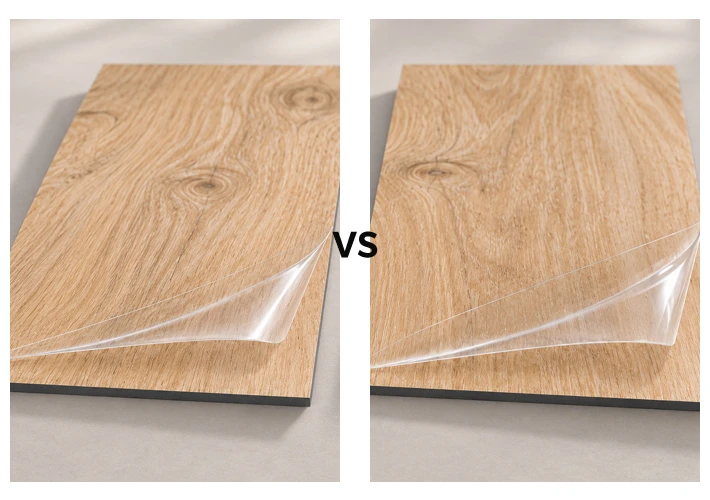
0.3mm vs 0.5mm Wear Layer: Key Differences Explained
The main difference between 0.3mm and 0.5mm wear layers is the amount of transparent protective material above the decorative film.
A 0.5mm wear layer is 0.2mm thicker than a 0.3mm wear layer, representing approximately 66.7% more wear layer thickness.
This does not mean that the flooring will last 66.7% longer. Actual service life depends on traffic intensity, maintenance, product formulation, installation quality, and other environmental conditions.
Comparison Table: 0.3mm vs 0.5mm LVT Flooring
| Comparison Factor | 2.5mm LVT with 0.3mm Wear Layer | 2.5mm LVT with 0.5mm Wear Layer |
|---|---|---|
| Total flooring thickness | 2.5mm | 2.5mm |
| Wear layer thickness | 0.3mm | 0.5mm |
| Surface protection | Standard | Enhanced |
| Abrasion resistance potential | Suitable for moderate use | Better suited to more demanding use |
| Residential suitability | Excellent | Excellent |
| Light commercial suitability | Suitable | Suitable |
| Higher-traffic commercial use | Requires careful evaluation | Generally a stronger candidate |
| Furniture movement | Suitable with protection | Additional protective material |
| Initial material cost | Generally lower | Generally higher |
| Target buyers | Budget-conscious distributors | Commercial flooring suppliers |
| Typical positioning | Residential and value-focused projects | Premium residential and commercial projects |
The comparison above describes typical product positioning rather than guaranteed performance. Buyers should request test reports and technical specifications for the exact product being purchased.
Advantages of 0.3mm Wear Layer LVT Flooring
A 0.3mm wear layer is one of the most common specifications in the residential LVT flooring market.
Its biggest advantage is the balance between surface protection and purchasing cost.
For distributors selling to residential flooring retailers, property renovation companies, and housing developers, this specification offers a competitive option without requiring the additional material investment associated with thicker wear layers.
Key advantages include:
1. Competitive Wholesale Pricing
A 0.3mm wear layer generally requires less protective material than a 0.5mm wear layer.
This can help manufacturers maintain competitive factory pricing, making it attractive for importers purchasing in bulk.
2. Suitable for Everyday Residential Use
Bedrooms, living rooms, dining rooms, and other ordinary residential spaces typically do not experience the same traffic intensity as busy commercial facilities.
When correctly installed and maintained, 0.3mm LVT flooring can provide practical surface protection for these environments.
3. Attractive Product Positioning
For distributors targeting entry-level and mid-range flooring markets, 0.3mm LVT flooring provides an opportunity to develop competitive product collections.
4. Flexible Design Selection
The same wear layer specification can be offered with different wood-grain designs, stone patterns, colors, textures, and surface finishes, depending on the manufacturer’s collection.
Advantages of 0.5mm Wear Layer LVT Flooring
A 0.5mm wear layer provides additional protective material above the decorative film.
This makes it an attractive choice for projects where the floor is expected to experience more frequent pedestrian activity or more intensive everyday use.
Its advantages include:
1. Increased Surface Protection
The additional thickness provides more protective material against long-term abrasion.
This can help maintain the appearance of the decorative layer in environments with regular foot traffic.
2. Better Product Positioning for Commercial Buyers
Commercial flooring distributors often need to supply different product grades for different applications.
A 0.5mm wear layer helps create a higher-specification product option for offices, retail spaces, hotel rooms, and other commercial interiors.
3. Greater Flexibility in Project Selection
When contractors are evaluating flooring for multiple building areas, a 0.5mm option can provide an additional specification choice for spaces with higher usage requirements.
4. More Competitive Premium Product Offering
For importers and wholesalers, offering both 0.3mm and 0.5mm products makes it easier to serve different market segments without relying on a single specification.
Does 0.5mm Always Mean Better Quality?
No. A 0.5mm wear layer offers more protective material, but it does not automatically make the entire flooring product superior.
A poorly manufactured 0.5mm product may still have problems with dimensional stability, surface coating, bonding, or installation performance.
Likewise, a well-manufactured 0.3mm product can provide excellent results in applications for which it is properly specified.
Professional buyers should evaluate the complete technical data sheet instead of comparing wear layer thickness alone.
Which Applications Are Suitable for 0.3mm and 0.5mm LVT Flooring?
Application requirements should be the starting point when choosing between 0.3mm and 0.5mm wear layers.
A residential bedroom, a hotel corridor, and a busy retail entrance have very different flooring requirements.
The correct specification depends on the expected traffic level, maintenance frequency, furniture movement, and the project owner’s performance expectations.
Residential Applications: Is 0.3mm Enough?
For many residential flooring projects, 0.3mm LVT flooring is a practical and cost-effective choice.
Common applications include:
- Bedrooms
- Living rooms
- Dining rooms
- Private apartments
- Residential renovation projects
- Guest rooms
- Low-traffic residential corridors
These areas generally experience moderate pedestrian activity.
For homeowners and residential developers working with a controlled budget, 2.5mm LVT flooring with a 0.3mm wear layer can provide a suitable balance between decorative appearance and everyday surface protection.
However, residential projects with pets, heavy furniture movement, or particularly intensive use may benefit from a thicker wear layer.
Commercial Applications: When Should Buyers Choose 0.5mm?
Commercial environments typically experience more frequent foot traffic than ordinary residential interiors.
A 0.5mm wear layer may be a better starting point for evaluating projects such as:
- Office buildings
- Retail shops
- Hotel guest rooms
- Reception areas
- Small commercial showrooms
- Meeting rooms
- Apartment common areas
- Professional service facilities
For these projects, the flooring may be exposed to repeated walking, rolling chairs, furniture movement, and regular cleaning.
A thicker wear layer provides additional surface protection, but buyers should still evaluate the flooring’s complete commercial performance.
For busy retail entrances, public corridors, restaurants, and other heavily trafficked spaces, a 0.5mm wear layer should not be accepted as sufficient evidence on its own. Buyers should request relevant abrasion, indentation, slip resistance, fire performance, and classification documentation.
Hotels and Hospitality Projects
Hotel flooring requirements vary according to the function of each space.
For example:
| Hotel Area | Suggested Starting Specification | Purchasing Consideration |
|---|---|---|
| Guest bedrooms | 0.3mm or 0.5mm | Budget and expected occupancy |
| Private suites | 0.3mm or 0.5mm | Furniture and maintenance |
| Reception areas | Evaluate 0.5mm or higher-spec alternatives | Traffic intensity |
| Corridors | 0.5mm or higher-spec alternatives | Repeated pedestrian traffic |
| Meeting rooms | 0.5mm for consideration | Chair movement and usage |
| Staff areas | Based on operational traffic | Cleaning frequency |
These are preliminary purchasing recommendations, not universal technical classifications.
For hospitality developments, procurement managers should evaluate acoustic requirements, fire regulations, cleaning chemicals, rolling loads, and maintenance costs alongside wear layer thickness.
Offices and Business Interiors
Office environments are another important market for 2.5mm LVT flooring.
For small offices and private meeting rooms, 0.3mm may be sufficient when the traffic level is moderate.
For larger office environments, shared workspaces, and meeting rooms with frequent furniture movement, 0.5mm can be a more appropriate option.
Buyers should pay particular attention to chair castors, concentrated furniture loads, and the indentation performance of the complete flooring system.
A thicker wear layer does not necessarily prevent dents caused by heavy furniture or unsuitable chair wheels.
Using protective furniture pads and suitable chair castors remains important.
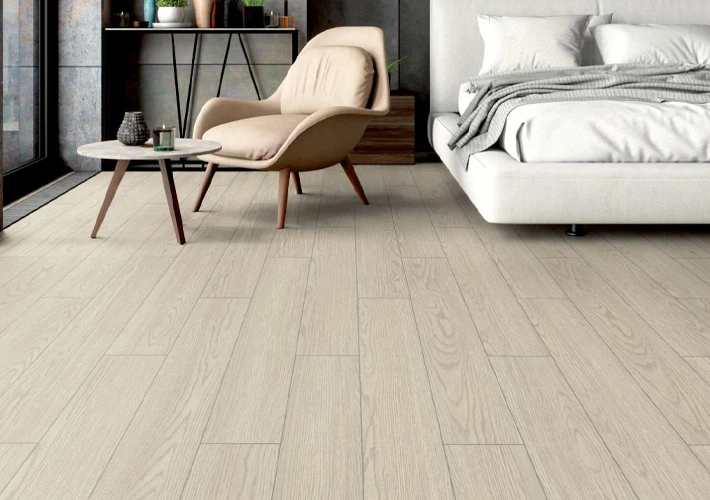
How Wear Layer Thickness Affects Cost, Durability, and Long-Term Value
Price is one of the most important factors in international flooring procurement.
However, professional buyers should avoid making purchasing decisions based entirely on the lowest factory price.
The correct question is not simply whether 0.3mm or 0.5mm costs less. It is whether the selected product provides the right performance for the intended application at an acceptable total project cost.
Initial Purchasing Cost
In general, 2.5mm LVT flooring with a 0.3mm wear layer has a lower manufacturing cost than an otherwise comparable product with a 0.5mm wear layer.
The thicker wear layer requires more protective material and may increase production costs.
However, the actual price difference depends on:
- Vinyl raw material costs
- Wear layer formulation
- UV coating specifications
- Decorative film selection
- Product dimensions
- Surface embossing
- Order quantity
- Packaging requirements
- Production efficiency
- Shipping and delivery arrangements
For large-volume orders, even a small difference in the price per square meter can influence the total procurement budget.
Importers should therefore request quotations for both specifications using the same decorative design, total thickness, surface finish, and packaging requirements.
This makes the comparison more accurate.
Surface Durability and Expected Service Life
The wear layer protects the decorative film against abrasion.
A thicker layer generally provides more material to withstand progressive surface wear.
However, buyers should not assume that increasing wear layer thickness from 0.3mm to 0.5mm will extend the flooring’s service life by a fixed percentage.
Actual durability depends on several variables:
Traffic intensity: A floor installed in a private bedroom experiences different conditions from one installed in a busy commercial corridor.
Cleaning methods: Abrasive cleaning pads, unsuitable chemicals, and poor maintenance practices can damage flooring surfaces.
Furniture movement: Repeated dragging of heavy furniture can create scratches and surface damage.
Product formulation: The composition and quality of the protective layer influence its resistance to abrasion.
Installation quality: Uneven subfloors, unsuitable adhesives, and poor installation practices can contribute to premature flooring problems.
For this reason, service-life estimates should be based on the complete product specification and real application conditions rather than wear layer thickness alone.
Comparing Long-Term Value
A cheaper flooring product is not always the most economical solution.
For example, consider two hypothetical purchasing options:
| Item | Option A | Option B |
|---|---|---|
| Product | 2.5mm LVT | 2.5mm LVT |
| Wear layer | 0.3mm | 0.5mm |
| Purchase price | Lower | Higher |
| Target application | Residential | Commercial |
| Surface protection | Standard | Enhanced |
| Intended positioning | Value-focused | Higher-specification |
If the flooring is being installed in private apartments, Option A may offer better purchasing value.
If the project involves a busy office or commercial showroom, Option B may be a more suitable investment.
The correct decision should consider the expected maintenance costs, replacement risks, project warranty obligations, and end-user expectations.
Why Bulk Buyers Should Compare the Complete Specification
For international distributors, product comparison should include more than the wear layer.
A complete LVT quotation should clearly identify:
- Overall thickness
- Wear layer thickness
- Product dimensions
- Total weight per square meter
- Surface treatment
- Decorative film options
- Backing construction
- Installation method
- Relevant test standards
- Packaging specifications
- Warranty conditions
This helps buyers avoid comparing products with different constructions under the same nominal product description.
Important Quality Factors Beyond the Wear Layer
A 2.5mm luxury vinyl flooring product can have either a 0.3mm or 0.5mm wear layer, but its overall performance is determined by the complete flooring construction.
For importers and project contractors, the following factors deserve particular attention.
Surface Coating and UV Treatment
UV coating is commonly applied to LVT flooring to improve surface protection and cleaning performance.
Depending on the formulation, it can help improve:
- Surface stain resistance
- Scratch and scuff resistance
- Cleaning convenience
- Surface appearance retention
- Resistance to everyday wear
Buyers should ask manufacturers about the coating system, surface finish, and relevant test results.
A thicker wear layer combined with an unsuitable surface coating may not deliver the expected performance.
Dimensional Stability
Dimensional stability is important because flooring materials can respond to temperature changes and environmental conditions.
Poor dimensional stability may contribute to:
- Gaps between flooring pieces
- Edge lifting
- Size changes
- Installation problems
- Visible surface irregularities
For international buyers, dimensional stability should be evaluated using appropriate testing methods.
Products intended for markets with significant temperature variations should be evaluated under the relevant installation and environmental conditions.
Indentation Resistance
Indentation resistance refers to the flooring’s ability to resist permanent deformation under pressure.
This is particularly important in commercial interiors where flooring may support:
- Office desks
- Cabinets
- Display racks
- Hotel furniture
- Storage units
- Meeting tables
Wear layer thickness primarily concerns surface protection. It should not be confused with the flooring’s ability to withstand concentrated loads.
Buyers should request indentation test results for the complete flooring product.
Scratch and Abrasion Resistance
Although a thicker wear layer generally provides more protective material, scratch resistance and abrasion resistance are not identical properties.
Scratch resistance is influenced by surface formulation, coating technology, and the physical properties of the surface.
Abrasion resistance concerns progressive material loss caused by repeated friction.
A professional flooring supplier should provide relevant test documentation rather than relying exclusively on general descriptions such as scratch-resistant or commercial-grade.
Slip Resistance and Fire Performance
For commercial and public building projects, slip resistance and fire performance may be essential specification requirements.
The applicable requirements vary by destination market and building type.
For example, buyers serving European projects may request relevant EN testing and classification documentation. North American buyers may require different standards depending on the application.
Always confirm the exact test method, laboratory report, product construction, and applicable local regulations.
Installation Compatibility
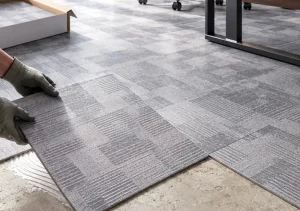
A 2.5mm dry-back LVT product generally requires a suitable adhesive installation system.
Its performance is influenced by:
- Subfloor flatness
- Subfloor moisture levels
- Surface cleanliness
- Adhesive compatibility
- Installation temperature
- Adhesive application
- Rolling and pressing procedures
- Acclimation requirements specified by the manufacturer
An uneven or damp subfloor can cause problems regardless of whether the flooring has a 0.3mm or 0.5mm wear layer.
For this reason, installation guidance should be included in the supplier’s technical documentation.
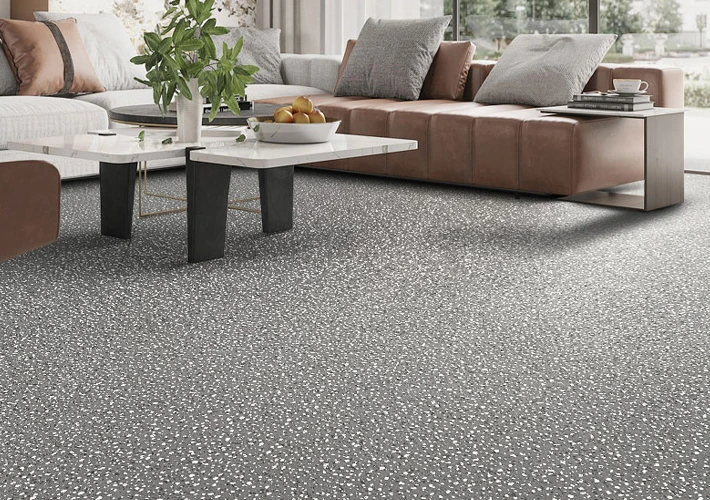
How to Choose the Right Specification for Different Markets and Buyers
International flooring markets have different price expectations, product preferences, technical requirements, and distribution structures.
A successful product portfolio should therefore include specifications that match the needs of different customer groups.
For Flooring Importers and Wholesalers
Importers usually need to balance three important factors:
- Competitive purchasing prices.
- Consistent product quality.
- Product specifications that match local market demand.
For distributors targeting the residential renovation market, 2.5mm LVT flooring with a 0.3mm wear layer can be a useful core product.
For distributors supplying commercial contractors, 0.5mm wear layer products can provide a higher-specification alternative.
Offering both options allows wholesalers to develop different price levels without changing the overall product category.
Changflor recommends building a product portfolio around clearly differentiated specifications rather than competing entirely on price.
For Flooring Distributors
Distributors need products that are easy to explain and position in local markets.
A simple product structure could include:
Value Series
- 2.5mm total thickness
- 0.3mm wear layer
- Wood-grain and stone designs
- Residential applications
- Competitive wholesale positioning
Commercial-Oriented Series
- 2.5mm total thickness
- 0.5mm wear layer
- Expanded decorative selections
- Selected commercial and higher-traffic applications
- Higher-specification market positioning
The final product range should be supported by technical documents, samples, installation instructions, and clear warranty terms.
For Construction Contractors
Contractors should begin with the project’s technical specifications rather than selecting a product based only on its advertised wear layer.
Important questions include:
- What is the expected daily foot traffic?
- Is the flooring intended for residential or commercial use?
- Will office chairs or wheeled equipment be used?
- What are the subfloor conditions?
- Are there specific fire or slip-resistance requirements?
- What maintenance procedures will be followed?
- Does the project require a specific warranty period?
If a project specification explicitly requires a 0.5mm wear layer, substituting a 0.3mm product may result in non-compliance.
Contractors should also confirm that the flooring meets all relevant project standards.
For OEM and Private Label Buyers
Many overseas flooring companies prefer to purchase products under their own brands.
A reliable Chinese LVT flooring manufacturer should be able to discuss customization options, including:
- Custom wood and stone patterns
- Surface texture selection
- Product thickness
- Wear layer specifications
- Product dimensions
- Private label packaging
- Carton printing
- Sample development
- Customized product collections
For buyers developing private-label flooring ranges, Changflor can discuss product configurations according to order requirements and manufacturing feasibility.
Why Should Buyers Source from a Chinese LVT Flooring Factory?
China is an important sourcing destination for international flooring buyers because manufacturers can provide a combination of production capacity, product variety, customization, and export-oriented supply services.
Working directly with a factory can offer several advantages:
Factory-direct communication: Buyers can communicate directly with the production team about specifications and product requirements.
Product customization: Manufacturers can discuss different wear layer thicknesses, patterns, colors, and packaging solutions.
Bulk order support: Factory sourcing can help wholesalers and importers organize larger purchasing programs.
Production coordination: Direct communication makes it easier to confirm sampling, specifications, quality inspection, and delivery schedules.
Technical support: Manufacturers can provide product information, installation recommendations, and relevant quality documentation.
However, buyers should always evaluate the actual manufacturer’s production capabilities, quality management procedures, export experience, and product consistency before placing large orders.
How to Evaluate a 2.5mm LVT Flooring Manufacturer in China
Choosing the right factory is just as important as choosing the correct wear layer.
A supplier may offer attractive prices, but buyers also need confidence in product consistency, delivery performance, documentation, and after-sales communication.
The following checklist can help international buyers evaluate a potential manufacturing partner.
Check Factory Production Capabilities
Before placing an order, buyers should understand whether the supplier is a direct manufacturer or a trading company.
Questions to ask include:
- Does the company have its own LVT flooring production facilities?
- Can it manufacture both 0.3mm and 0.5mm wear layer products?
- What overall thicknesses are available?
- Can it supply consistent decorative designs?
- Does it support OEM and ODM orders?
- What are its standard production lead times?
- Can it provide production and packaging photographs?
A factory visit or live video inspection can provide additional confidence.
Request Product Samples
Samples are one of the most practical ways to evaluate flooring quality.
When requesting samples, buyers should specify:
- 2.5mm overall thickness
- 0.3mm or 0.5mm wear layer
- Desired decorative pattern
- Surface finish
- Installation method
- Required product dimensions
It is advisable to request both specifications using the same design and surface finish.
This allows buyers to compare the products directly rather than relying only on photographs or technical descriptions.
Verify Technical Documents
Professional suppliers should be able to provide appropriate technical information for the products they manufacture.
Depending on the target market and project, buyers may request:
- Product technical data sheets
- Wear layer thickness inspection records
- Dimensional stability test reports
- Abrasion resistance test reports
- Residual indentation test reports
- Slip resistance documentation
- Fire performance reports
- VOC emissions documentation
- Relevant environmental declarations or certifications
The test methods and acceptance criteria should match the intended application and destination market.
Buyers should verify that reports apply to the exact product construction being purchased.
Understand Quality Control Procedures
Quality control should cover the entire manufacturing process.
A practical LVT flooring quality control system may include:
Incoming material inspection
Raw materials and decorative films should be checked before production.
Production monitoring
Manufacturing parameters should be monitored to maintain consistency in thickness, appearance, and material quality.
Finished product inspection
Finished flooring should be checked for dimensions, surface defects, color consistency, and other agreed specifications.
Packaging inspection
Cartons, labels, quantities, and product identification should be verified before shipment.
Pre-shipment inspection
Buyers may arrange third-party inspection or request inspection records before container loading.
These procedures help reduce the risk of receiving inconsistent products in large-volume orders.
Confirm Packaging and Container Loading
Packaging is an important part of international flooring procurement.
For export orders, buyers should confirm:
- Pieces per carton
- Square meters per carton
- Carton dimensions
- Gross and net weight
- Pallet requirements
- Container loading quantity
- Shipping marks
- Private label requirements
The loading quantity should be calculated using the actual carton specifications and container limitations.
For large orders, packaging optimization can help reduce transportation costs and improve warehouse handling efficiency.
Ask About MOQ, Lead Time, and Warranty
Before finalizing a purchase agreement, buyers should clarify:
- Minimum order quantity
- Sample availability
- Sample delivery time
- Bulk production lead time
- Payment terms
- Quality inspection arrangements
- Warranty coverage
- Claims and replacement procedures
Warranty conditions should clearly identify the product, intended application, installation requirements, maintenance conditions, and exclusions.
A professional manufacturer should communicate these conditions before order confirmation.
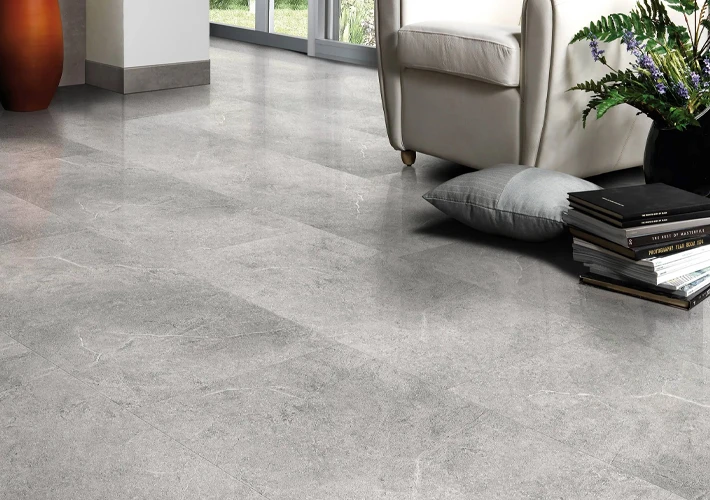
Changflor: Your China Factory Partner for 2.5mm Luxury Vinyl Flooring
For international flooring importers, wholesalers, distributors, and project contractors, choosing a reliable factory is essential for building a sustainable supply chain.
Changflor is a Chinese flooring brand focused on SPC and LVT flooring solutions for international markets.
We understand that different customers require different flooring specifications. A residential distributor may prioritize competitive pricing and attractive designs, while a commercial contractor may place greater importance on wear resistance, technical documentation, and consistent product quality.
That is why selecting between 0.3mm and 0.5mm wear layers should be based on the actual requirements of each project.
Our 2.5mm LVT Flooring Solutions
Changflor can discuss 2.5mm luxury vinyl flooring configurations with different wear layer options according to customer requirements and production availability.
Our product customization discussions can cover:
- 0.3mm and 0.5mm wear layer options
- Multiple wood-grain and stone designs
- Different surface textures and finishes
- Customized product dimensions
- OEM and private label packaging
- Bulk wholesale orders
- Product samples for evaluation
For distributors, offering two wear layer options can help create a more flexible product portfolio and serve different customer budgets.
Why Work with Changflor?
1. China Factory Supply
Direct communication with a Chinese flooring supplier helps buyers coordinate specifications, samples, production requirements, and export arrangements.
2. Multiple Flooring Solutions
Changflor focuses on SPC and LVT flooring products, allowing buyers to explore different flooring categories through one supplier.
3. Customization Support
We can discuss customized colors, patterns, dimensions, and packaging according to product requirements and order quantities.
4. B2B-Oriented Cooperation
Our business approach focuses on importers, wholesalers, distributors, construction contractors, and project procurement companies.
5. International Market Support
We understand the importance of product documentation, packaging specifications, sample evaluation, and communication throughout the export purchasing process.
Final Recommendation: Should Buyers Choose 0.3mm or 0.5mm?
For most buyers, the decision can be simplified by considering the intended application and performance requirements.
Choose 2.5mm LVT flooring with a 0.3mm wear layer when:
- The main target market is residential flooring.
- The project has moderate pedestrian traffic.
- Competitive purchasing costs are important.
- The product is intended for apartments, bedrooms, and living rooms.
- The project does not require a thicker wear layer.
Choose 2.5mm LVT flooring with a 0.5mm wear layer when:
- The product is intended for selected commercial environments.
- More frequent foot traffic is expected.
- Buyers want additional surface protection.
- The project requires a higher wear layer specification.
- The purchasing budget allows for a higher-specification product.
The most important conclusion is that 0.3mm and 0.5mm wear layers serve different market requirements. A 0.3mm wear layer is generally a cost-effective choice for residential flooring, while a 0.5mm wear layer is often a better starting point for selected commercial applications. Neither specification should be evaluated without considering the complete flooring construction and relevant test results.
If you are sourcing 2.5mm luxury vinyl flooring from China, Changflor welcomes inquiries from international importers, wholesalers, distributors, and project contractors.
Contact Changflor to request product specifications, decorative catalogs, samples, and factory quotations for 0.3mm and 0.5mm wear layer LVT flooring.
Contact Changflor today and develop the right LVT flooring collection for your market!