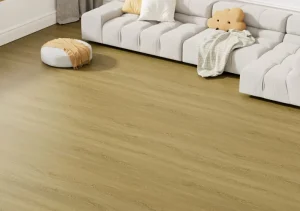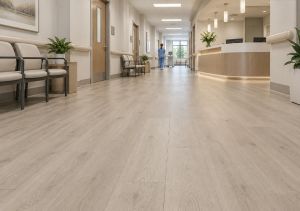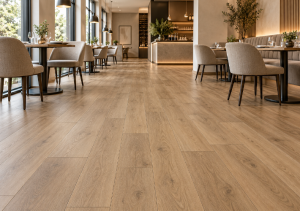
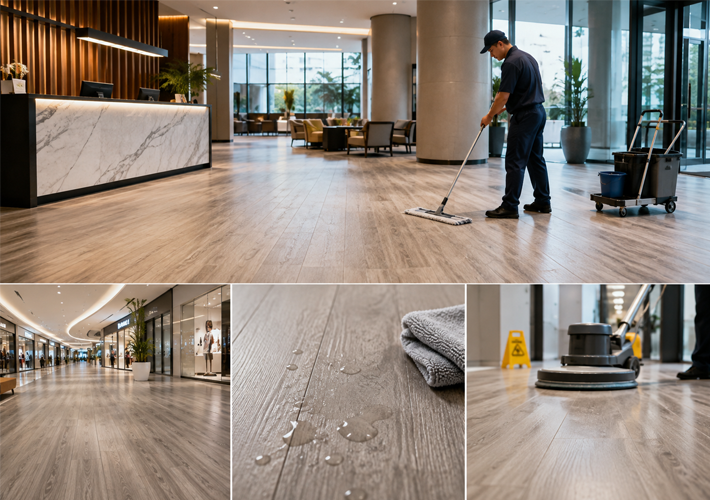
Commercial flooring is judged every day: at the entrance, under rolling chairs, around displays, beside lifts, and wherever customers and staff move through the building. A practical maintenance routine helps SPC flooring keep its appearance and gives the facility team a clear way to respond to spills, dirt, marks, and small repairs.
At ChangFlor, we recommend building the care plan around the exact product and the actual site conditions. Our SPC flooring collection includes different colours, surfaces, constructions, and formats, so this guide is a working framework for distributors, contractors, facility managers, and project buyers. The selected product instructions remain the final reference for cleaning products and installation details.
What does good SPC flooring maintenance achieve?
Maintenance is not only about making a floor look clean. It also helps a commercial team identify moisture, damaged edges, open joints, loose transitions, furniture pressure, and entrance-area wear before a small issue affects a larger area.
A good routine has four parts: remove loose dirt, respond to spills quickly, use compatible cleaning methods, and inspect the floor at practical points in the building. The routine should be simple enough for staff to follow and specific enough for the installer or facility manager to act on.
| Area or moment | Recommended action | What the team should watch |
|---|---|---|
| Building entrance | Remove loose grit and keep entrance mats clean and correctly positioned. | Sand, stones, trapped moisture, mat movement, and concentrated traffic |
| Daily operation | Dust mop or vacuum with a suitable floor attachment before damp cleaning. | Loose dirt that could scratch the surface or collect at joints |
| Spill or tracked-in moisture | Remove the liquid and clean the affected area as soon as practical. | Liquid at edges, transitions, seams, under furniture, or near service areas |
| Weekly or scheduled inspection | Walk the floor in normal lighting and check joints, edges, transitions, and high-use routes. | Plank movement, visible gaps, impact marks, indentation, or damaged accessories |
| After furniture changes | Use suitable pads or lifting methods and inspect the floor after heavy items are moved. | Scratches, pressure marks, dragged furniture, and concentrated loads |
The exact frequency should follow the traffic and cleaning plan of the building. A busy retail entrance may need attention several times during a day, while a low-traffic office zone may follow a lighter routine.
Start with dry soil removal
Loose dirt is one of the easiest problems to control. Grit brought in from outside can move across the floor under shoes, carts, chairs, and equipment. We normally suggest using clean entrance mats, removing visible debris promptly, and choosing a vacuum or dust-mop attachment that is suitable for resilient flooring.
Before damp cleaning, the floor should be free of loose particles. This reduces the chance of moving grit across the surface and makes the next cleaning step more effective. Cleaning tools should also be kept clean; a dirty mop can spread residue instead of removing it.
Clean spills before they become a site problem
Although the current ChangFlor SPC product page describes the example product as waterproof, a waterproof product still needs sensible spill management. Liquid can travel to edges, joints, transitions, service penetrations, and areas beneath equipment. Quick response also prevents stains and slip risks from becoming more difficult to manage.
For routine damp cleaning, use the method and cleaner approved for the selected product. Avoid introducing large amounts of water, leaving standing liquid, or using a chemical simply because it is strong. If a cleaner, disinfectant, solvent, polish, steam tool, or abrasive pad is not approved in the product care information, confirm its suitability before using it across the floor.
| Situation | First response | Follow-up check |
|---|---|---|
| Water or other clear liquid | Absorb or remove the liquid and clean the area with the approved routine. | Check nearby joints, edges, transitions, and furniture bases. |
| Food, drink, or coloured material | Remove the residue promptly and use the approved cleaner rather than aggressive scrubbing. | Confirm that no sticky film or colour transfer remains. |
| Rubber or shoe mark | Try the least aggressive approved cleaning method first. | Check whether the mark is surface residue or actual damage. |
| Unknown chemical spill | Isolate the area, follow the site safety procedure, and confirm material compatibility before cleaning. | Inspect the surface and request product guidance if the finish changes. |
| Liquid near a joint or edge | Remove it carefully and do not force liquid into the joint or under the plank. | Look for movement, swelling of adjacent materials, or an installation issue. |
This is a practical response framework, not a substitute for the facility’s safety procedure or the selected product’s care instructions. For healthcare, hospitality, food-service, or other controlled environments, the cleaning team should approve the routine with the project and safety requirements.
Protect the floor from avoidable scratches and pressure
SPC flooring is selected for many projects because its rigid construction and surface specification suit demanding interiors. That does not mean it is immune to damage. Dragging furniture, leaving sharp debris, using unsuitable chair casters, or concentrating heavy loads in a small area can shorten the visual life of any resilient floor.
When a commercial space is rearranged, we recommend lifting items where practical, using clean protective pads, and checking the suitability of chair casters and trolley wheels. Do not push a heavy display or cabinet across the floor simply because the plank feels rigid.
Cleaning and furniture protection should be coordinated. A clean floor with grit under a chair wheel can still develop visible marks, while a well-protected floor can be damaged if a chemical residue is left in a high-traffic route.

Inspect joints, edges, transitions, and high-use routes
Most facilities do not need to inspect every plank in detail every day. A short walk through the locations that experience the most traffic can reveal problems early. We suggest checking around entrances, service counters, office-chair routes, lifts, corridors, display areas, and transitions to other floor finishes.
| Inspection point | Possible sign | Next action |
|---|---|---|
| Plank joints | Visible gap, movement, edge impact, or a joint that no longer sits correctly | Record the location and ask the installer or supplier to review the cause. |
| Perimeter and transitions | Loose trim, damaged profile, exposed edge, or an opening around a doorway | Protect the area and repair the transition before traffic makes it worse. |
| Entrance and corridors | Concentrated scratches, dull appearance, grit accumulation, or tracked moisture | Review mats, cleaning timing, traffic flow, and the surface-care routine. |
| Under furniture | Indentation, scratches, wheel marks, or trapped moisture | Check pads, casters, load distribution, and the furniture layout. |
| Wet or service areas | Repeated spills, liquid at edges, or cleaning residue | Review the source of moisture and confirm that the installation detail is suitable. |
When should a damaged plank be replaced?
A small surface mark may be handled through the approved cleaning routine, but a damaged plank, edge, joint, or transition deserves a different response. Continuing to expose a damaged area to carts, moisture, or repeated foot traffic can make later repair more difficult.
For click-lock SPC, the replacement method depends on the installation layout, access, product system, and installer’s instructions. Keep spare material from the same order where possible and record the product, colour, batch information, and installation area. Do not assume that a visually similar plank will match the installed floor after lighting and wear are considered.
If you are planning a commercial order, ask us about the selected product’s format, construction, installation instructions, and sample before finalising the maintenance plan. Our free sample request page can help your team review the surface and colour before purchase.
Build a maintenance handover checklist
For distributors and contractors, maintenance information is also part of a professional project handover. The building owner should know what product was installed, where it was installed, how to clean it, what to avoid, and who to contact if a joint or transition needs attention.
| Handover item | What to record |
|---|---|
| Product identity | Product name or SKU, colour, format, selected thickness, and installation date |
| Approved cleaning routine | Dry-cleaning method, damp-cleaning method, approved cleaner, and spill response |
| Installation information | Installation system, subfloor notes, transitions, and areas requiring special attention |
| Protection requirements | Entrance mats, furniture pads, chair or trolley guidance, and temporary construction protection |
| Repair record | Spare material location, installer contact, inspected areas, and completed repairs |
Where technical documentation is required, we recommend keeping the current product data and applicable test information with the handover file. A standard reference such as ISO 10582:2017 or relevant ASTM resilient floor-covering standards may support a product review, but the exact edition, scope, and SKU applicability should always be confirmed.
Maintenance questions we ask before a B2B quotation
Maintenance starts before installation. When we discuss a commercial SPC flooring enquiry, we ask about the building’s use so the product, installation, and care expectations are aligned:
| Question | Why it matters |
|---|---|
| What type of building is it? | Office, retail, hotel, education, healthcare, and other spaces have different traffic and cleaning routines. |
| Where will the highest traffic occur? | Entrance routes, corridors, counters, and chair paths may need stronger protection and more frequent care. |
| What equipment moves over the floor? | Carts, chairs, trolleys, displays, and service equipment can influence surface and installation requirements. |
| What cleaning products does the facility already use? | Compatibility should be confirmed before a product is approved for routine use. |
| Will the buyer keep spare material? | Spare planks can make future repairs easier when the colour and product are no longer in regular stock. |
For a wider commercial planning view, our guide to SPC and LVT flooring for high-traffic commercial spaces explains how traffic conditions should influence product discussions.
Request an SPC flooring sample from ChangFlor
A clear maintenance plan protects the buyer’s investment and gives the facility team practical instructions from the first day of use. We can help you compare the selected SPC construction, surface, format, installation details, and project requirements before you place an order.
Request a free SPC flooring sample and include your country, project type, estimated area, expected traffic, and installation method. If you need technical information for a distributor or commercial project, you can also contact ChangFlor directly.