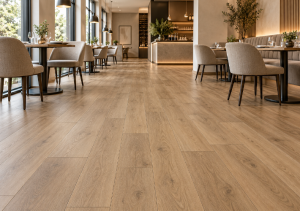
High-traffic commercial spaces require flooring that can withstand constant use while maintaining a professional appearance. Retail stores, hotels, offices, restaurants, shopping centers, schools, healthcare facilities, and public buildings all face the same challenge: the floor must handle heavy foot traffic, rolling loads, frequent cleaning, and daily wear without requiring excessive maintenance.
This is where SPC and LVT flooring for high-traffic commercial spaces have become increasingly popular. Both flooring types combine attractive designs with practical performance, making them suitable for commercial projects where durability, appearance, installation efficiency, and lifecycle cost all matter.
For importers, distributors, contractors, architects, and commercial flooring buyers, choosing the right flooring is not simply about selecting a beautiful surface. It requires evaluating wear resistance, dimensional stability, waterproof performance, installation method, maintenance requirements, product consistency, and supplier reliability.
As a professional Chinese flooring manufacturer, Changflor supplies SPC and LVT flooring solutions for commercial and residential applications, supporting international buyers with factory-direct production, customized designs, OEM/ODM services, and export-oriented quality control.
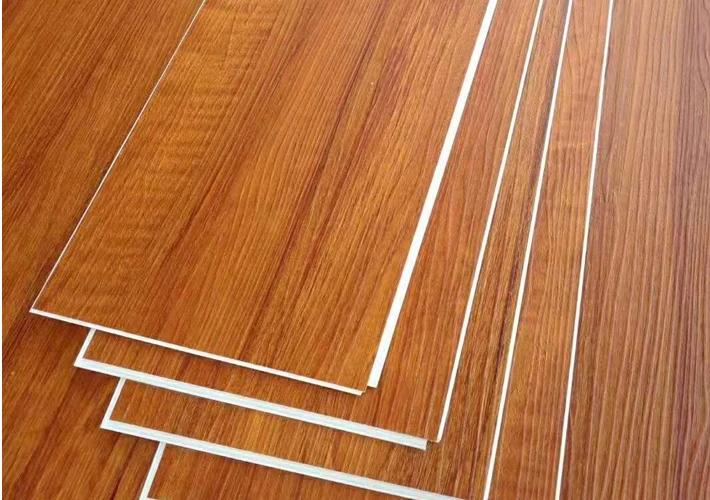
Why SPC and LVT Flooring Are Suitable for High-Traffic Commercial Spaces
Commercial flooring is exposed to significantly more stress than flooring in a typical residential environment. A hotel corridor may experience hundreds of people walking across it every day. A retail store may have customers, employees, shopping carts, and delivery equipment constantly moving across the floor.
Traditional flooring materials can perform well in these environments, but they may require more complicated installation or maintenance. SPC and LVT provide an alternative that combines visual flexibility with practical performance.
1. Excellent Wear Resistance
One of the most important factors for commercial flooring is resistance to surface wear.
SPC and LVT flooring generally use a protective wear layer over the decorative layer. The wear layer helps protect the printed design from daily abrasion caused by walking, footwear, furniture, and other commercial activities.
For high-traffic applications, buyers should pay close attention to the thickness and specification of the wear layer rather than evaluating flooring only by its appearance.
A properly specified commercial SPC or LVT floor can maintain its decorative appearance for a long period when correctly installed and maintained.
For distributors and project contractors, offering several wear-layer options is also useful because different projects have different performance requirements.
2. Water-Resistant and Easy to Maintain
Commercial floors are frequently exposed to spills, cleaning water, humidity, and other sources of moisture.
SPC flooring has a rigid stone-polymer core that provides strong dimensional stability and water-resistant performance. LVT flooring also offers excellent moisture resistance compared with many traditional flooring materials.
This makes SPC and LVT suitable for many commercial environments such as:
- Retail stores
- Hotel rooms and corridors
- Restaurants
- Offices
- Shopping centers
- Schools
- Clinics and healthcare spaces
- Commercial showrooms
- Public buildings
- Apartment common areas
The surface is also relatively easy to clean. Regular sweeping, vacuuming, and damp mopping can help remove dust and everyday dirt without complicated maintenance procedures.
For commercial property owners, easier maintenance can reduce labor requirements and help keep the floor looking presentable during daily operations.
3. Stable Performance Under Daily Use
SPC flooring is particularly attractive for commercial projects because of its rigid core structure.
Compared with flexible flooring products, rigid SPC flooring can provide a more stable surface under normal commercial use. Its dimensional stability helps reduce concerns related to expansion and contraction when the product is properly manufactured, installed, and used within the recommended environmental conditions.
This characteristic is especially valuable for large commercial projects where flooring may cover hundreds or thousands of square meters.
However, flooring performance always depends on the complete system. Subfloor preparation, installation conditions, expansion gaps, temperature, humidity, and product specifications all influence the final result.
4. Wide Range of Commercial Designs
Commercial flooring needs to perform well, but appearance is equally important.
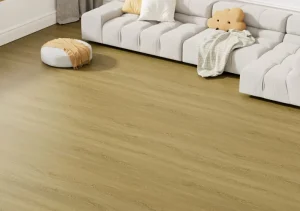
Modern SPC and LVT flooring can reproduce the appearance of natural materials such as:
- Oak
- Walnut
- Maple
- Stone
- Marble
- Concrete
- Cement
- Wood grain
- Modern abstract patterns
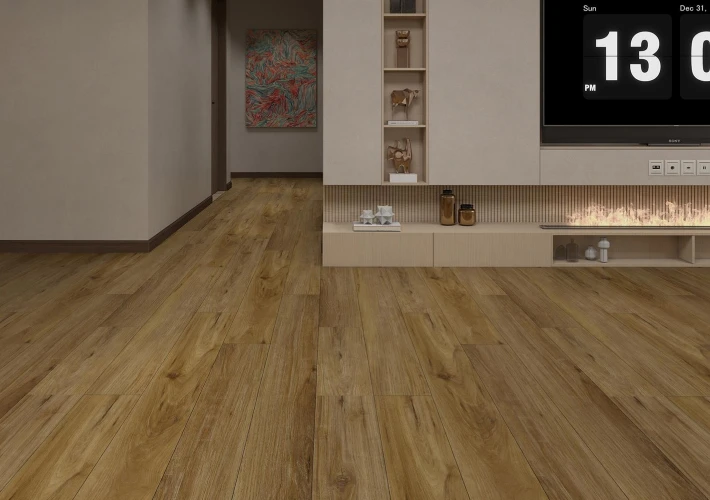
This allows architects and designers to create different interior styles without changing the fundamental flooring system.
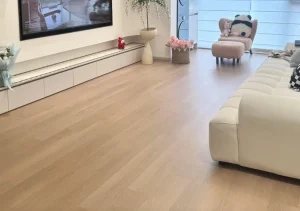
For hotels, for example, wood-look SPC or LVT can create a warm and premium atmosphere. In modern offices, concrete or stone-effect designs can provide a minimalist appearance. Retail stores can use customized colors and patterns to reinforce brand identity.
Changflor can provide different colors, textures, dimensions, surface treatments, and installation systems according to project requirements.
SPC vs. LVT Flooring for Commercial Applications
Although SPC and LVT belong to the same broader luxury vinyl flooring category, they are not identical.
Understanding the differences is important when selecting flooring for high-traffic commercial spaces.
| Feature | SPC Flooring | LVT Flooring |
|---|---|---|
| Core | Rigid stone-polymer core | Flexible vinyl-based construction |
| Structure | Rigid | Flexible or semi-rigid |
| Dimensional stability | High | Good |
| Underfoot feel | Firm and stable | Softer and more flexible |
| Water resistance | Excellent | Excellent |
| Installation | Click-lock or other systems | Click, glue-down or other systems |
| Design options | Wide | Very wide |
| Commercial use | Excellent | Excellent |
| Subfloor requirements | Requires suitable subfloor | Depends on installation type |
| Typical applications | Retail, hotels, offices, public spaces | Retail, healthcare, offices, hospitality |
When Should You Choose SPC Flooring?
SPC is often a strong option when the project prioritizes rigidity, dimensional stability, installation speed, and resistance to moisture.
Click-lock SPC flooring can also be attractive for renovation projects because installation can be relatively fast compared with some traditional flooring systems.
SPC is commonly considered for:
- Hotel renovations
- Retail chains
- Office buildings
- Commercial apartments
- Restaurants
- Showrooms
- Education facilities
- Hospitality projects
When Should You Choose LVT Flooring?
LVT provides greater flexibility in terms of construction and installation methods.
Glue-down LVT, for example, can be useful for commercial projects requiring a firmly bonded flooring system. It can also provide designers and contractors with greater flexibility when working with different floor layouts.
LVT is widely used in:
- Offices
- Retail stores
- Hotels
- Healthcare facilities
- Schools
- Restaurants
- Commercial buildings
The correct choice depends on project requirements rather than simply choosing one product as universally better than the other.
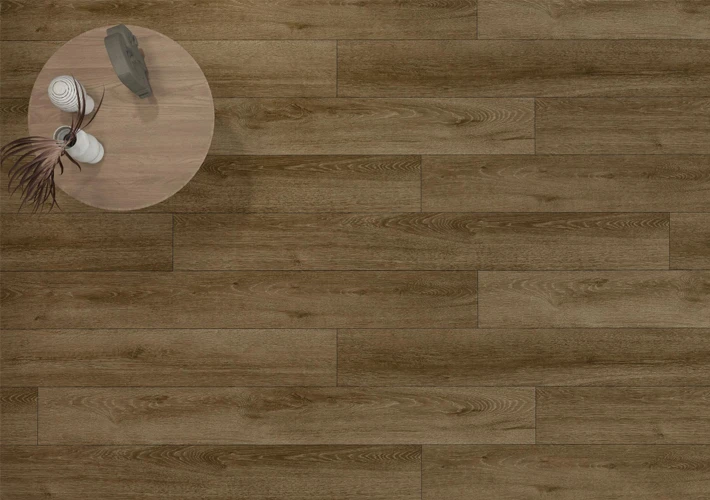
Key Specifications to Consider When Buying Commercial SPC and LVT Flooring
For B2B buyers, flooring specifications are more important than marketing descriptions.
Before placing a bulk order, importers and project contractors should evaluate several technical factors.
Wear Layer Thickness
The wear layer is one of the most important components affecting surface durability.
Residential and light-commercial applications may use thinner wear layers, while heavy commercial environments generally require more robust specifications.
Common commercial wear-layer options may include 0.3 mm, 0.5 mm, and 0.7 mm, although the appropriate specification depends on the application and manufacturer’s construction.
Buyers should match the wear layer to expected traffic levels rather than automatically choosing the thickest option.
Overall Thickness
The total thickness of SPC or LVT flooring affects the product’s structure, feel, and compatibility with existing floors.
For commercial applications, common SPC thicknesses may fall within approximately 4–8 mm, depending on the construction and project requirements.
LVT products can also be produced in different thicknesses depending on whether they are designed for residential, commercial, or specialized applications.
Surface Treatment
A suitable surface treatment can improve stain resistance, cleaning performance, scratch resistance, and overall appearance.
Commercial projects should consider flooring with a surface treatment appropriate for frequent cleaning and heavy daily use.
Installation System
Installation efficiency is another major factor in commercial construction.
SPC click flooring can reduce installation time because individual planks or tiles can be connected through an interlocking system.
Glue-down LVT provides another solution, particularly for projects where a permanently bonded floor is preferred.
The choice should consider project schedule, subfloor condition, labor availability, and future renovation requirements.
Slip Resistance
Commercial spaces need to consider user safety.
Depending on the application and local building requirements, flooring may need to meet relevant slip-resistance standards.
Restaurants, entrances, commercial kitchens, healthcare facilities, and other areas exposed to moisture should receive particular attention.
Buyers should request appropriate test reports and technical documentation from suppliers instead of relying only on general product claims.
Applications of SPC and LVT Flooring in High-Traffic Commercial Spaces
The versatility of SPC and LVT allows them to be used across many commercial environments.
Hotels
Hotels require flooring that combines appearance, durability, and easy maintenance.
SPC and LVT can be used in:
- Guest rooms
- Hotel corridors
- Reception areas
- Restaurants
- Meeting rooms
- Retail areas
- Serviced apartments
Wood-look designs are especially popular because they provide a warm appearance while offering easier maintenance than natural timber in many applications.
For hotel renovation projects, click SPC flooring can also help shorten installation schedules, allowing rooms or public areas to return to operation more quickly.
Retail Stores
Retail floors experience continuous foot traffic and frequent movement of merchandise.
SPC and LVT can provide a practical combination of durability and design flexibility.
Retail chains can also use consistent flooring designs across different branches to create a unified visual identity.
For commercial flooring distributors, this creates opportunities to supply standardized product lines for multi-location projects.
Offices
Modern offices increasingly prioritize comfortable, attractive, and easy-to-maintain interiors.
LVT can provide a more flexible flooring solution, while SPC offers a rigid structure and efficient installation.
Wood and stone designs can complement contemporary office furniture and partition systems.
Restaurants
Restaurants require flooring that can handle frequent cleaning and accidental spills.
Water-resistant flooring with a suitable protective surface can be useful in dining areas, corridors, and other appropriate spaces.
However, areas directly exposed to excessive water, grease, extreme heat, or industrial cleaning conditions should always be evaluated separately according to the manufacturer’s recommendations.
Healthcare and Education
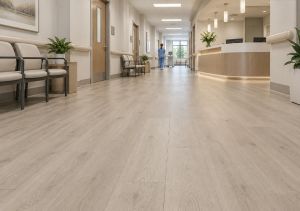
Healthcare facilities and educational buildings can generate substantial daily foot traffic.
Flooring in these environments needs to balance durability, hygiene, maintenance, safety, and appearance.
LVT is frequently considered for institutional environments because of its flexible construction options, while SPC can be attractive for areas where rigid flooring and fast installation are priorities.
The exact product specification should be selected according to the requirements of the specific facility.
How to Reduce Commercial Flooring Lifecycle Costs
The cheapest flooring product is not always the most economical choice.
Commercial buyers should consider the total lifecycle cost, including purchasing, installation, maintenance, repairs, replacement, and downtime.
Choose the Correct Specification
Over-specifying flooring can unnecessarily increase project costs, while under-specifying can lead to premature wear.
A professional supplier should help buyers select an appropriate combination of:
- Wear layer
- Thickness
- Core structure
- Surface treatment
- Installation method
- Size
- Design
- Packaging
Optimize Installation
Installation costs can represent a significant portion of a commercial flooring project.
Click SPC flooring can help simplify installation in suitable applications, potentially reducing labor requirements and project time.
However, the subfloor still needs to meet the manufacturer’s requirements. An uneven or contaminated subfloor can negatively affect installation and long-term performance.
Maintain the Floor Properly
Even high-performance commercial flooring requires maintenance.
A basic maintenance program should include regular cleaning, prompt removal of spills, suitable cleaning products, and protection under heavy furniture where appropriate.
Entrance mats can also reduce the amount of dirt and abrasive particles brought onto the floor.
Proper maintenance helps preserve the decorative surface and extend the useful life of the flooring.
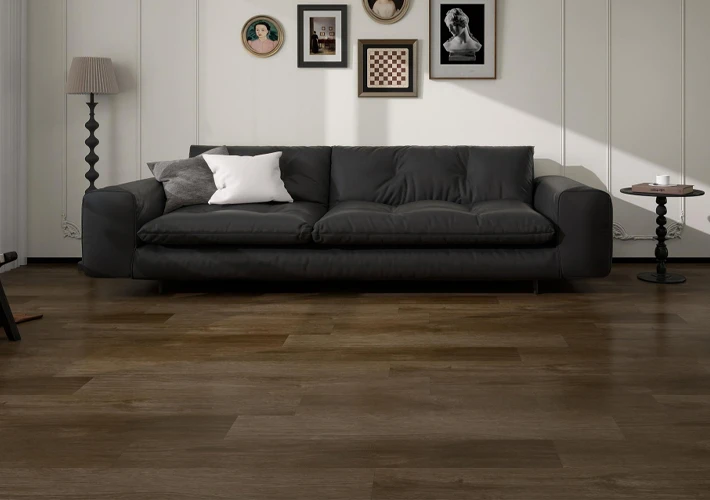
Why Choose Changflor as Your SPC and LVT Flooring Manufacturer?
For B2B buyers, choosing a flooring supplier is about more than product price.
A reliable manufacturer should be able to provide stable quality, consistent production, flexible customization, professional technical support, and dependable international logistics.
Changflor is a China-based manufacturer specializing in SPC and LVT flooring solutions for international markets.
Factory-Direct Supply
Working directly with a manufacturer can provide buyers with better control over product specifications, pricing, packaging, and production schedules.
Changflor supports wholesale orders and project-based procurement, making the company suitable for distributors, importers, contractors, and commercial project buyers.
OEM and ODM Services
Different markets have different preferences regarding colors, dimensions, textures, packaging, and branding.
Changflor can support OEM and ODM requirements for qualified B2B projects.
Customization can include:
- Product colors
- Surface designs
- Flooring dimensions
- Packaging
- Brand labeling
- Carton design
- Product specifications
This allows distributors to develop private-label flooring ranges instead of relying entirely on standard products.
Export-Oriented Production
International flooring buyers need suppliers familiar with export packaging, container loading, documentation, and international shipping requirements.
Changflor works with overseas buyers and can provide export-oriented packaging and production support.
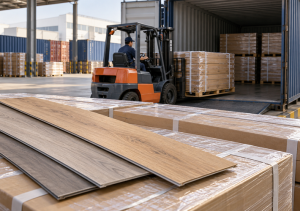
For large-volume projects, professional container loading is also important because flooring products occupy considerable container space. Optimized packaging can help improve loading efficiency and reduce unnecessary logistics costs.
Quality Control
For commercial flooring, consistency between batches is essential.
Differences in color, dimensions, surface texture, locking profile, or packaging can create problems during large-scale installation.
A professional manufacturing process should therefore include quality checks throughout production, from raw materials and core production to surface finishing, cutting, profiling, inspection, and packaging.
For B2B customers, Changflor can provide product specifications and relevant documentation according to project requirements.
How to Select the Right SPC or LVT Flooring for Your Project
Choosing commercial flooring should start with the actual application rather than simply selecting a popular design.
Before requesting a quotation, buyers should prepare several basic project details.
1. Identify the Traffic Level
Determine whether the project has light, medium, heavy, or very heavy traffic.
A small office and a busy shopping center should not necessarily use the same flooring specification.
2. Determine the Installation Method
Decide whether the project requires:
- Click SPC
- Click LVT
- Glue-down LVT
- Loose-lay LVT
- Other specialized systems
The installation method can affect labor costs, project schedules, and subfloor preparation.
3. Select the Appropriate Wear Layer
Higher traffic generally requires greater attention to wear resistance.
A supplier can recommend an appropriate wear-layer specification based on the expected usage.
4. Consider the Environment
Check exposure to moisture, temperature variation, sunlight, cleaning chemicals, rolling loads, and other environmental conditions.
For example, a hotel room has different requirements from a supermarket entrance.
5. Request Samples
Samples are important for evaluating:
- Color
- Texture
- Surface finish
- Locking system
- Dimensional accuracy
- Underfoot feel
- Visual consistency
For large commercial projects, buyers should test samples under realistic conditions before confirming mass production.
6. Evaluate the Supplier
Finally, consider the manufacturer’s:
- Production capability
- Quality control system
- Export experience
- Customization capability
- Lead time
- Packaging
- Technical support
- Communication
- After-sales service
A competitive unit price is valuable, but reliable supply and consistent quality can have an even greater impact on the success of a commercial project.
Conclusion
SPC and LVT flooring are practical flooring solutions for many high-traffic commercial spaces, combining durability, moisture resistance, design flexibility, easy maintenance, and efficient installation options.
SPC flooring is particularly attractive for projects that prioritize a rigid structure, dimensional stability, and click-lock installation. LVT offers flexible construction and installation options, making it suitable for a wide range of commercial environments.
For hotels, retail stores, offices, restaurants, education facilities, healthcare spaces, and other commercial applications, the most important step is to select a flooring specification that matches the actual traffic level and environmental conditions.
For importers, distributors, contractors, architects, and commercial flooring buyers, working with a reliable manufacturer can also simplify procurement and provide greater control over product quality, customization, packaging, and delivery.
Changflor provides SPC and LVT flooring solutions from China for international B2B customers. With factory-direct production, OEM/ODM support, multiple design options, and export-oriented service, Changflor can help commercial buyers develop flooring solutions suited to different markets and project requirements.
Looking for SPC or LVT flooring for a high-traffic commercial project? Contact Changflor for product specifications, samples, customization options, and a factory quotation.