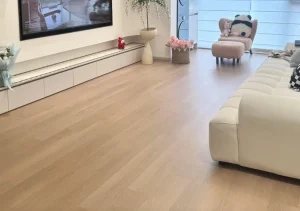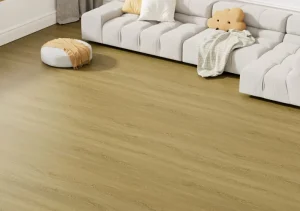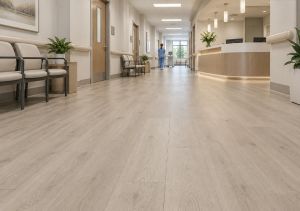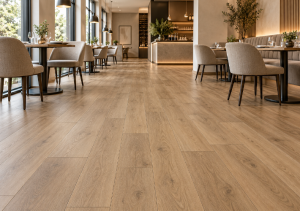
When purchasing glue down LVT flooring for commercial projects, wholesale distribution, hospitality, retail, education, healthcare, or residential development, choosing the right manufacturer is just as important as choosing the right product.
China has become one of the major global manufacturing centers for luxury vinyl flooring, including glue down LVT flooring. However, not every supplier operates as a real manufacturer, and not every factory has the same production capability, quality-control system, product consistency, or export experience. Some companies are trading companies that outsource production, while others may operate factories that are suitable for small domestic orders but lack the capacity to support international B2B projects.
For importers, flooring distributors, contractors, architects, and project buyers, the right glue down LVT flooring manufacturer should provide more than competitive pricing. Product construction, wear resistance, dimensional stability, color consistency, backing options, adhesive compatibility, packaging, quality control, customization, lead time, and after-sales support all affect the final project result.
This guide explains how to evaluate a glue down LVT flooring manufacturer in China, what specifications buyers should check, which questions should be asked before placing an order, and why working directly with an experienced Chinese factory such as Changflor can provide advantages for international buyers.
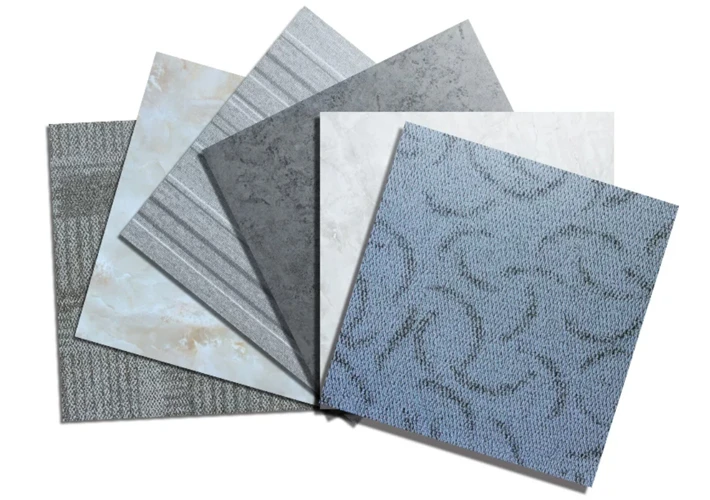
Understand What Glue Down LVT Flooring Is Before Choosing a Manufacturer
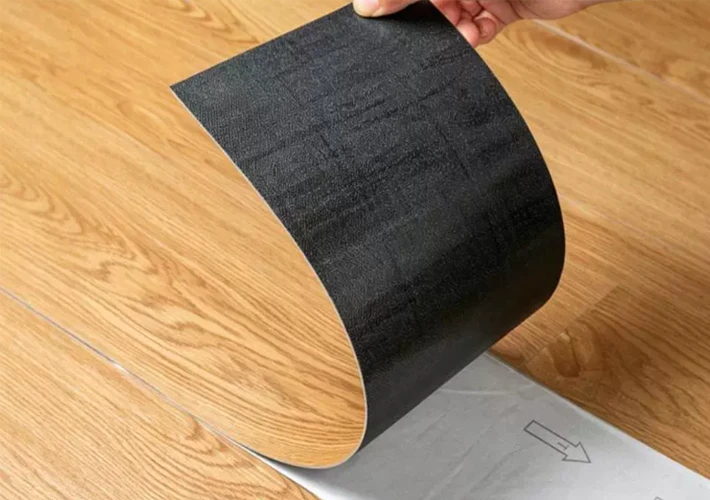
Glue down LVT, or luxury vinyl tile flooring installed with adhesive, is a resilient flooring solution widely used in commercial and residential environments. Unlike click-lock vinyl flooring, glue down LVT does not rely on an integrated locking mechanism. Instead, individual planks or tiles are installed directly onto a properly prepared subfloor using a suitable flooring adhesive.
This construction makes glue down LVT particularly attractive for commercial projects where designers and contractors want a stable, low-profile flooring system with a wide range of visual options.
Typical glue down LVT construction can include several functional layers:
- UV or protective surface layer
- Transparent wear layer
- Printed decorative film
- Vinyl or composite core layer
- Backing layer
- Optional additional functional layers depending on the product design
The exact construction varies between manufacturers and product series.
For B2B buyers, understanding this structure is important because two products can look almost identical but perform very differently in actual applications.
Wear layer is an important specification
One of the first technical specifications buyers should compare is the wear layer.
Common commercial LVT products may use different wear-layer thicknesses depending on their intended application. A thicker wear layer generally provides greater protection against abrasion, but the correct specification depends on the project rather than simply choosing the thickest available option.
For example:
| Application | Typical Consideration |
|---|---|
| Residential | Moderate wear resistance |
| Hotel rooms | Medium to high wear resistance |
| Retail stores | High wear resistance |
| Offices | High wear resistance |
| Schools | High traffic performance |
| Healthcare | Easy maintenance and durability |
| Commercial corridors | Higher abrasion resistance |
| Heavy commercial areas | Premium wear-layer specification |
A professional manufacturer should be able to recommend the appropriate product construction according to the expected traffic level.
Thickness also matters
LVT thickness can affect flooring performance, installation characteristics, dimensional stability, and project cost.
Common commercial specifications may include products around 2 mm, 2.5 mm, 3 mm, or other customized thicknesses. However, buyers should not evaluate flooring only by total thickness.
A thicker product is not automatically a better product.
The buyer should instead evaluate the complete construction, including wear layer, core composition, backing, dimensional stability, surface treatment, and manufacturing consistency.
Plank and tile formats
Glue down LVT provides considerable design flexibility.
Manufacturers may offer:
- Wood-look planks
- Stone-look tiles
- Concrete-look designs
- Herringbone patterns
- Chevron formats
- Custom plank sizes
- Custom tile sizes
- Multiple surface textures
For large projects, the ability to provide consistent dimensions and repeatable patterns is particularly important.
This is one reason buyers should evaluate the manufacturer’s production system rather than purchasing solely based on a product sample.
Check Whether the Supplier Is a Real Glue Down LVT Manufacturer
One of the most important steps when sourcing LVT flooring from China is determining whether the company is actually a manufacturer.
The Chinese flooring industry contains several types of suppliers:
- Direct manufacturers
- Manufacturer-exporters
- Trading companies
- Factory agents
- Distributors
- Companies combining manufacturing and trading
For international B2B buyers, working directly with an experienced manufacturer can provide better control over specifications, pricing, production schedules, packaging, and customization.
How can you verify a Chinese flooring factory?
Before placing a substantial order, buyers can request information such as:
- Factory address
- Production line information
- Product catalog
- Factory photographs
- Production videos
- Quality-control procedures
- Product specifications
- Certifications and test reports
- Export experience
- Packaging information
- Loading photographs
- Sample products
- Company registration information
A serious manufacturer should be able to clearly explain how its products are manufactured.
You can also ask technical questions about the product.
For example:
What is the wear-layer thickness?
What type of backing does the product use?
What are the standard dimensions?
What adhesive does the manufacturer recommend?
What dimensional stability testing is performed?
What standards or test reports are available?
What customization options are available?
A supplier that cannot answer basic technical questions may not have sufficient manufacturing expertise.
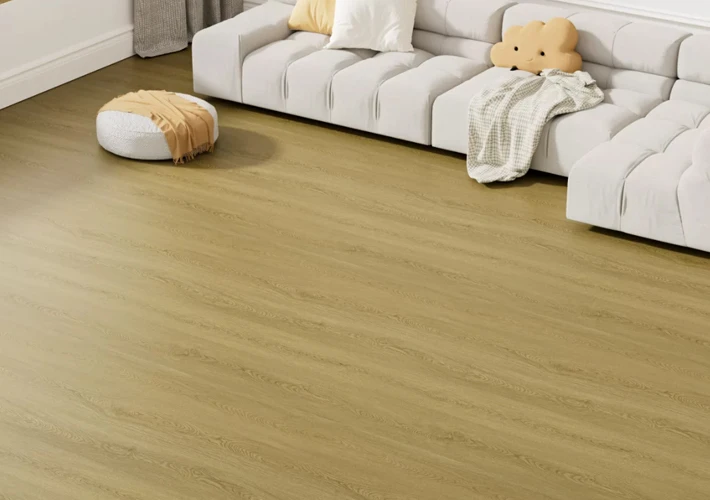
Why factory-direct sourcing can be valuable
When you purchase directly from a Chinese factory, the supply chain can be shorter.
Instead of:
Manufacturer → Trading Company → Distributor → Importer → Project
a buyer may be able to work directly with:
Manufacturer → Importer / Distributor / Project Buyer
This can improve communication and potentially reduce unnecessary costs.
For large-volume flooring projects, direct communication with the factory can also make it easier to control product specifications.
Changflor is positioned as a Chinese flooring manufacturer serving international B2B customers with LVT and SPC flooring solutions. For buyers looking for glue down LVT flooring from China, working directly with a factory can provide a more efficient path from product development to bulk production.
Evaluate Product Quality and Manufacturing Consistency
Price is important in international flooring procurement, but product consistency is often even more important.
A flooring manufacturer may provide an attractive quotation, but if the production quality varies between batches, the buyer can face significant problems during installation.
For commercial projects, color consistency, dimensions, surface appearance, and structural stability all matter.
Check color consistency
LVT flooring uses printed decorative layers to reproduce wood, stone, concrete, and other visual effects.
A professional manufacturer should have procedures for controlling color consistency between production batches.
This is particularly important when:
- Multiple containers are required
- The project will be installed over a large area
- The same flooring will be supplied to multiple buildings
- Additional quantities may be required later
- The project uses large open spaces
Buyers should discuss batch control before ordering.
For major projects, it can be useful to request a production sample or approved reference sample that the manufacturer can use as the production benchmark.
Check dimensional stability
LVT flooring needs to maintain its dimensions under normal installation and environmental conditions.
Poor dimensional stability can contribute to:
- Gaps
- Buckling
- Edge movement
- Installation problems
- Visual inconsistencies
A reliable manufacturer should understand how raw-material formulation, production temperature, pressing, cooling, and finishing processes affect product stability.
Surface quality
The flooring surface should be checked for:
- Printing consistency
- Texture consistency
- Surface defects
- Scratches
- Color variation
- Edge quality
- Gloss variation
- Protective-layer consistency
For commercial projects, even relatively small surface defects can become obvious when repeated across hundreds or thousands of square meters.
Raw-material control
Another important question is how the manufacturer controls raw materials.
A professional factory should have defined requirements for materials used in:
- Vinyl composition
- Plasticizers
- Stabilizers
- Decorative film
- Wear layer
- Backing
- Surface treatments
- Packaging
Consistent raw materials contribute to consistent finished products.
This is one of the major differences between an established manufacturer and a supplier that simply purchases finished products from different factories.
Compare Factory Capability, Customization and OEM/ODM Services
International flooring buyers do not always need standard products.
Distributors may require private-label packaging. Developers may require a particular color. Contractors may need specific dimensions. Large hotel projects may require a coordinated flooring collection.
Therefore, customization capability should be one of the key criteria when choosing a Chinese glue down LVT flooring manufacturer.
What can be customized?
Depending on the factory’s capabilities and order quantity, customization may include:
- Product dimensions
- Thickness
- Wear layer
- Surface texture
- Colors
- Wood patterns
- Stone patterns
- Packaging
- Carton design
- Product labeling
- Pallet configuration
- Brand information
- Special product specifications
OEM and ODM services can be particularly valuable for flooring distributors.
For example, a distributor may want to develop a private-label LVT collection for a particular market rather than selling a generic product that is available from many competing suppliers.
Ask about MOQ
MOQ, or minimum order quantity, is another important factor.
The MOQ can vary according to whether the buyer requires:
- Standard colors
- New decorative film
- New packaging
- Custom dimensions
- Private labeling
- Special formulations
Before requesting a quotation, buyers should clearly explain their requirements.
A professional manufacturer can then determine whether the order can be produced using existing specifications or whether customized production is required.
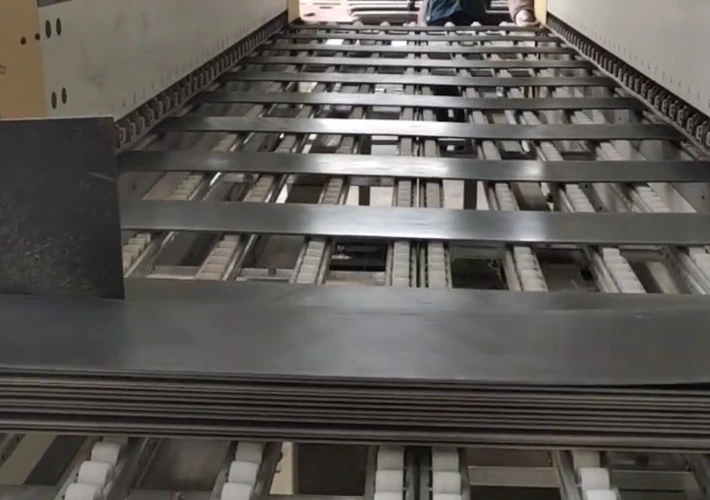
Ask about production capacity
A supplier may be able to produce samples quickly but struggle with a large commercial project.
Therefore, buyers should ask:
- What is the monthly production capacity?
- How many production lines are available?
- What is the normal production lead time?
- Can the factory handle repeat orders?
- How does the factory manage peak-season production?
- Can the supplier reserve production capacity for large projects?
This is especially important for hotel chains, retail projects, apartment developments, and commercial construction programs.
Review Certifications, Testing and Quality-Control Procedures
Certifications and test reports should not be treated as simple marketing materials.
For professional flooring procurement, documentation helps buyers evaluate whether the product is suitable for the target market and application.
Depending on the destination market and project requirements, buyers may need documentation related to:
- Product performance
- Fire performance
- Slip resistance
- Wear resistance
- Dimensional stability
- Chemical resistance
- Indoor air quality
- Environmental performance
- Heavy-metal or restricted-substance requirements
The exact requirements vary by country, building code, project specification, and application.
Do not simply ask, “Do you have certificates?”
A better approach is to ask for documents related to the exact product you intend to purchase.
This distinction is important.
A factory may have certificates for one product series while the buyer is purchasing another product.
Therefore, request documentation that corresponds to the actual:
- Product model
- Construction
- Thickness
- Wear layer
- Surface
- Production specification
Quality control should cover the entire production process
A strong LVT manufacturer should have quality control at multiple stages.
This can include:
Incoming material inspection
Raw materials are checked before production.
Production inspection
The manufacturing process is monitored for consistency.
Finished-product inspection
The final flooring is checked before packaging.
Packaging inspection
Cartons, labels, quantities, and pallet configurations are verified.
Pre-shipment inspection
The final order can be inspected before loading.
For international buyers, this multi-stage approach helps reduce the risk of receiving products that do not match the approved sample.
Compare Price, Packaging, Lead Time and Export Service
When comparing Chinese LVT flooring suppliers, buyers often focus heavily on the price per square meter.
However, the lowest quotation is not necessarily the lowest total procurement cost.
A better comparison should consider the complete supply package.
Compare quotations using the same specifications
For example, when comparing two suppliers, make sure both quotations specify:
- Product type
- Total thickness
- Wear-layer thickness
- Dimensions
- Surface treatment
- Backing
- Packaging
- Quantity per carton
- Cartons per pallet
- Loading quantity
- MOQ
- Incoterm
- Production lead time
Otherwise, you may be comparing two completely different products.
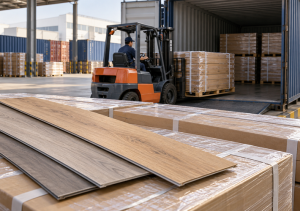
Packaging matters for international shipping
LVT flooring may travel thousands of kilometers before reaching its final destination.
Good packaging helps protect the products during:
- Factory handling
- Container loading
- Ocean transportation
- Port handling
- Warehouse storage
- Local transportation
Ask the supplier about:
- Carton strength
- Internal protection
- Pallet use
- Moisture protection
- Container loading method
- Product identification
- Batch identification
For large projects, clear batch identification can also help with inventory management.
Lead time should be realistic
A professional manufacturer should provide a realistic production schedule rather than promising an unrealistically short delivery time simply to win an order.
Lead time can depend on:
- Product availability
- Production capacity
- Customization
- Raw-material availability
- Packaging requirements
- Order quantity
- Peak-season production
For custom LVT products, buyers should confirm the production schedule before signing a purchase agreement.
Export experience
International flooring orders involve more than manufacturing.
An experienced exporter should understand:
- Commercial invoices
- Packing lists
- Shipping documents
- Container loading
- Export procedures
- Product labeling
- International logistics
- Communication with freight forwarders
For overseas buyers, this can make the procurement process significantly easier.
Questions to Ask a Chinese Glue Down LVT Flooring Manufacturer
Before selecting a supplier, buyers can use the following checklist.
Product questions
1. What LVT constructions do you offer?
Ask about different thicknesses, wear layers, backing structures, and surface treatments.
2. What are your standard sizes?
Check whether the factory can provide the plank or tile dimensions required for your project.
3. What wear layers are available?
Make sure the recommended wear layer matches the expected traffic level.
4. Can you provide product samples?
Samples allow buyers to evaluate color, texture, construction, and overall quality.
5. Can you customize the product?
Ask about dimensions, colors, textures, packaging, and private-label options.
Factory questions
6. Are you a direct manufacturer?
Ask for factory information rather than relying only on a company profile.
7. What is your production capacity?
This is important for large projects and repeat orders.
8. How do you control product quality?
Ask for details about raw materials, production inspection, and finished-product inspection.
9. How do you control color consistency?
This is especially important for large commercial projects.
Commercial questions
10. What is the MOQ?
Make sure the MOQ fits your purchasing plan.
11. What is the normal lead time?
Ask whether standard and customized products have different production schedules.
12. What packaging options are available?
Private-label buyers should discuss packaging early.
13. What are your payment and shipping terms?
Clarify the commercial terms before placing the order.
14. Can you support repeat orders?
This matters for distributors building a long-term product line.
Why Choose Changflor as Your Glue Down LVT Flooring Manufacturer in China?
For international buyers, choosing a flooring supplier should be viewed as choosing a long-term manufacturing partner rather than simply finding the lowest price.
Changflor is a China-based flooring manufacturer focused on SPC and LVT flooring solutions for international markets. For buyers sourcing glue down LVT flooring, Changflor can support the process from product selection and specification confirmation through bulk production and export.
The key advantage of working with a professional factory is direct communication.
Instead of communicating through several layers of intermediaries, buyers can discuss product requirements directly with the manufacturing team.
This can be particularly useful when a project requires customized specifications.
Suitable for different B2B buyers
Changflor’s flooring solutions can be considered by:
- Flooring importers
- Flooring wholesalers
- Distributors
- Contractors
- Project developers
- Interior designers
- Commercial flooring companies
- Building-material suppliers
- Retail flooring businesses
- Private-label flooring brands
For distributors, the ability to develop customized product collections can help differentiate their product range.
For contractors and project buyers, consistent specifications and reliable production are important for maintaining installation quality.
For importers, factory-direct communication can simplify the sourcing process.
Focus on long-term supply
A good flooring manufacturer should not only be capable of completing one order.
For B2B buyers, long-term supply consistency is often more valuable.
If a distributor sells a particular LVT collection successfully, it may need the same product again six months or one year later.
Therefore, buyers should consider whether the manufacturer can maintain:
- Stable product specifications
- Consistent colors
- Repeatable quality
- Reliable packaging
- Reasonable lead times
- Production capacity
- Technical communication
- Long-term cooperation
This is particularly important when building a private-label flooring business.
Request samples before bulk ordering
One of the safest ways to evaluate a Chinese glue down LVT flooring manufacturer is to request samples before placing a large order.
The evaluation process can include:
- Request the product catalog.
- Select suitable LVT specifications.
- Request physical samples.
- Confirm technical specifications.
- Review available testing documents.
- Compare samples with the project requirements.
- Confirm packaging.
- Request a quotation based on exact specifications.
- Confirm MOQ and lead time.
- Place a trial order before scaling up.
For large projects, buyers can also consider third-party inspection before shipment.
Choose the manufacturer based on total value
The best glue down LVT flooring manufacturer is not necessarily the company offering the lowest initial quotation.
A better supplier should provide a balance of:
Product quality + manufacturing capability + customization + quality control + price + delivery + communication + long-term support.
For international B2B flooring buyers, these factors directly influence the total project cost and customer satisfaction.
Conclusion: How to Select the Right Glue Down LVT Flooring Factory in China
Choosing a glue down LVT flooring manufacturer in China requires more than comparing prices from several suppliers.
Buyers should first confirm whether the supplier is a genuine manufacturer, then evaluate its product construction, wear layer, dimensional stability, surface quality, production capacity, customization capability, quality-control system, certifications, packaging, lead time, and export experience.
The right manufacturer should also be capable of maintaining consistent product quality across repeated orders.
For distributors and importers, this is particularly important because the flooring they purchase becomes part of their own product offering and reputation.
When evaluating suppliers, buyers should compare quotations using identical specifications and request samples before placing large orders. They should also ask detailed questions about the factory, production process, quality control, MOQ, lead time, packaging, OEM/ODM options, and after-sales support.
As a China flooring manufacturer, Changflor provides LVT and SPC flooring solutions for international B2B customers. Buyers looking for glue down LVT flooring can work with Changflor to discuss product specifications, sizes, surface designs, wear-layer requirements, packaging, private-label requirements, and project quantities.
Whether you are sourcing LVT flooring for a commercial building, hotel, retail space, office, residential development, or distribution business, choosing a capable factory at the beginning of the purchasing process can reduce supply risks and create a more reliable long-term flooring supply chain.
If you are looking for a China glue down LVT flooring manufacturer, contact Changflor to discuss your product requirements, request samples, and get a factory quotation for your next project.