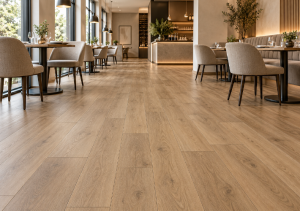
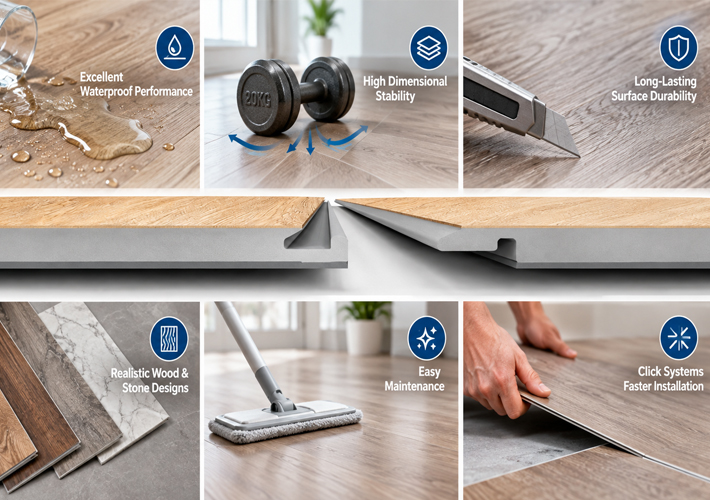
SPC flooring has become an important flooring option for residential, commercial, hospitality, retail, and other interior projects. Its combination of stone-based rigidity, waterproof performance, dimensional stability, and realistic wood or stone appearance makes it attractive to flooring distributors, importers, contractors, and project buyers.
However, SPC flooring is not automatically the right choice for every project. Like any flooring material, it has both advantages and limitations. Buyers need to consider factors such as subfloor conditions, installation requirements, comfort, acoustic performance, design preferences, project budget, and expected service environment before selecting a product.
For importers and B2B buyers, the quality of the SPC flooring supplier is also important. Different products can vary significantly in wear-layer thickness, core composition, locking system, dimensional stability, surface treatment, packaging, and quality control.
As a China flooring factory, Changflor supplies SPC and LVT flooring for international distributors, wholesalers, contractors, and commercial projects. This guide explains the major pros and cons of SPC flooring and provides practical information for buyers evaluating SPC flooring for their markets.
What Is SPC Flooring?
SPC stands for Stone Plastic Composite, sometimes called Stone Polymer Composite. SPC flooring is a rigid-core flooring product generally manufactured using a mineral filler, polymer materials, stabilizers, decorative film, and protective surface layers.
A typical SPC flooring structure can include:
- UV coating or surface protection – helps protect the surface from wear and staining.
- Wear layer – provides resistance against everyday abrasion.
- Decorative film – creates the visual appearance of wood, stone, concrete, or other designs.
- SPC rigid core – provides rigidity, dimensional stability, and structural support.
- Backing or underlayment – depending on the product, an attached IXPE or EVA layer may be included.
The exact composition and thickness vary by manufacturer and product series.
Unlike traditional flexible vinyl flooring, SPC has a rigid core. This gives it a firmer feel and helps it maintain its shape under normal interior conditions.
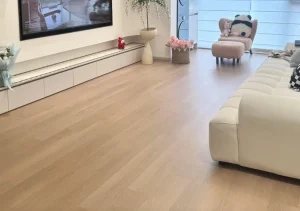
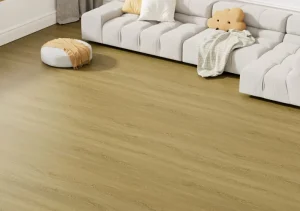
SPC flooring is commonly available in plank and tile formats. Wood-look SPC planks are especially common in bedrooms, offices, hotels, apartments, retail stores, and commercial spaces, while stone-look designs can be used in bathrooms, kitchens, restaurants, entrances, and other areas where a mineral or ceramic appearance is preferred.
For B2B buyers, specifications such as total thickness, wear-layer thickness, dimensions, locking profile, core formulation, surface treatment, packaging, and installation system should be checked before comparing prices.
What Are the Main Pros of SPC Flooring?
The popularity of SPC flooring comes from several practical advantages. For commercial and distribution markets, these benefits can make SPC easier to sell, install, and maintain than some conventional flooring products.
1. Excellent Water Resistance
One of the most frequently discussed advantages of SPC flooring is its water-resistant construction.
The rigid SPC core itself is designed to resist water exposure better than many traditional wood-based flooring products. This makes SPC suitable for areas where occasional moisture is expected.
Typical applications include:
- Kitchens
- Bathrooms outside continuously wet zones
- Hotel rooms
- Retail stores
- Offices
- Restaurants
- Apartment interiors
- Corridors
- Commercial reception areas
However, buyers should distinguish between water-resistant flooring and a completely waterproof floor system.
The flooring material may have strong water resistance, but water can still enter through joints, perimeter gaps, expansion spaces, or an improperly prepared subfloor. In areas subject to significant standing water, installation details and waterproofing measures remain important.
2. High Dimensional Stability
SPC flooring has a rigid mineral-based core that helps reduce movement compared with some softer flooring materials.
Temperature changes can cause flooring materials to expand and contract. Excessive dimensional movement can create gaps, buckling, or other installation problems.
A well-manufactured SPC product can provide good dimensional stability under normal indoor temperature conditions.
This characteristic is particularly useful for commercial projects where flooring may be exposed to:
- Air conditioning
- Heating
- Daily temperature fluctuations
- Large interior spaces
- Heavy foot traffic
Nevertheless, dimensional stability depends heavily on product formulation and manufacturing quality. A low-quality SPC product should not be assumed to have the same performance as a premium product simply because both are labeled “SPC.”
3. Durable Surface Performance
SPC flooring commonly uses a transparent wear layer above the decorative film.
The wear layer helps protect the printed design against everyday abrasion. Different projects require different wear-layer specifications.
For example, a residential project with relatively low foot traffic may require a different specification from a busy hotel corridor, supermarket, office building, or retail store.
Common commercial considerations include:
- Wear-layer thickness
- Surface treatment
- Scratch resistance
- Stain resistance
- Abrasion performance
- Maintenance requirements
For B2B buyers, choosing the correct wear layer according to the application is more useful than simply asking whether SPC flooring is “durable.”
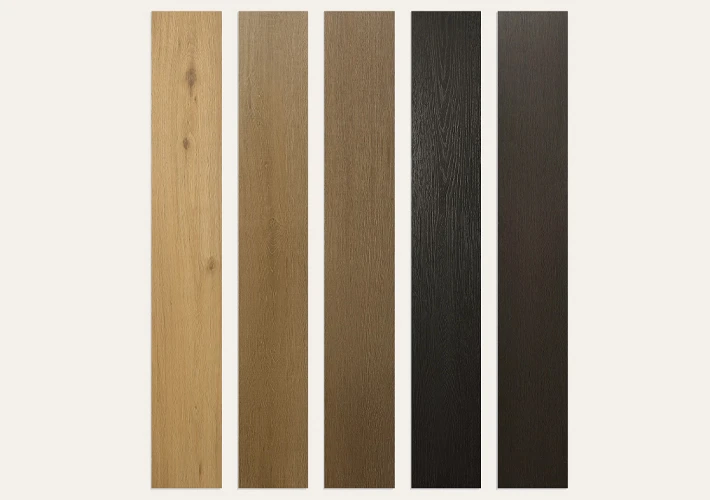
4. Realistic Wood and Stone Designs
Modern SPC flooring can reproduce the appearance of natural materials through high-resolution decorative films and surface embossing.
Popular designs include:
- Oak
- Walnut
- Pine
- Concrete
- Marble
- Travertine
- Cement
- Natural stone
- Herringbone wood
- Modern grey wood
- Warm natural wood
This gives architects, designers, distributors, and contractors a large design selection without requiring natural timber or stone for every project.
For commercial projects, consistent color and pattern availability are also important. A professional factory should be able to provide samples and production references before a large order is confirmed.
5. Easy Maintenance
SPC flooring generally requires relatively simple daily maintenance.
For many interior applications, routine maintenance can include:
- Sweeping
- Vacuuming
- Dry mopping
- Damp mopping with a suitable cleaner
- Prompt removal of spills
Unlike natural timber, SPC does not require regular sanding or refinishing.
This can be particularly useful for commercial properties where maintenance time and labor costs need to be controlled.
Hotels, offices, retail spaces, and rental properties can benefit from flooring that is relatively straightforward to clean and maintain.
6. Faster Installation With Click Systems
Many SPC products use click-lock installation systems.
Compared with some traditional flooring installation methods, a floating click system can simplify installation and reduce the amount of adhesive required.
This can be valuable for:
- Renovation projects
- Hotel refurbishment
- Apartment projects
- Retail stores
- Offices
- Temporary commercial spaces
However, “easy installation” does not mean that subfloor preparation can be ignored.
The substrate should generally be clean, dry, stable, and sufficiently level. Excessive unevenness can affect the locking system and the finished appearance.
7. Suitable for Commercial Applications
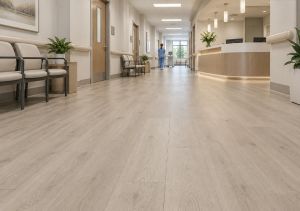
SPC flooring is widely considered for commercial interiors because of its combination of durability, water resistance, design flexibility, and installation convenience.
Potential applications include:
| Application | Why SPC May Be Considered |
|---|---|
| Hotels | Durable surface and wood-look appearance |
| Offices | Easy maintenance and commercial designs |
| Retail | High-traffic product options |
| Restaurants | Water resistance and easy cleaning |
| Apartments | Fast installation and design flexibility |
| Schools | Durable and easy-care surfaces |
| Corridors | Commercial wear-layer options |
| Showrooms | Wide range of visual designs |
The correct specification still depends on traffic levels, local building requirements, installation conditions, and project expectations.
8. Consistent Product Quality for Large Projects
Natural materials such as timber and stone can have significant variation in color, grain, texture, and dimensions.
Manufactured SPC flooring can provide more consistent appearance across a large project.
This is particularly useful for:
- Hotel chains
- Apartment developments
- Retail stores
- Office buildings
- Large residential projects
For project procurement, consistency between batches is an important supplier-selection factor.
What Are the Cons of SPC Flooring?
Despite its advantages, SPC flooring has limitations that buyers should understand before selecting it.
1. Harder Underfoot Than Softer Flooring
The rigid core gives SPC good structural stability, but it also means the floor can feel relatively hard underfoot.
Compared with carpet or some softer vinyl products, SPC may provide less cushioning.
This can matter in spaces where people stand for long periods, such as:
- Retail counters
- Reception desks
- Commercial kitchens
- Service areas
- Workstations
The addition of a suitable underlayment may improve acoustic and comfort performance, depending on the product and installation system.
2. It Can Feel Colder Than Carpet or Wood
SPC does not provide the same natural warmth underfoot as carpet or some wood flooring.
In colder climates, the rigid surface can feel cool when walked on without shoes.
This is not necessarily a performance defect, but it is a comfort characteristic that should be considered when selecting flooring for bedrooms, living spaces, hotels, or other areas where users frequently walk barefoot.
SPC can also work with certain underfloor heating systems, but compatibility must be confirmed with the specific manufacturer’s installation instructions.
3. Subfloor Preparation Is Still Important
One common misconception is that rigid-core flooring can cover any existing floor without preparation.
In reality, the quality of the substrate remains important.
An uneven subfloor can cause:
- Movement
- Clicking sounds
- Joint stress
- Visible irregularities
- Locking-system problems
- Premature wear
Before installation, contractors should check the substrate and correct significant irregularities according to the manufacturer’s requirements.
This is particularly important for large commercial projects.
4. Heavy Furniture Can Create Installation Challenges
SPC flooring is durable, but extremely heavy fixed furniture or equipment can affect a floating floor system.
If the flooring cannot move as intended, stress can develop around locking joints.
For large commercial projects, the installation plan should consider:
- Fixed cabinets
- Heavy shelving
- Kitchen equipment
- Display systems
- Machinery
- Built-in furniture
The flooring manufacturer’s installation guidelines should be followed for these conditions.
5. Repairs Can Be More Difficult Than Replacing Flexible Flooring
SPC flooring can be replaced plank by plank in some click-lock systems, but the process may not always be simple when a damaged plank is located in the middle of a completed installation.
Depending on the locking system and installation direction, several planks may need to be removed to reach the damaged area.
For this reason, B2B buyers should consider ordering a reasonable quantity of spare flooring for future maintenance.
Keeping the original product code, color, batch information, and installation records can also make future replacement easier.
6. Quality Varies Significantly Between Suppliers
This is one of the most important issues for B2B buyers.
Not all SPC flooring is manufactured to the same standard.
Two products may have the same advertised thickness but perform differently because of differences in:
- Core formulation
- Mineral filler ratio
- Polymer composition
- Wear layer
- Stabilizers
- Locking profile
- Decorative film
- Surface treatment
- Manufacturing control
Low-cost products may look attractive at the quotation stage but create additional risks if dimensional stability, locking performance, or surface durability does not meet project requirements.
For importers and distributors, supplier evaluation should therefore go beyond price per square meter.
How Does SPC Flooring Compare With Other Flooring Options?
SPC is often compared with LVT, laminate, and traditional hardwood flooring.
| Feature | SPC | LVT | Laminate | Hardwood |
|---|---|---|---|---|
| Water resistance | High | High | Varies | Generally lower |
| Rigid structure | Yes | Usually flexible | Yes | Yes |
| Wood appearance | Excellent | Excellent | Excellent | Natural |
| Maintenance | Easy | Easy | Easy | Higher |
| Underfoot feel | Firm | Softer | Firm | Natural |
| Installation | Click/glue options | Click/glue options | Click | Nail/glue/floating |
| Moisture tolerance | High | High | Moderate | Lower |
| Design consistency | High | High | High | Natural variation |
| Refinishing | No | No | No | Yes |
There is no single flooring material that is ideal for every project.
SPC is often selected when a buyer wants a combination of rigid construction, water resistance, durability, installation convenience, and wood or stone aesthetics.
LVT may be preferred when a softer and more flexible floor is required. Laminate may be attractive for certain dry interior applications, while hardwood remains relevant when authentic natural timber and refinishing capability are priorities.
What Should B2B Buyers Check When Purchasing SPC Flooring?
For distributors, importers, contractors, and project buyers, product selection should involve more than comparing catalog images.
Check the Wear Layer
The wear layer is one of the first specifications to review.
Common commercial products may use different wear-layer thicknesses depending on their intended application. Higher traffic environments generally require more robust surface specifications.
Ask the supplier for the exact technical specification rather than relying on general descriptions such as “commercial grade.”
Check Total Thickness
SPC flooring is available in multiple thicknesses.
Thickness can affect:
- Rigidity
- Locking performance
- Installation feel
- Acoustic performance
- Product positioning
- Packaging volume
However, thicker does not automatically mean better. Buyers should evaluate the complete product structure.
Check the Core
The SPC core is a major part of the product’s performance.
A reliable supplier should be able to provide technical information about its core composition and manufacturing process.
Check the Locking System
For click SPC flooring, the locking profile is particularly important.
The connection should provide consistent engagement during installation while minimizing unnecessary joint movement.
Buyers ordering large volumes should test actual samples rather than relying only on product photographs.
Check Dimensional Stability
Ask for test data or quality-control information related to dimensional stability, particularly if the flooring will be used in climates with significant temperature variation.
Check Formaldehyde and Other Compliance Requirements
Different markets may have different requirements concerning emissions, chemical content, fire performance, slip resistance, and other characteristics.
Before placing a large order, importers should identify the requirements applicable to their destination market and request relevant documentation from the manufacturer.
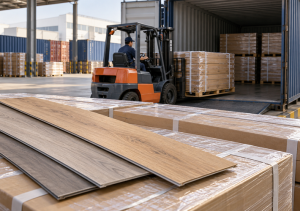
Check Packaging and Container Loading
Packaging is another important consideration for international buyers.
A professional SPC flooring factory should be able to provide information about:
- Carton dimensions
- Pieces per carton
- Square meters per carton
- Cartons per pallet
- Pallet dimensions
- Container loading quantity
- Protective packaging
- Product labeling
Good packaging reduces the risk of damage during long-distance transportation.
Is SPC Flooring a Good Choice for Commercial Projects?
SPC flooring can be a practical option for many commercial projects, particularly where water resistance, easy maintenance, consistent appearance, and installation efficiency are important.
Hotels can use wood-look SPC flooring in guest rooms and corridors. Offices can use neutral wood or stone patterns to create a professional interior. Retail stores can select stronger commercial specifications for areas with frequent foot traffic.
For apartments and property developments, SPC can also provide a balance between appearance, maintenance, and installation efficiency.
However, commercial flooring should always be selected according to the actual project environment.
For example, a low-traffic hotel room does not necessarily require the same specification as a busy shopping center corridor. Similarly, a dry office does not have the same requirements as a restaurant or moisture-prone interior.
The key is to match the SPC flooring specification with the project’s traffic level, moisture conditions, design requirements, installation method, and expected service environment.
Changflor: SPC Flooring Manufacturer in China
For international B2B buyers, working directly with a factory can provide advantages when product customization, stable supply, packaging, and long-term cooperation are important.
Changflor is a China-based flooring manufacturer specializing in SPC and LVT flooring for international markets.
For importers, wholesalers, distributors, contractors, and project buyers, Changflor can support product sourcing with different colors, patterns, sizes, structures, and specifications according to project or market requirements.
A professional factory can also help buyers evaluate whether a specific SPC structure is appropriate for their target application instead of simply offering the lowest-cost product.
For large projects, buyers should consider:
- Product specifications
- Wear-layer options
- Surface designs
- Click systems
- Product dimensions
- Packaging requirements
- Sample approval
- Production capacity
- Quality control
- Container loading
- Lead time
- OEM/ODM requirements
Samples should be evaluated before mass production, especially when SPC flooring will be used for a hotel, office development, retail project, or large residential project.
Frequently Asked Questions About SPC Flooring
Is SPC flooring completely waterproof?
SPC flooring has strong water-resistant properties, but the complete floor installation is not automatically waterproof. Joints, edges, transitions, and the substrate can still allow water to penetrate. Follow the manufacturer’s installation requirements for wet or moisture-prone environments.
Is SPC flooring better than laminate?
SPC and laminate have different characteristics. SPC generally offers stronger moisture resistance, while laminate can provide a different underfoot feel and product structure. The appropriate choice depends on the project environment and specifications.
Is SPC flooring suitable for hotels?
Yes. SPC flooring can be used in hotel rooms, corridors, offices, reception areas, and other interior spaces when the product specification matches the expected traffic and environmental conditions.
Does SPC flooring scratch easily?
SPC flooring is designed with a protective wear layer that provides resistance to everyday abrasion and scratching. However, no flooring is completely scratch-proof. Heavy furniture, sharp objects, sand, and improper maintenance can damage the surface.
Can SPC flooring be installed over existing flooring?
In some renovation projects, SPC can be installed over an existing floor if the existing surface meets the manufacturer’s requirements for stability, cleanliness, dryness, and flatness. The existing flooring should always be inspected before installation.
Does SPC flooring need underlayment?
Some SPC flooring products include an attached underlayment, while others do not. Whether additional underlayment is appropriate depends on the specific product, installation system, and project requirements.
How long can SPC flooring last?
The service life of SPC flooring depends on product quality, wear-layer specification, installation, traffic level, maintenance, and environmental conditions. A properly specified and installed commercial SPC floor can provide long-term service, but buyers should avoid using a single lifespan figure for every product.
What is the difference between SPC and LVT?
SPC uses a rigid core, while traditional LVT can use a more flexible vinyl structure. SPC generally provides greater rigidity and dimensional stability, while flexible LVT can provide a softer underfoot feel. Both can offer realistic wood and stone designs.
Final Thoughts: Understanding the Pros and Cons of SPC Flooring
The main advantages of SPC flooring include water resistance, dimensional stability, durable surface options, realistic designs, easy maintenance, convenient installation, and suitability for many residential and commercial applications.
Its limitations include a relatively hard underfoot feel, potentially cooler surface temperature, the need for proper subfloor preparation, installation considerations around heavy fixed objects, and significant differences in quality between manufacturers.
For B2B buyers, the most important point is that SPC flooring should be evaluated as a complete flooring system rather than simply by price or appearance. Wear layer, core composition, thickness, locking system, dimensional stability, surface performance, packaging, compliance, and factory quality control all influence the final result.
If you are sourcing SPC flooring from China, Changflor can provide product samples, specifications, design options, and factory supply for distributors, wholesalers, contractors, and commercial flooring projects. Comparing samples and technical specifications before placing a bulk order can help buyers select an SPC flooring product that matches their market and application requirements.
Changflor — China SPC & LVT Flooring Manufacturer.