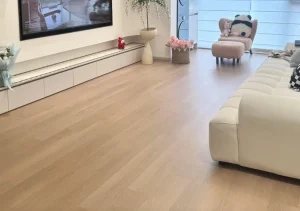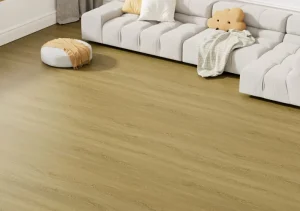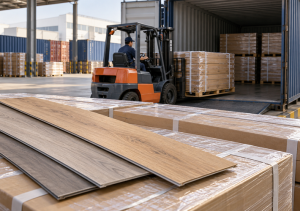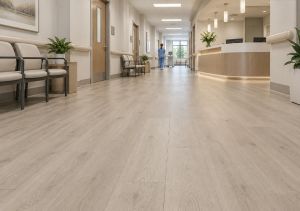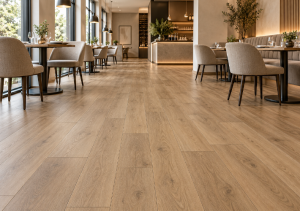
Luxury Vinyl Tile, commonly known as LVT flooring, has become one of the most widely used resilient flooring materials in residential, commercial, retail, hospitality, and renovation projects. It is valued for its realistic appearance, water resistance, durability, comfortable underfoot feel, and wide range of installation options.
However, the term LVT flooring can refer to several different product types. Some LVT products are designed as flexible glue-down tiles, while others use click-lock installation systems. Certain products are loose lay, while others are self-adhesive. In addition, the flooring market often groups LVT together with LVP and rigid-core products such as SPC flooring.
For importers, distributors, wholesalers, contractors, and project buyers, understanding these different types is important when selecting products for different markets and applications.
As a professional flooring manufacturer in China, Changflor supplies LVT and other resilient flooring solutions for global customers. This guide explains the common types of LVT flooring, their structures, advantages, applications, and key differences.
What Is LVT Flooring?
LVT stands for Luxury Vinyl Tile. It is a type of resilient flooring manufactured primarily from PVC-based materials and designed to reproduce the appearance of natural materials such as:
- Wood
- Stone
- Marble
- Concrete
- Ceramic tile
- Slate
Although the name includes the word “tile,” LVT flooring does not always come in a traditional square tile format. Depending on the design and product category, vinyl flooring may also be manufactured as long planks or other decorative formats.
A typical LVT flooring structure may include several layers:
- Wear layer – Protects the decorative surface from scratches, stains, and daily traffic.
- Decorative film – Provides the visual appearance of wood, stone, marble, or other materials.
- Vinyl core or backing layers – Provide structure, flexibility, and stability.
- Backing layer – Supports the flooring and may improve installation performance.
The exact construction depends on the product type. For example, flexible glue-down LVT has a different structure and performance profile from click-lock LVT or rigid-core flooring.
One of the main reasons LVT flooring has grown in popularity is its ability to combine decorative design with practical performance. Compared with natural wood or stone, LVT can offer easier maintenance, better water resistance, and more flexible design options.
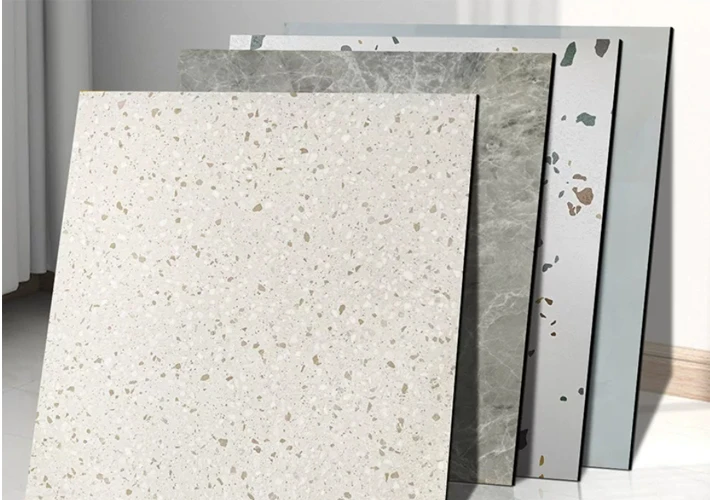
Glue-Down LVT Flooring
Glue-down LVT is one of the most common and traditional types of luxury vinyl flooring.
As the name suggests, the flooring is installed by applying adhesive to the prepared subfloor and securing the LVT tiles or planks directly to the surface.
Structure and characteristics
Glue-down LVT is generally thinner and more flexible than rigid-core flooring. Common product thicknesses may vary depending on the manufacturer and market requirements.
Because it is directly bonded to the subfloor, glue-down LVT can provide excellent stability once properly installed.
Main advantages
The key benefits of glue-down LVT include:
- Strong bonding to the subfloor
- Good dimensional stability
- Suitable for large commercial spaces
- Available in many thicknesses and designs
- Can be easier to replace individual damaged tiles
- Often has a lower material cost than some click-lock systems
- Suitable for high-traffic applications
Glue-down LVT is widely used in:
- Retail stores
- Offices
- Hotels
- Restaurants
- Educational facilities
- Healthcare spaces
- Commercial renovation projects
Limitations
The main disadvantage is that installation requires more preparation. The subfloor usually needs to be smooth, clean, dry, and level. The installer must also select the appropriate adhesive and follow the recommended installation procedures.
For large-scale commercial projects, however, the additional installation work can be worthwhile because of the long-term stability and performance.
For distributors and project contractors, glue-down LVT remains an important product category because it is widely accepted in commercial flooring markets.
Click-Lock LVT Flooring
Click-lock LVT, also known as interlocking LVT flooring, uses a mechanical locking system that allows individual planks or tiles to connect together without traditional full-surface adhesive.
The edges of the flooring are designed with a click or locking profile. During installation, the panels are connected to create a floating floor.
Main advantages of click-lock LVT
Click-lock systems offer several important benefits:
- Faster installation
- No full-surface adhesive required
- Cleaner installation process
- Easier replacement and renovation
- Suitable for DIY and professional installation
- Can reduce installation time
- Convenient for residential projects
Because installation is relatively simple, click-lock LVT is popular in markets where renovation speed and labor efficiency are important.
It can be used in:
- Apartments
- Houses
- Hotels
- Offices
- Rental properties
- Retail spaces
- Renovation projects
Important considerations
Click-lock flooring requires a properly prepared subfloor. Even though the installation system is designed to simplify the process, excessive unevenness can affect the locking mechanism and long-term performance.
The quality of the click system is also important. A well-designed locking profile can improve installation efficiency and reduce the risk of joint separation.
For wholesale buyers, it is important to evaluate not only the visual design but also:
- Locking strength
- Dimensional accuracy
- Thickness consistency
- Edge quality
- Installation performance
Changflor can provide different LVT flooring structures and specifications based on customer requirements and target market needs.
Loose Lay LVT Flooring
Loose lay LVT flooring is designed to remain in position primarily through its weight, friction backing, and special product construction rather than relying on traditional adhesive across the entire floor.
This type of flooring is especially useful in projects where fast installation and easy replacement are important.
How loose lay LVT works
Loose lay flooring is usually heavier and thicker than standard flexible vinyl flooring. Its backing helps create friction against the subfloor, allowing the flooring to remain stable under normal conditions.
Depending on the installation environment, additional adhesive or fixing methods may sometimes be used around edges or in specific areas.
Advantages of loose lay LVT
The main benefits include:
- Fast installation
- Easy replacement
- Reduced adhesive use
- Convenient for renovation
- Can simplify maintenance
- Suitable for temporary or frequently updated spaces
Loose lay LVT is often used in commercial and renovation applications where minimizing downtime is important.
For example, if one plank or tile is damaged, it may be easier to remove and replace than a permanently bonded floor.
Applications
Loose lay LVT may be suitable for:
- Offices
- Retail stores
- Temporary commercial spaces
- Hospitality projects
- Rental properties
- Renovation projects
However, the performance of loose lay flooring depends heavily on the product design, backing construction, installation environment, and subfloor condition.
Therefore, buyers should select the product based on the specific application rather than assuming that every loose lay LVT product performs the same way.
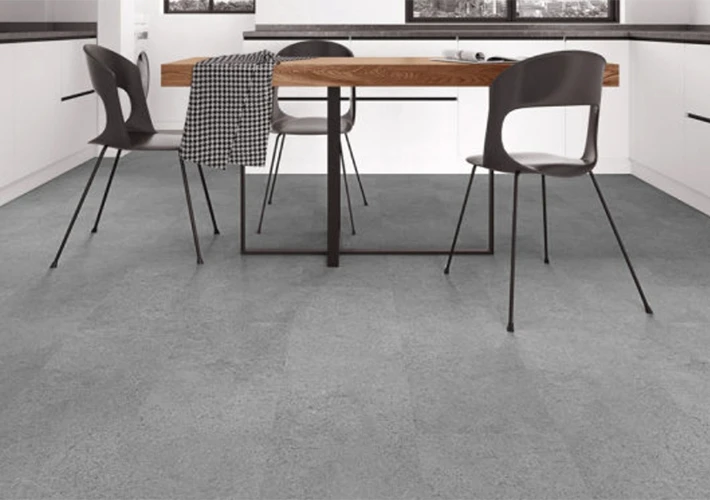
Self-Adhesive LVT Flooring
Another common category is self-adhesive LVT flooring, sometimes called peel-and-stick vinyl flooring.
This type of flooring includes an adhesive layer on the back of each tile or plank. During installation, the protective film is removed, and the flooring is pressed onto the prepared subfloor.
Advantages of self-adhesive LVT
Self-adhesive LVT offers several convenient features:
- Simple installation
- Reduced need for additional adhesive
- Faster installation for small areas
- Suitable for renovation
- Convenient packaging and transportation
- Can be attractive for DIY markets
This type of flooring is commonly used in residential renovation and light commercial applications.
Limitations
The adhesive quality is critical. Installation performance can be affected by:
- Dust or moisture on the subfloor
- Uneven surfaces
- Improper temperature conditions
- Low-quality adhesive
- Poor surface preparation
For this reason, self-adhesive LVT is generally more suitable for properly prepared surfaces and applications with appropriate traffic requirements.
Importers and wholesalers should carefully consider the climate and installation habits in their target market when sourcing self-adhesive vinyl flooring.
Dry Back LVT Flooring
Dry back LVT is another term commonly used in the commercial flooring industry. In many cases, dry back LVT refers to traditional flexible vinyl flooring that is installed using adhesive.
Therefore, dry back LVT is closely related to glue-down LVT.
The flooring itself does not have a pre-attached adhesive backing. Instead, adhesive is applied separately during installation.
Why is dry back LVT popular?
Dry back LVT is popular because it provides flexibility in product design and installation.
It can offer:
- Strong bonding performance
- Good stability
- A wide range of decorative options
- Competitive cost
- Suitable performance for commercial projects
The product can be manufactured in different sizes, including:
- Wood-look planks
- Stone-look tiles
- Marble-look tiles
- Concrete-look designs
- Customized decorative patterns
For large commercial projects, dry back LVT is often selected because it can create a stable and professional flooring surface when installed correctly.
LVT Plank and LVT Tile
LVT flooring can also be classified according to its shape and visual design.
The two most common formats are LVT planks and LVT tiles.
LVT plank flooring
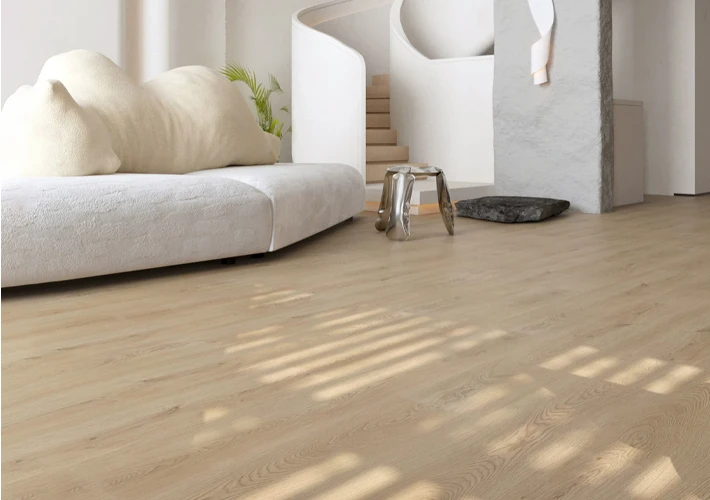
LVT planks are usually designed to imitate natural wood flooring.
Popular designs include:
- Oak
- Walnut
- Maple
- Ash
- Hickory
- Rustic wood
- Reclaimed wood
- Modern grey wood
LVT plank flooring can provide the appearance of hardwood while offering better resistance to moisture and easier maintenance.
This makes it suitable for:
- Living rooms
- Bedrooms
- Offices
- Hotels
- Retail spaces
- Restaurants
Different surface textures can also be added to improve the realistic appearance of the flooring.
For example, embossed surfaces can create a texture that more closely resembles natural wood grain.
LVT tile flooring
LVT tiles are usually designed to imitate stone, marble, ceramic, concrete, or other mineral surfaces.
Popular styles include:
- Marble-look LVT
- Travertine-look LVT
- Slate-look LVT
- Concrete-look LVT
- Terrazzo-look LVT
LVT tile can be used in commercial and residential spaces where a stone or ceramic appearance is desired without the weight and installation requirements of natural materials.
The flooring may also feel warmer and more comfortable underfoot than traditional ceramic tile.
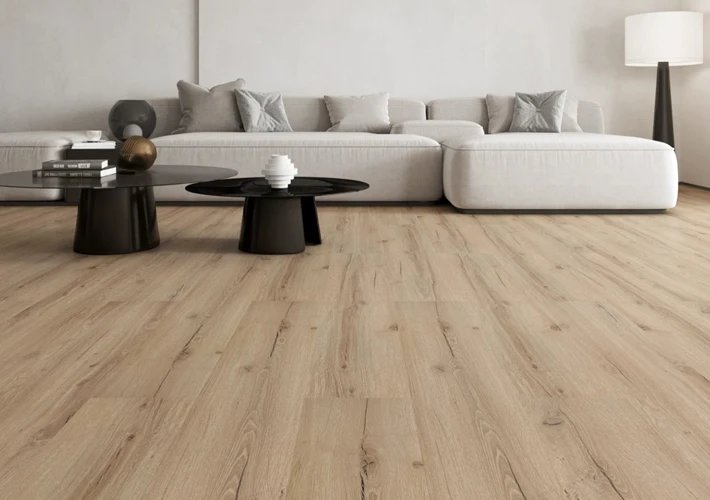
Flexible LVT and Rigid Core Flooring: What Is the Difference?
When discussing LVT flooring, buyers often encounter terms such as:
- LVT
- LVP
- SPC
- WPC
- Rigid core vinyl flooring
These products are related but not identical.
Traditional LVT is generally flexible, while SPC and some other modern vinyl flooring products use a more rigid core.
Traditional flexible LVT
Flexible LVT usually consists primarily of vinyl-based layers.
It can offer:
- Flexibility
- Comfortable walking performance
- A wide variety of designs
- Thin construction
- Strong suitability for glue-down installation
Traditional LVT is especially common in commercial flooring projects.
Rigid core vinyl flooring
Rigid core flooring uses a more stable and rigid middle layer.
The two commonly discussed categories are:
SPC flooring:
SPC stands for Stone Plastic Composite or Stone Polymer Composite. It generally uses a rigid mineral-filled core and is known for dimensional stability and high rigidity.
WPC flooring:
WPC generally refers to a wood-polymer or wood-plastic composite-style core used in certain vinyl flooring constructions. It is often designed to provide a softer and more comfortable walking experience compared with some rigid SPC products.
Although SPC and WPC are often discussed alongside LVT, they have different core constructions.
For importers and distributors, the most important point is to avoid using all these terms interchangeably when preparing product specifications.
A customer searching for flexible glue-down LVT may have different requirements from a customer looking for rigid-core SPC click flooring.
Common Wear Layer Options for LVT Flooring
The wear layer is one of the most important factors affecting LVT flooring performance.
It is the transparent protective layer located above the decorative film.
A thicker or more durable wear layer can generally provide improved resistance to daily wear, although overall flooring performance also depends on the product construction, surface treatment, installation, and application.
Common wear layer options vary by product and market.
For example, residential products may use lighter-duty wear layers, while commercial flooring may require a more robust protective layer.
When selecting LVT flooring, buyers should consider:
- Residential or commercial use
- Expected foot traffic
- Presence of pets
- Retail or hospitality applications
- Cleaning requirements
- Project lifespan
- Budget
For commercial distributors, offering multiple wear-layer options can help serve different customer segments.
A basic residential LVT product and a heavy commercial LVT product may look similar, but their long-term performance can be significantly different.
Which Type of LVT Flooring Is Best?
There is no single LVT flooring type that is best for every project.
The correct choice depends on the installation method, traffic level, budget, and application.
Best for large commercial projects
Glue-down or dry back LVT is often a strong option for large commercial areas.
Its advantages include stable installation, efficient material costs, and easy replacement of damaged sections.
Best for fast renovation
Click-lock LVT can be a practical option when installation speed is important.
It is particularly suitable for residential renovation, rental properties, and projects where reducing installation time is a priority.
Best for easy replacement
Loose lay LVT can be useful in spaces where flooring sections may need to be replaced quickly.
This can be valuable in commercial environments and renovation projects.
Best for DIY applications
Self-adhesive LVT can be attractive for customers looking for a relatively simple installation method.
However, proper surface preparation remains essential.
Best for wood-look designs
LVT planks are typically the preferred choice when the goal is to create a realistic wood flooring appearance.
Best for stone and marble designs
LVT tiles are suitable for projects that require the appearance of stone, ceramic, marble, or concrete.
The best approach is to select flooring based on the actual project requirements rather than focusing only on product appearance.
How to Choose LVT Flooring for Wholesale or Commercial Projects
For flooring importers, distributors, contractors, and project buyers, choosing LVT flooring involves more than selecting a popular color.
Several factors should be evaluated before placing a bulk order.
1. Installation method
Determine whether the market prefers:
- Glue-down
- Click-lock
- Loose lay
- Self-adhesive
Different countries and customer groups may have different installation preferences.
For example, professional commercial contractors may prefer glue-down products, while residential renovation markets may have stronger demand for click-lock flooring.
2. Product thickness
Thickness affects the flooring’s feel, durability expectations, transportation weight, and compatibility with existing floors.
The appropriate thickness should be selected according to the project and market positioning.
3. Wear layer
The wear layer should match the expected traffic level.
A product designed for bedrooms may not be suitable for busy retail or hotel areas.
4. Design selection
Popular LVT designs continue to include:
- Natural oak
- Light wood
- Dark walnut
- Grey wood
- Concrete
- Marble
- Stone
- Herringbone patterns
However, design preferences can vary by region.
Distributors should select a balanced collection that includes both classic designs and market-specific trends.
5. Surface texture
Embossed textures can improve the realism of wood and stone designs.
Common surface options may include:
- Smooth
- Embossed
- Wood grain
- Hand-scraped style
- Registered embossing
6. Packaging and logistics
For international buyers, packaging should be designed to protect the flooring during transportation.
Important factors include:
- Carton strength
- Pallet requirements
- Container loading
- Product labeling
- Barcode requirements
- Private label packaging
A professional LVT flooring supplier should be able to support buyers with export packaging and customized labeling requirements.
Why Work With Changflor as Your LVT Flooring Supplier?
When sourcing LVT flooring from China, buyers need to consider more than the unit price.
A reliable supplier should provide stable product quality, clear specifications, consistent designs, professional packaging, and effective communication.
Changflor is a China-based flooring manufacturer focused on supplying flooring solutions for international B2B customers.
We support customers including:
- Flooring importers
- Wholesalers
- Distributors
- Building material companies
- Contractors
- Project buyers
- Private-label brands
Our product solutions can be developed according to different market requirements.
Changflor’s LVT flooring advantages
1. Multiple product options
We can provide different LVT flooring structures, installation systems, sizes, and decorative designs to meet various market demands.
2. Factory-based supply
Working directly with a China flooring manufacturer can help buyers improve supply efficiency and access customized product solutions.
3. OEM and private label support
For distributors and flooring brands, customized packaging, labeling, and product specifications can help create a differentiated market offering.
4. Export experience
International flooring orders require careful attention to packaging, loading, documentation, and communication. Changflor focuses on supporting global B2B customers throughout the sourcing process.
5. Design flexibility
From natural wood patterns to stone and marble effects, buyers can select designs based on their local market and customer preferences.
6. Commercial and residential solutions
Different product constructions can be developed for different applications, from residential renovation to commercial flooring projects.
For long-term cooperation, consistency is especially important. A flooring supplier should be able to maintain stable specifications and design quality across repeat orders.
Frequently Asked Questions About LVT Flooring
What is the most common type of LVT flooring?
Glue-down LVT is one of the most established types, especially in commercial flooring. Click-lock LVT is also widely used because of its convenient installation.
Is LVT the same as vinyl flooring?
LVT is a type of vinyl flooring. It is generally designed to provide more realistic decorative patterns and can imitate materials such as wood, stone, marble, and concrete.
What is the difference between LVT and LVP?
LVT usually refers to Luxury Vinyl Tile, while LVP means Luxury Vinyl Plank.
LVT often describes tile-shaped products or stone-look designs, while LVP generally refers to plank-shaped products designed to imitate wood. However, both belong to the luxury vinyl flooring category.
Is click-lock LVT better than glue-down LVT?
Neither is universally better.
Click-lock LVT is easier and faster to install, while glue-down LVT can provide strong long-term stability in commercial environments. The correct choice depends on the project.
Can LVT flooring be used in commercial spaces?
Yes. Commercial-grade LVT is widely used in offices, hotels, retail stores, restaurants, educational facilities, and other high-traffic environments.
The product should be selected based on traffic requirements and project specifications.
What is dry back LVT?
Dry back LVT generally refers to flooring that requires separate adhesive during installation. It is commonly associated with glue-down LVT products.
How long does LVT flooring last?
The service life depends on product quality, wear layer, traffic level, installation quality, maintenance, and environmental conditions. A properly selected and maintained LVT flooring product can provide long-term performance.
Conclusion
LVT flooring is available in several common types, including glue-down LVT, click-lock LVT, loose lay LVT, self-adhesive LVT, dry back LVT, LVT planks, and LVT tiles.
Each type has different advantages.
Glue-down LVT is widely used for stable commercial installations. Click-lock LVT offers faster and more convenient installation. Loose lay LVT can simplify replacement and renovation. Self-adhesive LVT is suitable for markets that value simple installation. Meanwhile, LVT planks and tiles provide a wide range of wood, stone, marble, and other decorative effects.
For importers and distributors, choosing the right type of LVT flooring requires evaluating installation methods, wear layers, thickness, design, target customers, and project requirements.
As a professional LVT flooring manufacturer in China, Changflor can support global wholesalers, distributors, contractors, and private-label brands with flexible flooring solutions and export-oriented service.
Whether you are sourcing glue-down LVT, click-lock LVT, LVT planks, LVT tiles, or customized flooring products, Changflor can help you identify the right solution for your market.
Contact Changflor today to request product specifications, samples, catalogs, and customized LVT flooring solutions for your business.