Introduction
Bathroom flooring has always been a challenging choice for residential and commercial projects. High humidity, frequent water exposure, cleaning requirements, and long-term durability are key factors that influence flooring selection.
So, is LVT flooring suitable for bathrooms?
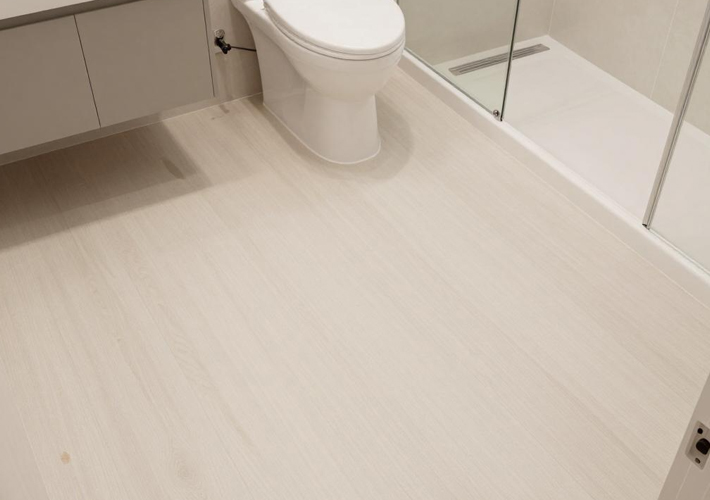
Yes, LVT flooring is a suitable choice for many bathroom applications. With waterproof construction, excellent durability, realistic designs, and easy maintenance, LVT bathroom flooring has become an increasingly popular solution for hotels, apartments, residential projects, and commercial spaces.
Why Choose LVT Flooring for Bathrooms?
When selecting bathroom flooring, project owners usually compare LVT with traditional materials such as ceramic tile or stone.
The decision is not only about appearance. It also involves:
- installation efficiency
- maintenance requirements
- long-term durability
- project cost control
LVT vs Tile Bathroom Flooring: Key Differences
| Factor | LVT Bathroom Flooring | Ceramic Tile |
|---|---|---|
| Water Resistance | Excellent when properly selected and installed | Excellent but requires proper grout sealing |
| Installation Speed | Faster installation with click or glue-down systems | Longer installation process |
| Comfort | Warmer and softer underfoot | Hard and cold surface |
| Design Options | Wood, stone, and custom patterns | Limited pattern flexibility |
| Maintenance | Easy cleaning with fewer joints | Grout lines require regular maintenance |
| Repair | Individual plank replacement possible, reducing replacement costs during long-term operation | Damaged tiles may require removal |
For many commercial projects, LVT provides a better balance between appearance, performance, and installation efficiency.
Waterproof Performance: Can LVT Be Used in Bathrooms?
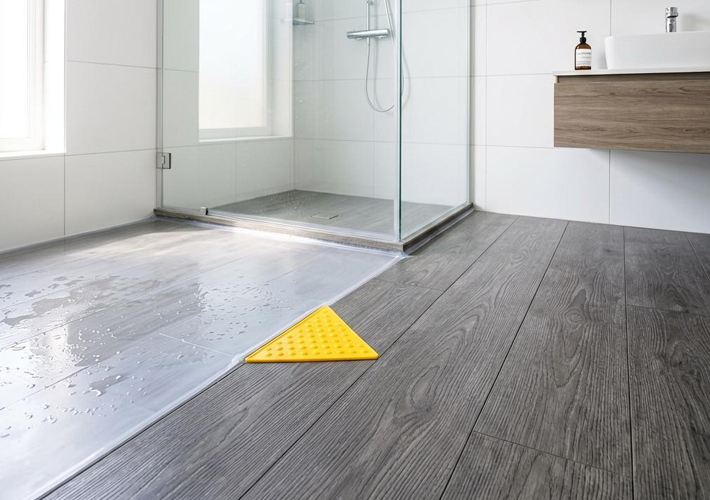
One of the biggest concerns when selecting bathroom flooring is whether the material can withstand frequent moisture exposure. Modern waterproof LVT flooring is designed with moisture-resistant structures, making it suitable for bathrooms, kitchens, hotels, and other humid environments.
However, achieving reliable waterproof performance requires more than choosing a waterproof flooring product. Long-term performance also depends on:
- Product construction – a stable core structure helps reduce dimensional changes caused by temperature and humidity fluctuations.
- Installation method – proper installation helps minimize movement and prevent moisture from reaching areas beneath the flooring.
- Subfloor preparation – a clean, dry, and properly prepared substrate is essential for maintaining flooring stability.
Durability: Long-Term Performance for Commercial Bathroom Projects
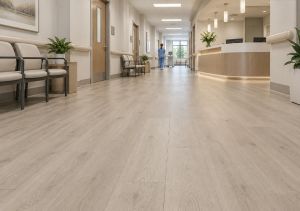
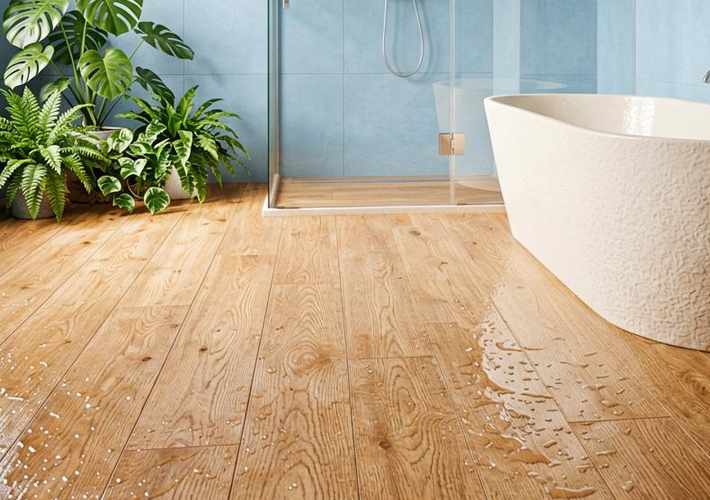
Commercial bathroom projects, such as hotels, restaurants, offices, and healthcare facilities, require flooring that can withstand frequent use, regular cleaning, and long-term daily wear.
Compared with many traditional bathroom flooring options, LVT flooring is designed with a protective wear layer that helps maintain surface performance and appearance even in demanding environments. For commercial projects, this means fewer repairs, lower maintenance costs, and a longer service life.
Key durability advantages of LVT flooring include:
Wear Resistance
The protective wear layer helps LVT flooring withstand daily use and frequent foot traffic in bathroom environments. This helps reduce surface deterioration over time.
Scratch and Stain Resistance
The durable surface layer helps reduce scratches and stain penetration, making LVT easier to clean and maintain in busy bathroom environments.
Easy Repair
Damaged LVT areas can often be repaired or replaced without removing the entire floor. This helps reduce repair time, minimize project disruption, and avoid unnecessary replacement costs during the flooring’s service life.
How Wear Layer Thickness Affects Bathroom LVT Performance
The thickness of the wear layer directly affects LVT’s resistance to abrasion and daily wear. For residential bathrooms, lighter wear layers may be sufficient, while commercial bathrooms with heavy traffic usually require thicker wear layers for improved durability.
Besides wear layer thickness, the overall flooring structure also affects stability and long-term performance in commercial applications.
For commercial spaces, choosing durable bathroom flooring is not only about maintaining appearance but also about reducing operational costs and improving long-term project reliability. With proper installation and care, LVT flooring can provide stable performance even in demanding bathroom environments.
Design Flexibility: More Options Than Traditional Flooring
Bathroom spaces are no longer designed only for basic functionality. In residential developments, hotels, and hospitality projects, flooring plays an important role in creating a comfortable and visually appealing environment.
Traditional bathroom materials often have limitations in terms of patterns and design flexibility. LVT provides more possibilities by combining practical performance with realistic decorative surfaces.
LVT offers:
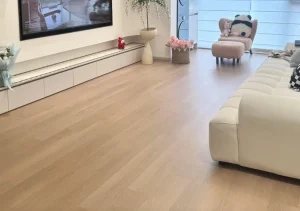
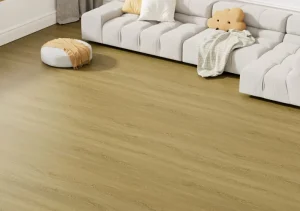
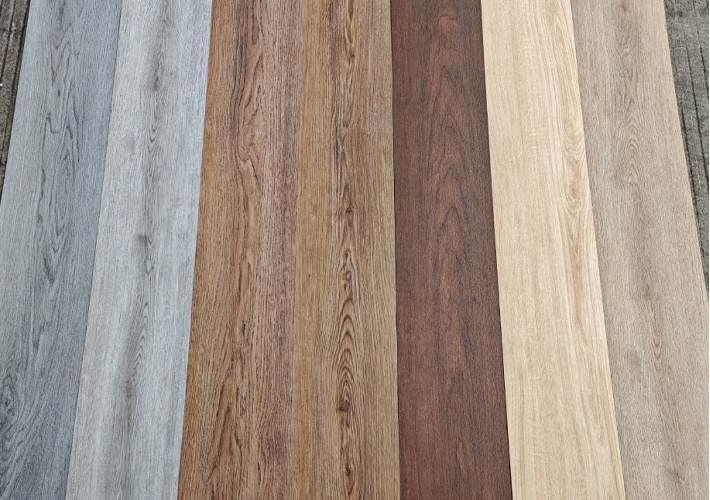
- realistic wood appearance
- natural stone patterns
- modern decorative designs
- customized colors and textures
For hotels and commercial projects, this allows designers to create premium bathroom spaces while maintaining the durability and maintenance advantages required for daily operation.
Easier Installation and Lower Project Risk
For contractors and developers, bathroom flooring selection is not only about product performance. Installation time, labor requirements, and project schedules also directly affect overall project costs.
Compared with traditional tile installation, LVT can simplify the flooring process and reduce several common project challenges, including:
- longer construction periods
- complex installation procedures
- higher labor requirements
- difficulty during renovation projects
Different LVT systems provide flexible solutions:
| Type | Best For | Advantages |
|---|---|---|
| Glue-down LVT | Hotels, commercial bathrooms | Strong bonding, dimensional stability |
| Click LVT | Residential bathrooms, renovations | Fast installation, easy replacement |
| Loose Lay LVT | Renovation and fast-track projects | Quick installation, no adhesive |
The right installation method depends on project conditions, including traffic level, renovation schedule, substrate condition, and maintenance expectations.
LVT Bathroom Flooring Maintenance Requirements
Bathrooms are exposed to daily moisture, stains, and frequent cleaning. For hotels, apartments, and commercial buildings, flooring maintenance directly affects operating costs and long-term appearance.
LVT provides a practical flooring solution with simple maintenance requirements.
Regular maintenance should include:
- Routine cleaning to remove dust and debris
- Prompt removal of spills
- Use of suitable neutral cleaners
Avoid:
- Abrasive cleaning products
- Harsh chemicals
- Excessive standing water
- Steam cleaning unless specifically approved by the manufacturer
Compared with materials that require frequent grout maintenance, LVT offers a smoother surface that is easier to clean and maintain.
For commercial properties, easier maintenance helps reduce downtime and extend flooring service life.
How to Choose the Right LVT Bathroom Flooring
Although LVT is suitable for bathrooms, proper product selection is essential.
1. Choose the Right LVT Structure
Consider:
- project type
- traffic level
- installation method
- maintenance requirements
2. Check Installation Requirements
Proper preparation is critical:
- dry and flat substrate
- moisture testing
- suitable installation materials
- suitable expansion allowance
3. Work With a Reliable Manufacturer
For B2B buyers, supplier capability matters.
Important factors include:
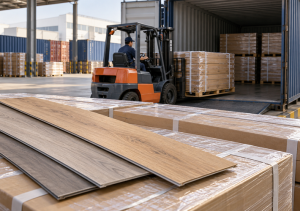
- consistent quality control
- stable production capacity
- technical support
- customization ability
- export experience
FAQ About LVT Bathroom Flooring
Can LVT flooring be installed in bathrooms?
Yes. LVT is suitable for bathrooms because of its waterproof performance, durability, and easy maintenance.
Is LVT better than tile for bathrooms?
LVT offers advantages in installation speed, comfort, design flexibility, and maintenance, while tile remains popular for certain applications.
Does bathroom LVT need special installation?
Yes. Proper subfloor preparation and installation methods are important to ensure long-term performance.
Is waterproof LVT suitable for hotels?
Yes. Many commercial projects choose LVT because it combines durability, design flexibility, and easier maintenance.
What thickness of LVT is suitable for bathrooms?
The suitable LVT thickness depends on application and traffic level. Residential bathrooms may use standard constructions, while commercial bathrooms typically require thicker structures and stronger wear layers for better durability and stability.
Conclusion
Choosing bathroom flooring is not only about appearance. For contractors, distributors, and developers, the ideal solution should provide reliable performance, efficient installation, and long-term value.
With waterproof construction, realistic designs, durability, and easy maintenance, LVT bathroom flooring has become a practical alternative to traditional flooring materials.
As an experienced LVT flooring manufacturer, we provide customized flooring solutions, technical support, and consistent quality control to meet different project requirements.
Contact our team to discuss your LVT flooring needs and explore suitable solutions for your market or project.