When you are sourcing SPC flooring for distribution, private-label sales, or a commercial project, the first quotation is only the beginning. At ChangFlor, we work with importers, distributors, flooring contractors, and project buyers who need more than a catalogue price. They need a product range that fits their market, clear specifications, dependable samples, and a supplier who can communicate clearly from the first inquiry to the repeat order.
In this guide, we explain how we recommend evaluating an SPC flooring supplier, what information to request, and how we usually move from product selection to samples and quotation.
Start with the product range and application
Before we prepare a quotation, we normally need to understand where the flooring will be sold or installed. A distributor may need a collection of wood-look and stone-look designs, while a contractor may need one construction for a specific project. The right product brief usually includes:
- Wood-look planks, stone-look designs, or another visual direction
- Residential, light commercial, or heavier commercial application
- Click-lock installation or another installation system
- Plank or tile format, overall thickness, and wear-layer requirement
- Attached underlay, bevelled edge, surface texture, and other details
- Destination market, packaging language, and documentation requirements
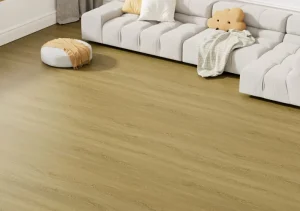
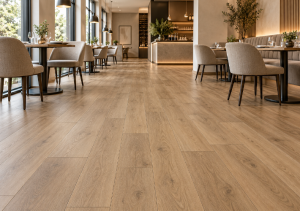
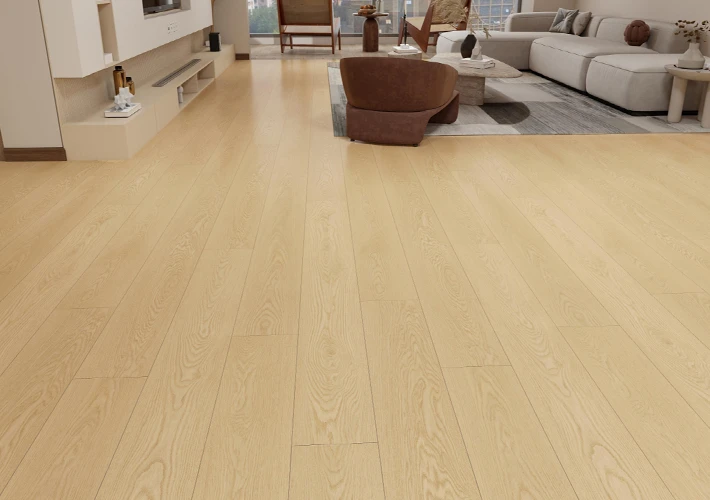
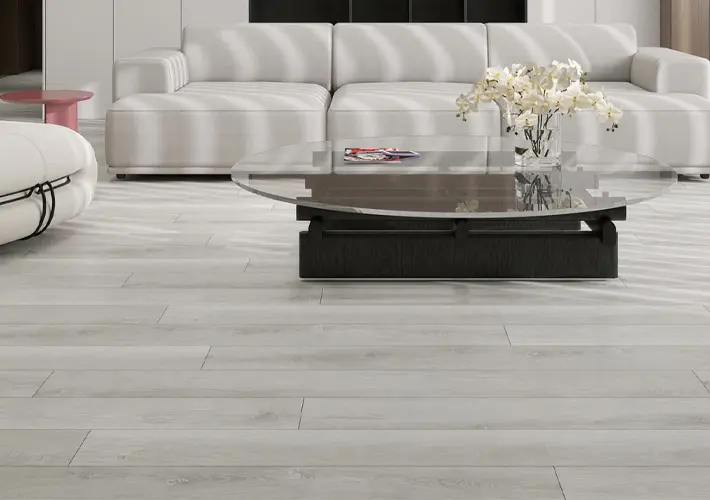
Our current SPC flooring collection is organised into Wood Grain, Stone Pattern, and Carpet-patterned products. This gives buyers several design directions to consider before they narrow the range for their market.
We also encourage buyers to look beyond the number of designs shown online. For repeat business, the important questions are whether the construction, colour, surface embossing, packaging, and product documentation can remain consistent from one order to the next.
Compare the construction details line by line
“SPC flooring” describes a product category, not a complete specification. When we compare a product with a buyer, we prefer to put the details in writing instead of relying on a general product name.
For each SKU, we recommend confirming:
- Overall thickness
- Wear-layer thickness
- Plank or tile dimensions
- Core construction
- Surface treatment and embossing
- Locking profile
- Attached pad, if included
- Edge treatment and packaging method
- Recommended installation conditions
- Warranty terms and exclusions
Our SPC category currently displays an example measuring 1220 × 184 × 4 mm with a 0.3 specification. This is a product example shown on our website, not a universal recommendation for every application. When you contact us, we can confirm the complete datasheet and clarify exactly what each specification represents before you compare quotations.
We do not recommend comparing suppliers only by total thickness or unit price. A quotation can differ because of the wear layer, backing, locking system, packaging, or other construction details.
Use standards and test documents correctly
For an international order, the useful question is not simply whether a supplier mentions a standard. The useful question is whether the test document applies to the exact construction and SKU being discussed.
For reference, ISO 10582:2017 covers characteristics for non-cushioned, heterogeneous PVC floor coverings supplied in tile, plank, or roll form, including classification by intensity of use. ASTM F3261 is listed by ASTM International among standards for resilient flooring in modular format with a rigid polymeric core.
These references can help define a buyer’s requirements, but a standard reference alone does not prove that every SPC product complies with it. We recommend checking the product name, SKU, test method, laboratory, test date, current formulation, and destination-market requirements together. If your project also requires low-emission documentation, fire classification, slip resistance, or green-building documentation, please include that information before the quotation is finalised.
Request samples before confirming the collection
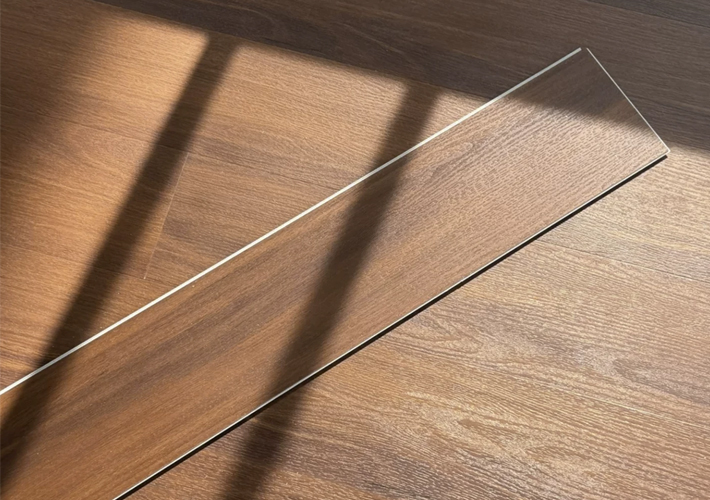
We see the sample stage as a practical quality check, not only a sales step. A sample lets you compare the surface, colour, dimensions, locking fit, backing, and packaging protection before you make a larger commitment.
When a sample arrives, we suggest checking:
- Colour and print repeatability
- Surface texture and gloss level
- Edge straightness and locking fit
- Backing or attached pad
- Odour and surface cleanliness
- Whether the sample matches the technical datasheet
Several pieces are more useful than one piece because they allow you to check joint alignment and surface variation. We also recommend keeping an approved reference sample and comparing it with the first production batch. You can use our Free Sample page to begin that discussion with our team.
Clarify MOQ, packaging, and lead time
Before we prepare a commercial quotation, we need to understand the quantity, selected SKUs, destination market, and packaging expectations. These details can affect the production schedule and the final procurement cost.
We recommend confirming the following items in writing:
- Sample lead time and first-order production lead time
- Repeat-order lead time
- Minimum order quantity by SKU
- Whether mixed colours or mixed SKUs are accepted
- Carton quantity and pallet quantity
- Private-label, neutral, or standard packaging options
- Artwork approval process
- Replacement procedure for confirmed defects or damaged cartons
- Export documents and loading arrangements
Please also make sure the quotation states the commercial basis clearly, such as EXW, FOB, or CIF, and identifies the actual construction rather than using only the general term “SPC flooring.”
How we support repeat supply
A successful first shipment is important, but distributors also need confidence in the next shipment. During a product discussion, we can review the approved colour, retained sample, packaging artwork, product documentation, and the requirements for repeat orders.
We also encourage buyers to ask practical questions: What is the product specification? How is it checked? What happens if the delivered product does not match the approved reference? Clear answers to these questions help both sides avoid misunderstandings before production begins.
SPC flooring supplier checklist
| Area | What to confirm with us | Score |
|---|---|---|
| Product fit | Does the range match your market and application? | 1–5 |
| Specification | Are construction details complete and consistent? | 1–5 |
| Documentation | Are the documents connected to the actual SKU and market? | 1–5 |
| Commercial terms | Are MOQ, packaging, lead time, and Incoterms clear? | 1–5 |
| Supply support | Can we support samples, repeat orders, and technical questions? | 1–5 |
This checklist is not a replacement for product testing or a factory audit. It is a simple way to keep supplier comparisons consistent and make sure the conversation covers more than the first quotation.
Why importers and distributors contact ChangFlor
At ChangFlor, we present SPC and LVT flooring for B2B buyers who need product information, samples, and a clear path to commercial discussion. Our website includes our SPC flooring range, product pages, and a Free Sample route for buyers who want to compare a product before discussing an order.
When you contact us, please share the application, target quantity, preferred designs, destination market, packaging requirements, and any documents your customers require. With that information, we can have a more useful conversation about the right construction, samples, MOQ, lead time, and quotation.
Let’s discuss your SPC flooring project
The right SPC flooring supplier should be able to explain the construction, provide a representative sample, clarify the commercial terms, and support repeat supply. If you are sourcing SPC flooring for distribution, private-label sales, or a commercial project, start with the product brief and sample requirements. Then contact ChangFlor through our Free Sample page so we can review your requirements with you.